Understanding God’s Will in the Face of Suffering: Acts 21 and the Prophecy of Agabus

In Acts 21, we encounter a striking moment where the apostle Paul, guided by the Holy Spirit towards Jerusalem, receives a sobering prophecy about his future. This passage raises important questions about the nature of prophecy, human response to divine will, and the tension between well-meaning counsel and obedience to God’s calling.

A simple black leather belt with silver buckle resting on a white surface 

The Prophecy of Agabus (Acts 21:10-14, ESV)

“While we were staying for many days, a prophet named Agabus came down from Judea. And coming to us, he took Paul’s belt and bound his own feet and hands and said, ‘Thus says the Holy Spirit, “This is how the Jews at Jerusalem will bind the man who owns this belt and deliver him into the hands of the Gentiles.”’ When we heard this, we and the people there urged him not to go up to Jerusalem. Then Paul answered, ‘What are you doing, weeping and breaking my heart? For I am ready not only to be imprisoned but even to die in Jerusalem for the name of the Lord Jesus.’ And since he would not be persuaded, we ceased and said, ‘Let the will of the Lord be done.’”

This passage follows Paul’s earlier declaration in Acts 20:22-24 (ESV):

“And now, behold, bound by the Spirit, I am going to Jerusalem, not knowing what will happen to me there, except that the Holy Spirit testifies to me in every city that imprisonment and afflictions await me. But I do not account my life of any value nor as precious to myself, if only I may finish my course and the ministry that I received from the Lord Jesus, to testify to the gospel of the grace of God.”

1. The Nature of Agabus’ Prophecy

Agabus, a prophet from Judea, delivered a message from the Holy Spirit using symbolic action—a method reminiscent of Old Testament prophets (e.g., Ezekiel’s enacted prophecies in Ezekiel 4-5). His prophecy was predictive, not prescriptive: it revealed what would happen, not necessarily what Paul should do.

Some prophecies in Scripture are conditional, offering warnings that may be averted through repentance (e.g., Jonah’s message to Nineveh). However, Agabus’ words carried no hint of conditionality—they were a straightforward declaration of future events. This raises the question: if the prophecy was certain, why did the believers urge Paul to avoid Jerusalem?

2. The Believers’ Response: Love vs. God’s Will

The disciples, including Luke (the author of Acts), pleaded with Paul not to go. Their reaction was natural:

  • They loved Paul and did not want him to suffer.
  • They may have misinterpreted the prophecy as a warning rather than a confirmation of God’s plan.

This mirrors Peter’s reaction in Matthew 16:22 (ESV) when Jesus foretold His crucifixion:

“Peter took him aside and began to rebuke him, saying, ‘Far be it from you, Lord! This shall never happen to you.’”
Jesus’ response was sharp: “Get behind me, Satan! You are a hindrance to me. For you are not setting your mind on the things of God, but on the things of man.” (Matthew 16:23, ESV).

Similarly, the believers in Acts 21 were operating from human concern, not divine perspective. Their intentions were good, but their advice, if followed, would have diverted Paul from God’s purpose.

3. Paul’s Resolve: Embracing Suffering for Christ

Paul’s response was unwavering:

  • He was “ready not only to be imprisoned but even to die” (Acts 21:13).
  • He saw his suffering as part of his calling (Acts 20:24; Philippians 1:20-21).

His attitude reflects Jesus’ words in Luke 9:23-24 (ESV):

“If anyone would come after me, let him deny himself and take up his cross daily and follow me. For whoever would save his life will lose it, but whoever loses his life for my sake will save it.”

Paul understood that obedience to God sometimes requires embracing hardship. His journey to Jerusalem was not reckless defiance but faithful surrender.

4. Lessons for Discerning God’s Will Today

This passage offers key principles for Christians facing difficult decisions:

  • Prophecy Reveals, But Does Not Always Direct
    Agabus’ prophecy confirmed what awaited Paul, but it did not instruct him to avoid it. Likewise, God may reveal challenges ahead without necessarily calling us to evade them.
  • Well-Meaning Counsel Must Be Weighed Against God’s Word
    The believers’ pleas were heartfelt, but Paul prioritised the Spirit’s leading. Proverbs 3:5-6 (ESV) reminds us:

“Trust in the Lord with all your heart, and do not lean on your own understanding. In all your ways acknowledge him, and he will make straight your paths.”

  • Suffering May Be Part of God’s Plan
    Scripture repeatedly associates faithfulness with endurance (Romans 5:3-5; 1 Peter 4:12-13). Avoiding suffering is not always the godliest choice.

Conclusion: “Let the Will of the Lord Be Done”

The believers’ final words—“Let the will of the Lord be done” (Acts 21:14)—mark their submission to God’s higher purpose. Paul’s example challenges us to:

  • Seek God’s perspective over comfort.
  • Trust that His plans, even when painful, are purposeful.
  • Remain steadfast when well-meaning advice conflicts with divine calling.

In a world that prioritises safety and self-preservation, Paul’s resolve reminds us that the greatest fulfilment lies in surrendering to God’s will—whatever the cost.

It is always wise to listen to godly Council. The people who care about us, will naturally not want us to come to harm. We would not be sensible to simply ignore their love or advice. This is especially true on making a big decision, or one that potentially leads us down a dangerous path.

At the end of the day though, we are answerable only to God. If he is instructing us to do something, and the entire rest of the world is telling us not to, then of course we must follow him. God over man.

The most difficult part, for me at least, is discerning God’s will. Few of us will receive a clear prophecy as Paul did in today’s passage, so we must always be cautious to follow God’s will carefully. We all want a neon sign telling us which way to go, but for the most part, we are to study and understand the Bible and discern gods will from that alone.

Using appropriate wisdom and discernment, all any of us can do is try to follow God to the best of our ability. 

Partnering for the Truth in a Digital Age (3 John 5–8)

In this instalment of our series exploring the Book of 3 John, we examine verses 5–8, where the Apostle John commends Gaius for supporting travelling missionaries. This passage underscores the critical role of hospitality and partnership in advancing the gospel. As we study each verse, we’ll explore its significance and consider its application in our modern context, where physical itinerant preaching has largely been replaced by digital ministries. These “digital missionaries” spread the gospel online, and this passage offers guidance for supporting their work. We’ll also delve into verse 7, which highlights the missionaries’ refusal to accept support from non-believers, emphasising how this choice serves as a powerful witness to the world while preserving the gospel’s integrity. Additionally, we’ll clarify that while our tithes belong primarily to the local church, our offerings can be directed as the Lord leads to support missionaries, digital or otherwise, with discernment to ensure our giving aligns with God’s purposes.

3 John 5 – Faithful Hospitality

“Dear friend, you are faithful in what you are doing for the brothers and sisters, even though they are strangers to you.”

John praises Gaius for his faithful support of fellow believers, particularly travelling missionaries, whom he calls “brothers and sisters.” The inclusion of “strangers” underscores Gaius’ generosity toward those he doesn’t personally know, reflecting a selfless commitment to God’s work.

Gaius’ faithfulness shines through in his practical support for missionaries, providing resources like food, shelter, or funds despite lacking personal ties with them. This hospitality was essential for enabling itinerant ministers to spread the gospel, demonstrating a love that transcends familiarity and fosters unity in the early church’s mission.

3 John 6 – Commending Generosity

“They have told the church about your love. Please send them on their way in a manner that honours God.”

The missionaries Gaius supported shared testimonies of his love before the church, affirming his reputation for generosity. John urges him to continue equipping these workers “in a manner that honours God,” ensuring their journey is supported with dignity and resources.

Gaius’ support not only sustained the missionaries but also strengthened the church’s witness through their public praise. The call to send them off honourably suggests providing practical aid—such as provisions, encouragement, or travel assistance—that reflects God’s generosity and upholds the mission’s integrity, ensuring missionaries could continue their work unhindered.

3 John 7 – Sacrificial Service and Witness to the World

“It was for the sake of the Name that they went out, receiving no help from the pagans.”

John highlights the missionaries’ sacrifice: they ventured out “for the sake of the Name” (Christ), relying solely on believers’ support and refusing aid from “pagans” (non-believers). This choice ensured their mission remained a clear testimony to the world.

Primarily, refusing pagan support allowed the missionaries to present a powerful witness to non-believers. By depending solely on the church, they demonstrated that the gospel is self-sufficient, sustained by God’s provision through His people, not by worldly resources. This independence signalled to pagans that the message of Christ stood apart from secular agendas, inviting curiosity and respect for the faith. A notable example is the Apostle Paul, who worked as a tentmaker to support himself, as described in Acts 18:3: “and because he was a tentmaker as they were, he stayed and worked with them.” Paul also writes in 1 Thessalonians 2:9, “Surely you remember, brothers and sisters, our toil and hardship; we worked night and day in order not to be a burden to anyone while we preached the gospel of God to you.” By labouring with his hands, Paul avoided burdening those he ministered to, reinforcing the gospel’s credibility as a message free from reliance on non-believers. Additionally, this practice preserved the gospel’s purity, preventing entanglement with external influences that might dilute or compromise its truth. While both witness and integrity were crucial, the outward testimony to the world was paramount, showcasing the missionaries’ trust in God and the church’s unity in supporting the mission.

The Need for Discernment in Giving

When supporting missionaries, particularly digital ones, we must exercise wisdom and discernment in our giving. Unlike travelling ministers, whose character and lifestyle could often be observed directly by the communities they served, digital missionaries operate in a virtual space, making it harder to assess whether they bear good fruit for the gospel. While we can evaluate their teaching at face value, their personal conduct—how they live out their faith behind the scenes—remains less visible. To ensure our offerings honour God, we should seek ministries that demonstrate transparency, such as those publishing financial accounts or clearly outlining their mission and impact. For example, supporting a digital ministry that provides detailed reports on how donations are used reflects wise stewardship, ensuring our gifts advance the gospel through trustworthy channels.

3 John 8 – Partners in Truth

“We ought therefore to show hospitality to such people so that we may work together for the truth.”

John concludes by urging believers to support these missionaries, becoming “fellow workers for the truth.” By aiding them, Gaius and others actively participate in their gospel mission, sharing in its impact.

Supporting God’s workers makes believers partners in spreading the truth. The term “fellow workers” implies a collaborative effort, where every act of hospitality—however small—contributes to the mission of proclaiming Christ, uniting the church in a shared purpose.

Application Today: The message of 3 John 5–8 resonates in our digital age, where online ministries serve as modern equivalents of travelling missionaries. Just as Gaius supported strangers for the sake of the gospel, we can back “digital missionaries”—pastors, podcasters, or content creators—who spread God’s Word through platforms like YouTube, social media, or apps. This support might include engaging with their content, sharing posts to amplify their reach, or contributing offerings to sustain their work, such as donations to maintain websites, fund outreach campaigns, or develop Christian apps. However, we must prioritise our tithes to the local church, which serves as the primary hub for worship, teaching, and community, ensuring its ministries thrive. Our offerings, beyond the tithe, can be directed as the Lord leads to support missionaries, whether digital or traditional, provided we use discernment to ensure their credibility. The principle of refusing pagan support, as seen in verse 7, remains vital. Many digital ministries avoid secular sponsorships to maintain a clear witness to the world, showing that the gospel relies on God’s provision through His people, not on commercial or ideological influences. By supporting these ministries, we help them uphold this testimony, demonstrating to non-believers the power and independence of the Christian faith. For example, donating to a Christian podcast that refuses secular ads or promoting a YouTube channel that relies solely on believer support reinforces this witness. As we partner with these ministries through our offerings, we become fellow workers for the truth, advancing Christ’s mission in a digital world.

Conclusion: The example of Gaius in 3 John 5–8 challenges us to support those who proclaim the gospel, just as he did for travelling missionaries. In today’s context, this means standing with digital missionaries who carry God’s truth to global audiences. While our tithes belong first to the local church, our offerings can be given as the Lord leads to support these ministries, using discernment to ensure they are worthy of our gifts. By refusing pagan support, these missionaries maintain a strong witness to the world, and through our resources, engagement, and prayers, we uphold the gospel’s integrity and become partners in spreading the truth in our time.

Love in Action: Living out Jesus‘s Commands

Introduction: The Call to Obey God’s Commandments

What does it mean to love God in a world filled with challenges? The Bible provides a clear answer: loving God is inseparable from obeying His commands. In 1 John 5:2–3 (NIV), we read, “This is how we know that we love the children of God: by loving God and carrying out his commands. In fact, this is love for God: to keep his commands. And his commands are not burdensome.” The apostle John emphasises that obedience is the tangible expression of our love for God. Far from being oppressive, God’s commands are designed to lead us into abundant life.

This post begins a series exploring how we can live out our love for God by obeying the commands of Jesus. Today, we focus on three specific commands: loving our neighbour, forgiving others, and making disciples. Each command offers practical ways to reflect God’s love in our daily lives. By examining their meaning and application, we can take steps toward a deeper, more obedient faith.

A group of seven people, including both older adults and younger adults, standing together outdoors on a sunny day. They are smiling and appear to be enjoying each other’s company. Several of them are holding bags filled with fresh produce, such as leafy greens and other vegetables. The group is casually dressed, and they are standing on a paved street with yellow buildings and green trees in the background. In the distance, a church steeple is visible. The overall mood is cheerful and communal, suggesting they may have just come from a market or community event.

Examining Three Commands of Jesus

Command 1: Love Your Neighbour as Yourself (Mark 12:31)

Jesus declares in Mark 12:31 (NIV), “The second is this: ‘Love your neighbour as yourself.’ There is no commandment greater than these.” Paired with loving God, this command forms the foundation of Christian ethics. It calls us to treat others with the same care, respect, and selflessness we desire for ourselves.

Loving our neighbour does not mean accepting or endorsing sinfulness. True love seeks the ultimate good of others, which may involve graciously challenging sinful behaviour and sharing the Gospel. This command is radically inclusive, extending to friends, strangers, and even those who oppose us. It reflects God’s heart for all people, urging us to see others through His eyes.

Practically, we can obey this command by serving those around us—perhaps helping a struggling neighbour with practical needs or listening empathetically to a friend. Loving our neighbour might also mean gently pointing someone toward God’s truth through the Gospel, offering hope and redemption. For example, consider a church member who invited a colleague to a Bible study, patiently answering their questions about faith. Such actions embody Christ’s love. Reflect on your daily interactions: are they marked by this selfless, Gospel-centred love?

Command 2: Forgive Others (Matthew 6:14–15)

In Matthew 6:14–15 (NIV), Jesus teaches, “For if you forgive other people when they sin against you, your heavenly Father will also forgive you. But if you do not forgive others their sins, your Father will not forgive your sins.” Spoken in the context of the Lord’s Prayer, this command underscores forgiveness as a cornerstone of Christian life.

Forgiveness means releasing resentment and extending grace, mirroring the forgiveness God offers us. It is not always easy—deep hurts, such as betrayal or injustice, can feel insurmountable. Yet Jesus calls us to forgive, relying on God’s strength to heal our wounds. Forgiveness does not excuse sin but frees us from bitterness and aligns us with God’s heart.

To apply this command, start by praying for those who have hurt you, asking God to soften your heart. Journaling can help process emotions, while seeking reconciliation—where appropriate—can restore relationships. For instance, forgiving a family member who apologised after a dispute can rebuild trust. Forgiveness is often a process, not a one-time act. Begin with small steps, trusting God to guide you toward healing and peace.

Command 3: Make Disciples (Matthew 28:19–20)

Jesus’s final charge, known as the Great Commission, is found in Matthew 28:19–20 (NIV): “Therefore go and make disciples of all nations, baptising them in the name of the Father and of the Son and of the Holy Spirit, and teaching them to obey everything I have commanded you.” This command calls every believer to share the Gospel and nurture others in faith.

Making disciples involves sharing the good news of Jesus, mentoring new believers, and living as an example of His teachings. This command connects directly to loving our neighbour: there is no greater act of love than sharing God’s love through the Gospel, offering others the hope of eternal life. While the scope is global, discipleship begins in our immediate communities—with friends, family, or colleagues.

Practically, you can obey by sharing your faith with a friend, joining a small group to grow together, or mentoring a new believer. For deeper insight into the Great Commission, I recommend my book, From Doubt to Disciples, which explores how to live out this command with confidence. Grab a copy to discover practical steps for disciple-making. By modelling Christ’s love, your faith can become contagious, inspiring others to follow Him.

Conclusion: Living Out Love Through Obedience

The commands to love our neighbour, forgive others, and make disciples are powerful expressions of loving God, as outlined in 1 John 5:2–3. Loving our neighbour includes sharing the Gospel, not affirming sin, ensuring our love points to God’s truth. Forgiving others reflects God’s grace, freeing us to live in peace. Making disciples, the ultimate act of neighbourly love, spreads God’s hope to others. These commands, though challenging, are not burdensome—they lead to a life aligned with God’s purpose.

Start small: choose one command to focus on this week. Perhaps offer a kind word to a neighbour, forgive a lingering hurt, or share your faith with a friend. God’s grace empowers us to grow in obedience, transforming our lives and communities. This post is the first in a series exploring Jesus’s commands. Future posts will examine others, such as “Do not judge” or “Follow me,” to deepen our journey.

Jesus said if you love me, you will obey me… How much will you love him this week?

A Mighty Message in a Little Letter – 3 John: A Call to Faith, Hospitality, and Truth

Imagine receiving a personal letter from a trusted friend, filled with encouragement, warnings, and a call to live faithfully. The letter of 3 John is just that—a brief but powerful message that resonates with us today. Written by the Apostle John, this short epistle addresses Gaius, a faithful believer, and tackles issues in the early church. In this post,I will unpack the key themes of 3 John, outline its structure, and offer practical applications for our lives.

Though concise, 3 John reveals timeless truths about walking in truth, showing hospitality, and confronting challenges in the church.

A cartoon postman/mailman carrying a tiny letter with a church in the background as if he is delivering this small but important epistle

Context and Background

The letter of 3 John is traditionally attributed to the Apostle John, the same author of 1 and 2 John and the Gospel of John, based on its similar style and theological emphasis. Likely written in the late 1st century, the letter is addressed to Gaius, a beloved member of a Christian community, with references to two other figures: Diotrephes and Demetrius. The setting appears to be a church facing internal conflicts, particularly regarding the support of traveling missionaries and issues of authority.

John’s purpose in writing is multifaceted: to commend Gaius for his faithfulness, to warn against the disruptive behavior of Diotrephes, and to encourage continued support for missionaries spreading the gospel. Despite its brevity—only 14 verses—3 John holds significant value for understanding personal relationships, truth, and hospitality in the early church. It reminds us that even small acts of faithfulness can have a lasting impact.

Outline of Key Topics in 3 John

Greeting and Commendation (Verses 1-4)

The letter opens with John’s warm greeting to Gaius, whom he addresses with affection and describes as beloved. John expresses joy upon hearing that Gaius is “walking in the truth,” a phrase that underscores Gaius’ faithfulness to the gospel. This section highlights the importance of living a life aligned with God’s truth, a central theme of John’s writings. For John, truth is not merely intellectual assent but a way of life that reflects commitment to Christ.

Hospitality and Support for Missionaries (Verses 5-8)

John praises Gaius for his hospitality toward traveling Christian workers, likely itinerant missionaries spreading the gospel. Gaius has provided practical support, such as food and shelter, enabling these workers to continue their ministry. John urges Gaius to persist in this generosity, noting that supporting such workers makes believers “co-workers for the truth.” This section emphasizes the role of hospitality in advancing God’s kingdom and our shared responsibility to support gospel work.

Warning Against Diotrephes (Verses 9-10)

John then addresses a troubling issue: the behavior of Diotrephes, a church member who rejects John’s authority and refuses to welcome traveling missionaries. Diotrephes’ actions are driven by pride, as he seeks preeminence and even expels those who disagree with him. John promises to address this behavior directly if he visits, highlighting the dangers of pride and division in the church. This section serves as a caution against self-centered leadership that undermines the unity and mission of the Christian community.

Commendation of Demetrius (Verses 11-12)

In contrast to Diotrephes, John commends Demetrius, who has a good reputation among the church and is likely a missionary or leader. John encourages Gaius to “imitate what is good” rather than evil, presenting Demetrius as a godly example. This brief section underscores the value of positive role models in the Christian life and the importance of character in leadership.

Closing and Personal Note (Verses 13-14)

John concludes with a personal note, expressing his desire to visit Gaius in person rather than communicate only through letters. He sends greetings from mutual friends and blesses Gaius with peace. This closing reinforces the value of personal connection in the Christian community, reminding us that relationships are central to the life of the church.

Practical Applications for Today

The letter of 3 John, though written to a specific individual in a specific context, offers timeless lessons for us today. Here are five practical applications for living out its teachings:

Walking in Truth

John’s joy over Gaius’ faithfulness encourages us to prioritize studying and applying Scripture in daily life. We ought to live out biblical truth in our actions and decisions, not just understand it intellectually. We should foster accountability by engaging in Bible study groups or mentoring relationships to stay rooted in God’s truth.

Practicing Hospitality

Gaius’ support for missionaries challenges us to open our homes and resources to those in need, particularly those serving in ministry. We should consider hosting a missionary, supporting a local outreach, or providing practical help to church workers. We ought to cultivate a culture of generosity in our churches by organizing initiatives to support global or local missions.

Addressing Division

The example of Diotrephes serves as a warning against prideful or divisive behavior in the church. We should confront such issues with humility and grace, seeking reconciliation and unity. We ought to promote a shared focus on the gospel to prevent self-centeredness from fracturing our communities.

Imitating Godly Examples

Demetrius’ good reputation highlights the importance of seeking and becoming godly role models. We should identify mentors who reflect Christlike character and strive to emulate their faith and integrity. Likewise, we ought to inspire others by living with consistency and humility in our communities.

Building Personal Connections

John’s desire for a face-to-face visit underscores the value of personal relationships in the church. We should invest in meaningful interactions, whether through small groups, one-on-one discipleship, or sending encouraging notes. Building strong connections strengthens our churches’ witness and fosters mutual support.

Conclusion

The letter of 3 John, though only 14 verses long, is a rich and relevant message for us today. It calls us to walk in truth, practice hospitality, confront division, follow godly examples, and build personal connections. These timeless principles challenge us to live faithfully in our churches and communities. We should reflect on how we can apply these lessons—perhaps by supporting a missionary, fostering unity, or mentoring others. Let 3 John inspire us to love generously and strengthen the body of Christ.

If you would be interested in doing a verse by verse study of this letter, do let me know in the comments! Thanks 


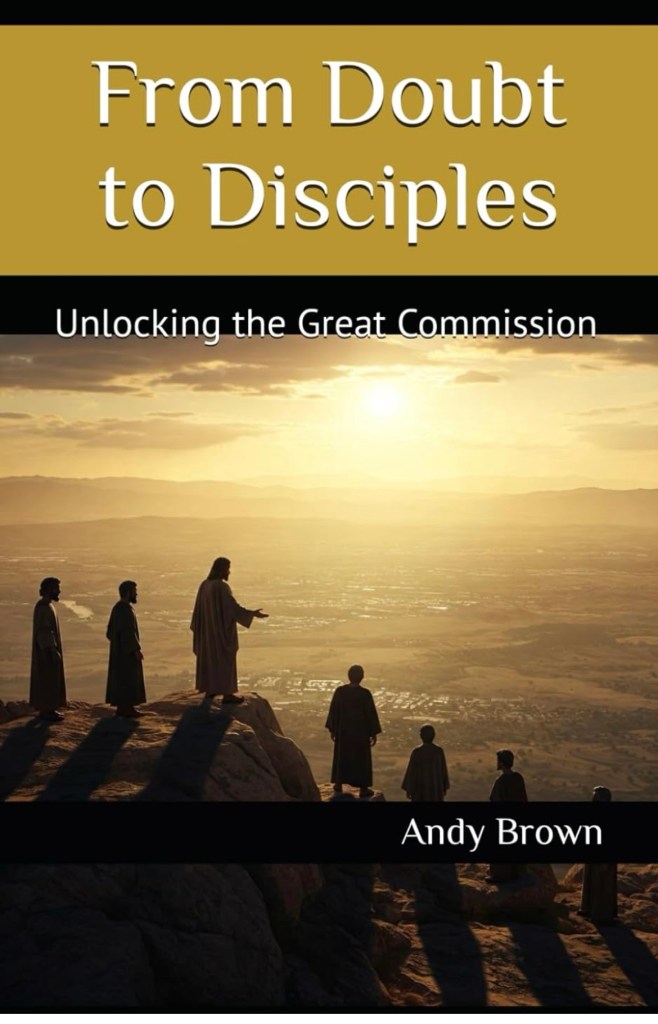
Check out Andy‘s brand-new book… From Doubt to Disciples: Unlocking the Great Commission. Now available on Amazon 

From Doubt to Disciples: Unlocking the Great Commission

The front cover of Andy‘s new book… From doubt to disciples: unlocking the great commission. 

Many Miracles – Andy Brown

Today we tackle a fairly short but astonishing passage from Acts chapter 5. It again highlights to us the kind of life that these early believers lived and it is only natural to compare their experiences to our own. Many miracles and wonders were being performed among the people by the apostles. All the believers…
— Read on andy-brown.org/2020/06/19/many-miracles/

This Sunday at Church: Let your wife know you thank God for her being a Mother

For this Sunday here’s what you can do: Let your wife know you thank God for her being a mother.   In the past I have written “This Sunday at Church:…

This Sunday at Church: Let your wife know you thank God for her being a Mother

This Sunday at Church: Encourage the Encourager

Who are the encouragers in your life? What can you do today to give them a boost? Have a great Sunday!

This Sunday at Church I want to encourage you to do the following: Encourage the Encourager. Do you know the encourager at church? They seem to be …

This Sunday at Church: Encourage the Encourager

#TestimonyTuesday: A Prayerful Miracle

Throughout 2022 the BerryBunch had a few times of leave/holiday. But these were, each, ruined by illness and sickness. As we approached our 3 week …

#TestimonyTuesday: A Prayerful Miracle

This Sunday at Church: Praying for your Church’s Outreach Effort

I often share from this wonderful series on a Sunday. Today’s post is particularly powerful so I really do encourage you to give it a read.

This Sunday at Church I want to encourage you to do the following: Praying for your church outreach effort.  It might mean someone’s eternity with …

This Sunday at Church: Praying for your Church’s Outreach Effort

This Sunday at Church: Letting your pastor know you appreciate the years he’s devoted to ministry

This Sunday at Church I want to encourage you to do the following: Letting your pastor know you appreciate the years he’s devoted to ministry. …

This Sunday at Church: Letting your pastor know you appreciate the years he’s devoted to ministry

UK Christian Bloggers – Andy Brown (Best of 2022)

For my final best of the year series of posts, I want to share one from the UK Christian bloggers.

Over the last year, a group of UK-based bloggers have been getting together regularly to pray and swap stories. It’s been a tremendous encouragement. I want to publicly thank each and everyone of them today.

If you are looking for something to read or watch, do check out their blogs. There is some wonderful material there and you will not be disappointed.


Hi! My name is Andy Brown, you may remember me from such blogs as andy-brown.org…! It has indeed been some time since my last proper post, although I have tried to share some older material and some great posts from friends and fellow bloggers. Life has gotten rather busy and my writing has suffered. I…
— Read on andy-brown.org/2022/06/18/uk-christian-bloggers/

Preaching to the Choir – Andy Brown (Best of 2022)

Are you preaching to the choir? Is that wasteful, or does the choir need your encouragement as well? It was a great pleasure yesterday evening to meet (on video) a couple of fellow Christian bloggers, and lovely to share some of our stories, questions and experiences of ministering through this medium. It was humbling to…
— Read on andy-brown.org/2022/04/09/preaching-to-the-choir/