Mercy or Faith? (PoW)

Pearls of Wisdom

Don’t mistake Gods mercy as a response to your faith

Have you ever had a situation where someone said “God will protect me,” even while walking into a potentially dangerous situation? 

With the ongoing situation with COVID-19, you might have even heard this recently. “I’m carrying on as normal because God will protect me from harm.” They claim that this is faith, but also walks dangerous close to “testing God”. 

The thing is, if the Christian who says such a thing does indeed stay safe, then they feel somehow justified and “proved right.” We must never mistake God’s mercy for a response to our faith. Such a Christian may have been protected by God’s mercy rather than any act of faith on their own part. 

I am not against faith of course, and absolutely you should do what you believe God wants you to. Faith should not replace common sense however. God may sometimes call us into dangerous places, but for most of us, we just need to live wisely. 

Follow Government advice and stay home during the COVID crisis. Don’t test the Lord by putting yourself in harms way. This is ultimately being selfish and not thinking about how your choices may affect others. 

Thank God for His mercy!

Promises, promises (Psalm 91 part 2)

He who dwells in the secret place of the Most High
will rest in the shadow of the Almighty.
2 I will say of Yahweh, “He is my refuge and my fortress;
my God, in whom I trust.”
3 For he will deliver you from the snare of the fowler,
and from the deadly pestilence.
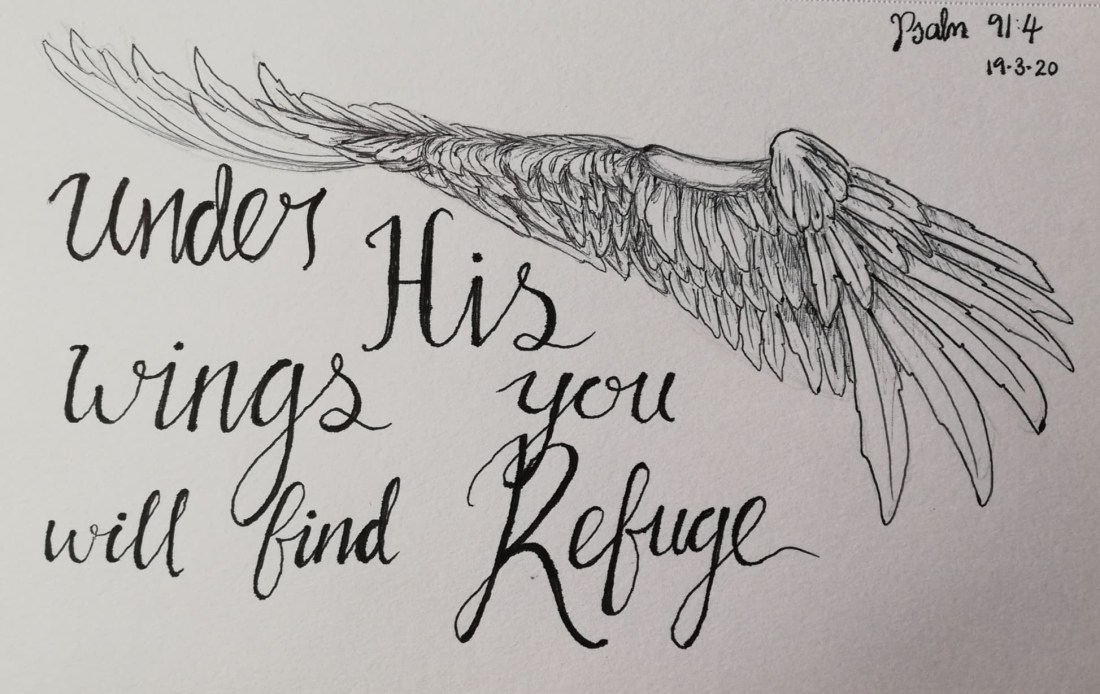
4 He will cover you with his feathers.
Under his wings you will take refuge.
His faithfulness is your shield and rampart.
5 You shall not be afraid of the terror by night,
nor of the arrow that flies by day,
6 nor of the pestilence that walks in darkness,
nor of the destruction that wastes at noonday.
7 A thousand may fall at your side,
and ten thousand at your right hand;
but it will not come near you.
8 You will only look with your eyes,
and see the recompense of the wicked.
9 Because you have made Yahweh your refuge,
and the Most High your dwelling place,
10 no evil shall happen to you,
neither shall any plague come near your dwelling.
11 For he will put his angels in charge of you,
to guard you in all your ways.
12 They will bear you up in their hands,
so that you won’t dash your foot against a stone.
13 You will tread on the lion and cobra.
You will trample the young lion and the serpent underfoot.
14 “Because he has set his love on me, therefore I will deliver him.
I will set him on high, because he has known my name.
15 He will call on me, and I will answer him.
I will be with him in trouble.
I will deliver him, and honor him.
16 I will satisfy him with long life,
and show him my salvation.”

Psalm 91 (WEB)

This is a second post on Psalm 91, and you can read the first part here – Read the Bible… literally?

Last time, we started to think about whether the Bible should be read literally or not. And the answer was “It depends…”

Some passages are clearly poetic or allegorical and should not be taken literally. Likewise, other passages of Scripture are definite instructions that should be followed as such.

Psalm 91 has some amazing promises, and at this time in the world, there are many Christians quoting these promises of protection against the Corona virus. Is that appropriate however?

Can we interpret these verses as meaning God will protect us from harm, violence, pestilence and the like? Or is there more going on here?

We really want to be able to believe these promises and interpret them literally. Wouldn’t it be fantastic to have total protection against these things at all times? But us wanting it to be true is not the same as it being true.

I recently heard someone preaching on these verses and essentially saying that if you have sufficient faith, then you can accept these verses at face value and it only fails to work for those who fail to trust God sufficiently.

That’s the risk. We read these verses and if they seem untrue in our lives, then we conclude we don’t have enough faith. When we water down God’s Word to the point where we say, “If we do this, then that will happen…” We make the Bible a scientific formula in a way it was never intended to be. 

Look at the evidence of your life. If you are reading this, then chances are you are probably a believing Christian. Can you say you are without trouble, violence or illness at all times? If not, then is that because you have failed to trust God? Again, I doubt it.

When Jesus was being tempted by the devil, the enemy quoted these exact verses to the Lord.

Then the devil took him into the holy city. He set him on the pinnacle of the temple, 6 and said to him, “If you are the Son of God, throw yourself down, for it is written,

‘He will command his angels concerning you,’ and,
‘On their hands they will bear you up,
so that you don’t dash your foot against a stone.’”Psalm 91:11-12

7 Jesus said to him, “Again, it is written, ‘You shall not test the Lord, your God.’”Deuteronomy 6:16

Matthew 4:5-7 (WEB)

It seems to me that the devil was trying to tempt Jesus into believing that these verses were literally true. He was enticing Him to test God by forcing Him to uphold the promise. If Jesus leapt from the roof, then angels would have to be issued to stop Him dashing His foot or on a stone.

Jesus responds perfectly and says you should not put God to the test.

If the devil is trying to get Jesus to test this promise, and He refuses, why do we think we can get away with it?

Similarly, if it was a matter of how much we trust God, then Jesus has us beaten. None of us can claim to trust the Father to the same degree that Jesus did. Jesus trusted His Father perfectly. If that’s the case, and if these promises are literal, then Jesus should have been able to draw upon them.

The psalm itself gives us a hint that there is more to these words than just their face value. Verse 15 says, “He will call on me, and I will answer him. I will be with him in trouble.” Be with us “in trouble”? But don’t the earlier promises suggest we won’t have any trouble?

So, where does this leave us? 

We must understand this passage in the light of other passages. Indeed, all Scripture must be understood in its proper place among the context of the Bible. 

Take Job. He lost everything; his health, his wealth and his family. As he sat down with his three friends, they essentially told him that all this happened because he did not trust in God. That is exactly what we are tempted to think when trouble comes to us. Yet, at the end, God appeared and pronounced that the friends had not represented Him well at all. 

Likewise, Jesus Himself said:

I have told you these things, that in me you may have peace. In the world you have trouble; but cheer up! I have overcome the world.”

John 16:33 (WEB)

Jesus says it plainly. While we live in this world, we will have trouble. He was neither ignorant of Psalm 91 nor contradictory of it. 

It is my belief therefore that this Psalm is about God’s faithfulness to His people. He does offer protection, refuge and defence, but often in the midst of the trouble befalling us. Our faith is not a weapon allowing us to remove every difficult and unpleasant thing in our path. Rather it connects us to the One who has overcome all of that, and walks through the trouble with us. 

I wish I could promise you that the Corona virus, or indeed any illness, will never affect you. Some teach that. Healing is very real, and I’ve have both heard and seen amazing miracles banishing sickness from someone. I do not believe God wants us to be sick, but neither do I think God’s primary concern is our comfort. 

God is more concerned about our eternal destiny, than our present and temporary trials. 

In our limited human minds, it is very difficult to try to grasp God’s wider purposes, especially when it comes to times of trouble. That’s where the trust comes in. God doesn’t reward our trust by removing all problems. Our trust in Him reminds us that He is in control, even when things go wrong. 

God is our refuge. He is most certainly our fortress. Life may get difficult, and it may even come to an end. God takes the long view however. This life is not all that there is, and eternity is a very long time in comparison. 

let this psalm inspire you. Let these wonderful words bring you into a place of praise and trust of our Heavenly Father. Ask Him to protect you from harm of course, but trust him if it does not happen as you had hoped. Don’t test God by putting yourself in harm’s way and demanding God rescue you. Instead, use your God-given brain and the leading of the Holy Spirit to avoid trouble where possible. If it comes, continue to rejoice in Him and your witness will speak volumes to a frightened world. 

Who can you pray for?

Confess your offenses to one another, and pray for one another, that you may be healed. The insistent prayer of a righteous person is powerfully effective.

James 5:16 (WEB)

Are you tired of hearing about the corona virus yet? It has been quite a while since the headlines mentioned anything other than the global pandemic! Sorry to mention it again here!

In these difficult times, there is a lot of practical things we can do as the Body of Christ to support each other. If you have elderly or vulnerable family members or neighbours, you might be able to shop for them to save them having to go out.

Our family, led by my wonderful wife, is setting about sending Easter cards or cards of encouragement to all the members of our church (the ones we have contact information for that is).

As you might have noticed, I have been trying to post on the blog every day. I am hoping that even in the difficult days ahead, many will read the blog and ideally be encouraged or uplifted in some way.

What practical things are you doing? What things could you do to bless those around you at this time?

You might be in a situation where doing something practical is just not possible right now. Not all of us can. There is one thing you can do however, and it will make a tremendous difference. You can pray.

Sometimes we think of prayer as a last resort. We do all the practical stuff, and then turn to prayer when we run out of ideas. This really shouldn’t be the way we think. Prayer is our first and foremost response in every situation.

Who can you pray for today? I hope it won’t take you long to think of someone.

my family has a jam jar full of lolly sticks. On each stick, we write the name of a friend or family member. When we sit down to pray, we draw out a stick and then pray for the person named. It is a great way of remembering to pray for different people.

Don’t be afraid to ask for prayer at this time either. There are prayer warriors out there just looking for someone to cover in prayer. Why not be the “squeaky wheel?”

As well as the people you know, please also pray for your government and leaders. They need God’s wisdom and guidance right now to make right decisions and to time them well.

I exhort therefore, first of all, that petitions, prayers, intercessions, and givings of thanks be made for all men: 2 for kings and all who are in high places, that we may lead a tranquil and quiet life in all godliness and reverence.

1 Timothy 2:1-2 (WEB)

Please also pray for your church leaders. Many places of worship have been closed and this presents something of a unique challenge for ministers and pastors alike.

Those working in the medical field will also very much need our prayers right now. In the UK, our health service was stretched prior to the pressures of the corona virus, and so they need our support now more than ever .

I could go on, but there is an unending list of people and situations we can pray for. Prayer is powerful, and we in the family of God can make a huge difference.

Pray without ceasing.

1 Thessalonians 5:17 (WEB)

While on Lockdown

Speaking to one another in psalms, hymns, and spiritual songs; singing and making melody in your heart to the Lord; 20 giving thanks always concerning all things in the name of our Lord Jesus Christ, to God, even the Father;

Ephesians 5:19-20 (WEB)


Don’t be deceived! “Evil companionships corrupt good morals.”

1 Corinthians 15:33 (WEB)

I write this at a very strange time here in the UK. It was announced last night that new rules were being imposed upon us to try to prevent the further spread of the Corona virus. Essentially we can now only leave the house to buy food, seek medical help, exercise once a day or travel to work if it can’t be done at home.

Such massive restrictions on our personal freedoms would have been utterly unthinkable only a few weeks ago. Yet, our government believes this is necessary to save lives, and agree or disagree with the measures, we must respect them for this.

Having to stay home for a good length of time is going to prove quite a challenge for many people. Our homes have never seemed so small! But before complaining too much, spare a thought for those who have no home to be isolated in.

Staying at home of course means we have very little human contact now. Thank God it has happened in an age where we have Internet and video calling, as I can’t imagine how people would have coped without such things.

Without that human contact, we must all be very careful about what we allow to influence us. Our only window to the world may now be TV screens, phones, and tablets. An almost constant negative news stream, social media posts and Whatsapp messages may bombard us and leave us feeling worse, not better.

Consider how often you read the news. At this time in the world, it makes sense to stay in touch with what’s going on, but is there much point in checking every hour? My phone is constantly “pinging” as news stories from various apps pop up. Do I really need to know how many people are dying on a daily basis of this virus? I don’t get a feed of cancer deaths, or those killed in road traffic accidents. Check the news once in the morning and then again in the evening – surely that will be sufficient.

I’ve likewise found myself checking social media much more often in the last few days. There are many positive posts of course, and it is a great way of keeping in touch with those you can no longer see face-to-face. There is an awful lot of negative posts too. Many of these are feeding into our fears, and leave us feeling far worse than before. Be very careful what you read. If you follow a page or a person who is leaving you feeling worse, then consider if you need to keep following them.

Paul encourages us, in the verses above, to be very careful about what we allow into our minds. He also reminds us what we should be talking about.

If we only ever listen to negative things, then inevitably this will affect our character.

We also need to ensure we are being a positive influence on those around, and particularly at this time. Your words can lift people up and point them to Jesus, and there are a lot of people in desperate need of encouragement right now. You can provide that.

Whatever flavour of social media you prefer, please can I encourage you to think before you click. Is what you are about to post at all helpful? Will it lift others up, or just bring them down?

In the same way, think carefully about what you read. Headlines alone can be misleading, and there is plenty of click-bait out there enticing us in. Before you read it though, ask yourself if this will boost you or hinder you.

Play biblical worship music as often as you can. Music is often uplifting, and especially so when it is full of God’s Word and pointing us towards Him. If you play an instrument, this is a great time to put in some practice and learn some new songs. Share your gift on YouTube or other social media too.

We are on lockdown, but we can still be a positive influence on the world. Church buildings may be closed, but the church itself – God’s people – are open for business as usual.

Where do you stand?

31 “But when the Son of Man comes in his glory, and all the holy angels with him, then he will sit on the throne of his glory. 32 Before him all the nations will be gathered, and he will separate them one from another, as a shepherd separates the sheep from the goats. 33 He will set the sheep on his right hand, but the goats on the left. 34 Then the King will tell those on his right hand, ‘Come, blessed of my Father, inherit the Kingdom prepared for you from the foundation of the world; 35 for I was hungry and you gave me food to eat. I was thirsty and you gave me drink. I was a stranger and you took me in. 36 I was naked and you clothed me. I was sick and you visited me. I was in prison and you came to me.’

37 “Then the righteous will answer him, saying, ‘Lord, when did we see you hungry and feed you, or thirsty and give you a drink? 38 When did we see you as a stranger and take you in, or naked and clothe you? 39 When did we see you sick or in prison and come to you?’

40 “The King will answer them, ‘Most certainly I tell you, because you did it to one of the least of these my brothers,[c] you did it to me.’ 41 Then he will say also to those on the left hand, ‘Depart from me, you cursed, into the eternal fire which is prepared for the devil and his angels; 42 for I was hungry, and you didn’t give me food to eat; I was thirsty, and you gave me no drink; 43 I was a stranger, and you didn’t take me in; naked, and you didn’t clothe me; sick, and in prison, and you didn’t visit me.’

44 “Then they will also answer, saying, ‘Lord, when did we see you hungry, or thirsty, or a stranger, or naked, or sick, or in prison, and didn’t help you?’

45 “Then he will answer them, saying, ‘Most certainly I tell you, because you didn’t do it to one of the least of these, you didn’t do it to me.’ 46 These will go away into eternal punishment, but the righteous into eternal life.”

Matthew 25:31-46 (WEB)

I know this is a long passage to start this post with, but I wanted you to be able to read the whole thing and let its challenging words sink in. 

Where do you stand? On the left, or on the right? And I don’t mean politically…

When the news about the corona virus first broke in the early part of this year, I’ll admit to being a little flippant about it. I never imagined it would impact the lives of us all in such ways. 

Reading the news and various social media feeds, I see a rather bleak picture and many individuals who are very scared right now. I thank God that this virus is no worse than it is, but certainly appreciate the heavy impact it will have on many families – particularly those who are vulnerable or elderly. 

It makes you think, doesn’t it? Some doctors are urging we discuss and prepare for the fact that this virus may take the lives of those we love. Are we ready for that? 

I mentioned in my post the other day – Coronavirus – that some had claimed this virus was a sign of the End Times. If you’re not sure what I mean by that, the Bible teaches that one day Jesus will return for His people. There are many diverse views about exactly how this will happen, but essentially all Christians agree HE will return sooner or later. There are certain signs which precede His coming and perhaps this virus is one of them. You can do your own study on that. 

Either way though, the Corona virus gives us pause. It is an opportunity to face the big questions in life. What happens when we die? Are we prepared for the return of the Lord Jesus? Where can we turn when it feels like the world is falling apart? 

Do you have adequate answers to these questions? 

The passage above from Matthew’s Gospel is often called the parable of the sheep and the goats. It depicts the end of time when we will all stand before Jesus’ throne and He will judge us. This is known as the Great White Throne judgement. I’m not entirely sure it is right to call this a parable, as it may not be an illustration at all, but precisely how it will be. 

There is much we could say about this passage. One of the scarier elements is that those who thought they were doing well, were not, and those who did no think they were doing so well, were commended. 

So, where do you stand? Are you a sheep or a goat? It is a question we must all ask ourselves, and answer honestly. Ignoring the question is not an option. We must not wait until we get there to find out, as it will then be too late. 

How can you be sure? How can you know whether you will be counted among the sheep or the goats? The passage itself suggests it is not about what we do, as those who did “spiritual” things were counted as goats. 

The answer does not lie in the activities we participated in, nor in our own “good works.” Our best works are going to look rather shabby when we stand before the Throne of God. 

There is only one way to heaven, and His Name is Jesus Christ. The difference between the sheep and the goats is that the sheep put their lives in the hands of the Good Shepherd. The goats went their own way. 

If you want to find out more about the way to heaven, then check out my post – One Way. 

For the vast majority of people, this Coronavirus will not take their life – praise God. But the questions posed above are still important. None of us can beat the clock, and every one of us will – sadly – die one day. Even if we are the generation to see the return of Jesus Christ, then we sill need to be prepared. Are you? 

So what will it be? Are you a sheep or a goat?

What about the animals?

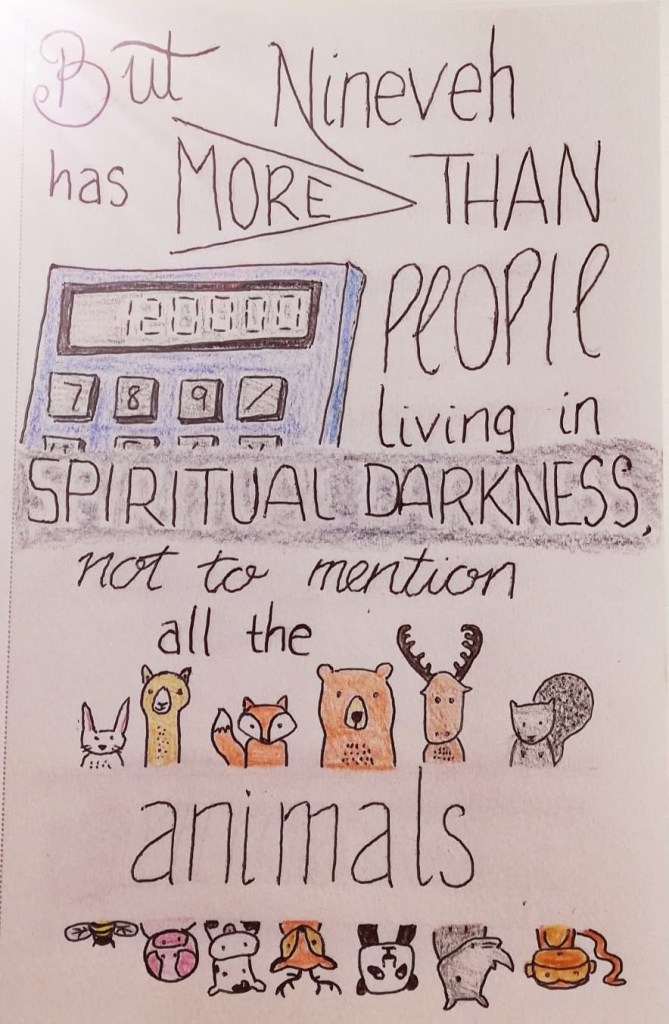
Jonah 4:11 (NLT) But Nineveh has more than 120,000 people living in spiritual darkness, not to mention all the animals. Shouldn’t I feel sorry for such a great city?”

As I write this, I’m overlooking a sort of forest woodland. In the last few minutes I have seen an abundance of nature! I’ve seen ducks, squirrels, deer, rabbits and even what I think was a stoat.

Due to the Coronavirus, the woodland has largely been abandoned at the moment. I suspect that the sudden drop in guests will quite badly affect the wildlife here. Over time I am sure they have become somewhat dependent on the food given to them by visitors. This area will be closed to the public for several weeks leaving the animals to fend for themselves for a while.

While the sudden drop in available food will be a bit of a shock to them, I am not overly worried about them. God cares for people, but He cares for His creation also.

There have been a number of posts on social media about panic buying and stockpiling. As a result, many food banks and charities have seen a dip in food donations. This is not limited to charities offering support for people either, and a number of animal rescue shelters are struggling too. The Coronavirus is affecting the whole world in myriad ways.

The verse above is quoted from the book of Jonah in the Old Testament. In fact, it is the closing verse of that book. Most people recall that Jonah was once swallowed by a big fish, but in case you don’t know the rest of the story, here is a brief summary.

God called Jonah to preach to the non-Jewish (Gentile) city of Nineveh. Instead, Jonah heads in the complete opposite direction and boards a ship to Tarshish. A great storm swamps the ship, and in the end Jonah confesses to the crew that he is the cause of their struggle. Ultimately they have to throw him overboard to still the storm.

It is at this point – more or less – that Jonah is swallowed by the fish. The fish later spews up the reluctant prophet on to the shoreline, and Jonah finally goes to Ninevah as he was instructed.

Jonah did not want to go to Ninevah and preach because he was afraid the people would listen to him… He knew that if they heard his message, they would repent and turn back to God – and God would forgive them. Imagine that?

After he gives his message, he goes and sits outside the city to see what would happen. The sun is burning hot, and he grows weary. God causes a vine to grow up beside him and offer him some shelter. Later however, a worm comes along and eats the root of the vine so it withers and Jonah loses his shade.

It’s something of an odd story right? Indeed it is, but it is really about who is in charge. God is running the show throughout, and He gives Jonah the vine and quickly takes it away to demonstrate to Jonah that he has no control in the situation. God wants Jonah to realise that He cares for the people of Ninevah.

The book of Jonah closes with the verse above. God tells Jonah He is right to care for the 120,000 people living there. We don’t know what happened to Jonah after this, but let’s hope he learned a lesson!

Perhaps 15 years ago, I had a dog who was very poorly. They had a particularly bad night, and we had to contact an emergency vet. The next day I happened to be reading this closing chapter of Jonah. I’ll always remember that because I recall very vividly this final verse. As well as the 120,000 people, God specifically mentions the animals also.

The word animals here is sometimes translated as cattle, so perhaps refers to farm animals or bovine species. Whatever it refers to though, it is clear that God cares for the animals also.

Animals are a part of God’s creation. While they are not as important as people, they are important. We have a responsibility to take care of them, and must certainly not mistreat them.

Spare a thought this week for all those affected by the Coronavirus. We must prioritise helping people with various needs at this time. We, the church, may not be able to gather together in large numbers, but we can and must continue to be Jesus’ hands and feet on the Earth. Call an isolated family member. Check on an elderly neighbour. Let’s do what we can to share God’s love in this difficult time.

As well as those things, and if you’re not overstretched, do consider whether there are ways to take care of God’s creation also. You might consider grabbing a can of dog food to pass on to a struggling pet owner. Perhaps you could walk a friend’s dog. Maybe, like me, there is a nearby animal shelter who could do with a helping hand at this difficult time.

Like many, I’m deeply disappointed to read stories of fighting in supermarkets and immoral seller hiking up prices. There are plenty of positives stories also, and we – the church – should be leading the way in that.

How can you be a blessing to those around you at this time? And remember, God cares about the animals also.

The Sinfulness of my Sin

I acknowledged my sin to thee, and my iniquity have I not hid. I said, I will confess my transgressions to the LORD; and thou forgavest the iniquity of my sin. Selah.

Psalm 32:5 (WEB)

The sinfulness of my sin… captivating title right? And I know what you are thinking – two blog posts in two days? What’s gotten into Andy?!

I’m pleased to report that all is well, and I’m not self-isolating with nothing to do. In fact, I am very conscious of how everyone is feeling right now, and hoping that a few extra blog posts will be well received.

A few weeks ago I spoke on Psalm 32. You can listen to that message here. It is a wonderful Psalm and I only had a short time to discuss it. This post covers one of the things I did not have time to explore.

The totality of the Psalm is about sin and repentance. It points out the depth of our wrongdoing, the wonder outs grace of God and our responsibility to confess and acknowledge our sin.

There is an interesting little phrase in verse 5 which says God forgives the “iniquity of our sin.” We might say the “sinfulness of our sin.”

Some translations of the Bible render this as the “guilt of our sin,” but this doesn’t quite cover it in my view.

If God forgives our sin, then what does it mean for Him to forgive the iniquity of our sin?

It is like saying the “saltiness of salt,” or the “chocolatey-ness of chocolate…” What is the psalmist getting at here?

Often when we say “Sorry,” we are not really sorry for what we did, but rather are sorry we got caught. When we see hardened criminals breaking down in tears in the dock of the courtroom, it is often about the loss of their freedom, money or reputation. Being sorry for the consequences of sin is of course very natural, and a great reason not to do it in the first place. But are we sorry for the sin itself? If we never got caught, are we truly repentant for the thing we did?

The sinfulness of our sin is the badness of our sin. It is to recognise that sin is wrong, not because it has terrible consequences, but because it is wrong in the sight of God.

When we are truly repentant, we are sorry to God for falling short of His perfection. We are saying that the thing we did – the things we all do – are very wrong irrespective of consequence and punishment.

God forgives us not just from the punishment of sin through Jesus’ death at the cross, but for sin’s sinfulness also. God forgives us for the wickedness of our sin, and all of its consequences. That is not to say that we are free from any consequence on Earth of course, just rob a bank to see what I mean. God can forgive a robber, but they’ll still go to jail for it.

The point is that we need to recognise that our sin is wrong. It is wrong in and of itself. The consequences are indeed terrible, if facing them without Christ, but the sinfulness alone is wicked before God.

As you reflect on and confess your own sins, ask yourself if you are sorry for what they are, or for their consequence.

Spend some time this week to reflect on where you have fallen short, and on the One who forgives all of your sins and covers all of your iniquity. Come to Jesus at the cross and surrender your whole life to Him. It will be the best decision you ever made!

Read the Bible… literally? (Psalm 91 part 1)

He who dwells in the secret place of the Most High
will rest in the shadow of the Almighty.
2 I will say of Yahweh, “He is my refuge and my fortress;
my God, in whom I trust.”
3 For he will deliver you from the snare of the fowler,
and from the deadly pestilence.
4 He will cover you with his feathers.
Under his wings you will take refuge.
His faithfulness is your shield and rampart.
5 You shall not be afraid of the terror by night,
nor of the arrow that flies by day,
6 nor of the pestilence that walks in darkness,
nor of the destruction that wastes at noonday.
7 A thousand may fall at your side,
and ten thousand at your right hand;
but it will not come near you.
8 You will only look with your eyes,
and see the recompense of the wicked.
9 Because you have made Yahweh your refuge,
and the Most High your dwelling place,
10 no evil shall happen to you,
neither shall any plague come near your dwelling.
11 For he will put his angels in charge of you,
to guard you in all your ways.
12 They will bear you up in their hands,
so that you won’t dash your foot against a stone.
13 You will tread on the lion and cobra.
You will trample the young lion and the serpent underfoot.
14 “Because he has set his love on me, therefore I will deliver him.
I will set him on high, because he has known my name.
15 He will call on me, and I will answer him.
I will be with him in trouble.
I will deliver him, and honor him.
16 I will satisfy him with long life,
and show him my salvation.”

Psalm 91 (WEB)

A cursory read of this Psalm and you might think all of your problems are over. The psalmist sings of God’s refuge, deliverance from deadly pestilence and being shielded in times of terror and violence. 

In the recent days where world governments have taken drastic measures to ward off the Corona-virus, I’ve seen many Christians quoting and meditating on the verses of this Psalm. But does this passage really suggest God will protect us from all illness, violence and trouble? If so, then why do we all face such troubled times in our lives? Let’s explore that in part two (to follow in the coming days).

For now, let’s think about taking the Bible literally. I recently heard a non-Christian source describing the “Pentacostals.” They were fairly general in their terms and what they said might have applied to any number of Christian denominations, whether they would consider themselves Pentacostal or not. One thin they said was that Pentacostals take the Bible literally – word-for-word. My ears pricked up at this. 

Is the Bible meant to be taken literally? It is not a Yes or No question i’m afraid. 

I hold Scripture in very high esteem. I believe that the Bible is inspired by God, and every Word can be trusted and relied upon. I base my entire life and eternity on the hope of the Bible. I know God and His Son Jesus Christ as revealed in the pages of Scripture. It is exactly as God intended it, and it without fault or mistake. 

Every Scripture is God-breathed and profitable for teaching, for reproof, for correction, and for instruction in righteousness,

2 Timothy 3:16 (WEB)

Does that mean I take the Bible literally? Sometimes yes, and sometimes no. 

The Bible is not a simple book. It is made up of all kinds of different writing styles. Some of the Bible is poetic, some of it is historic, some is prophetic, and some of it is made up of letters written from Christians to churches or other ministers. 

Where the Bible is giving instruction, it is certainly meant to be taken literally. 

Passages containing poetry or allegory are more than likely not meant to be taken literally. 

Psalm 91 is one of those poetic passages, and we know that some parts at least, are not intended to be read literally. How can I say this for sure? Just read verse 4 with me:

He will cover you with his feathers.
Under his wings you will take refuge.
His faithfulness is your shield and rampart.

Psalm 91:4 (WEB)

Does God have wings? How about feathers? I’ve studied the Bible for years, and read many books about it, and i’ve yet to hear anyone claim that God is a winged or feathered Being. This is a picture. It suggests a mother hen covering her vulnerable chicks under the protection of her wings. That’s the message the Psalmist is trying to create here. He is not trying to communicate that God literally has wings. 

It is therefore important when reading the Bible to try to discern whether a passage is meant to be read literally. Sometimes it is clear and sometimes not. Genesis 1 is a classic example of this. There are those who say it is a literal account of the creation, while others that it is just a poetic picture of how God did it. Whether you agree Genesis 1 is a scientific text or not, you catch my meaning (I hope!)

So, can we take the promises of Psalm 91 at face value? I hope that I have shown above that some parts of this psalm at least, are not intended to be taken literally. But can we claim the promises for our own? I will discuss this next time. Look out for part two!

Did you know you can subscribe to this blog? You can do so via WordPress or by entering your email address. Then you will be automatically notified of part two when it arrives! 

Imitate Christ

Be imitators of me, even as I also am of Christ.

1 Corinthians 11:1 (WEB)

A few thoughts from Andy on this verse from 1 Corinthians. What does it mean to imitate Christ? How do we do it? Can we dare to say the same thing and ask other to imitate us as we follow Christ?

Lent is Coming

It’s only about a month until Ash Wednesday and the beginning of Lent.

I know that Christians mark Lent in many ways. Some observe fasting, while others start a spiritual habit.  I knw many who like to read a new book or follow Lent study throughout the period. And here comes the shameless plug…

If you are looking for something to read and study over Lent, then please consider getting a copy of my 40-day devotional – A Journey with Jesus.

It is available from your local Amazon store, both in paperback and Kindle.

It’s also available in large print for those who prefer.

I hope you enjoy it, but more importantly, I hope you grow closer to God as a result.

Quick to Listen (audio)

Understand this, my dear brothers and sisters: You must all be quick to listen, slow to speak, and slow to get angry.

James 1:19 (NLT)

A short audio message from Andy about this particular verse considering respectful debate, the General Election and social media.

Never more have we needed this lesson from James!

https://andy-brown.org/wp-content/uploads/2019/12/quick-to-listen-1.m4a


Chosen To Be Holy

Ephesians #3

“even as he chose us in him before the foundation of the world, that we should be holy and blameless before him. In love he predestined us for adoption to himself as sons through Jesus Christ, according to the purpose of his will,”

Ephesians 1:4-5 (ESV)

A while ago I was forced to reassess something extremely important in the Christian faith. I had to face the challenge of the sovereignty of God. And these verses played no small part in that journey.

I once believed that although God was supreme, He did not control every single little action in the universe. I believed that our response to Him was somehow our choice – an act of our free will. The more I think about that, the more ludicrous it sounds.

The Bible teaches that God chose us, and not the other way around. As hard as that may be to get our heads around sometimes, it must be true. The alternative goes something like this, and I hope you agree it makes little sense. When I was a sinner, and had nothing to do with God whatsoever; while I was far off and living (and enjoying) my sin and sinfulness, somehow… some way… I decided to turn from that sin and come to God…

That cannot be correct.

Instead, while I was in that sin and quite happy there, God reached down and saved me from and in spite of myself. He essentially saved me against my will because no sinner willingly wants God in their lives. I had no will to escape the sin that I was in. Nor did I have the power to do so. The truth is that God chose me and He chose you as well.

These verses clearly tell us that God chose us and He did so before the foundation of the world. He chose us before creation. He chose us before we did or thought or said anything. That means that his choice had absolutely nothing to do with us. He chose us because it was His sovereign will to do so.

When we hear this truth, we often ask the question: “If He chose us, then why not choose someone else?” That is to say, if the choice is His, what about the ones who reject Him? This is a difficult question, and when we realise that God chooses some and not others, we feel it is somehow unfair. I’ve said it before, but fairness is not what we want from God, rather we want grace and mercy.

It is a miracle He chose any of us at all.

Why did He choose us? To be holy and blameless before Him.

I’ve always believed that God saved us for our own sake, and of course He does, but i’m no longer convinced it is His primary reason for doing so. Rather, I am starting to think God saved us not for us, but primarily so that He would have a spotless bride to present to His Son.

God predestined us for adoption, as the verses above say, and put simply, that means that God decided in advance to bring us into His family forever. Adoption is such a wonderful picture because legal adoptions cannot be undone, and also entitle the adoptee to everything that a natural child would have access to. Adopted children are as equal as natural ones, and the word “sons” here is important because the son (in that culture) had a greater claim than a daughter.

The point is that this adoption does not make us somehow second-class children. We are not somehow lesser children to God because we are adopted, rather instead the text makes clear that we are welcomed and celebrated in God’s family.

God specially selected you to be His very own, and He has brought you into His adopted family. I hope, like me, that makes you feel very special indeed. Even if the entire world rejects you, you can be assured that God will never reject or forsake you (Hebrews 13:5).

Rejoice in God’s love for you today, and know that this love will never change. You are His adopted child!