Transcription of Beyond Doubt: John 20: 19-31 

For those who prefer to read rather than listen, please see below an edited transcript of my sermon which I shared with you yesterday. 

Peace, Power, and Purpose: Meeting the Risen Lord

Good morning. It’s wonderful to share some thoughts with you today. I was due to speak a little while ago but was unwell, so I’m really pleased to be here now.

Thinking back, I believe I spoke around Easter last year too.
Last year, we looked at the resurrection story through the book of Luke, focusing on the road to Emmaus. This year, we’ve been considering it through John’s Gospel, and today’s passage (John 20:19-31) actually overlaps a little with the end of that Emmaus story, describing events later on that same Resurrection Sunday evening. The disciples from Emmaus may well have been in the very room we read about today. What we know for sure is that Thomas wasn’t with them. We’ll explore more about Thomas, also known as Didymus (the twin), in a few minutes.

There’s a lot in this passage, perhaps more than we can fully unpack in one go, but I hope we can learn a great deal from this powerful story.

In the Locked Room

The passage begins on the evening of that first Easter Sunday. The disciples were gathered together, having been through the tumultuous events of Holy Week. They had witnessed Jesus’ actions in the temple, seen him wash their feet, and then watched him be arrested, illegally tried, crucified, and die.

That very day, they’d also heard the astonishing reports from the women at the tomb – that Jesus’ body was gone. John tells us he and Peter had run to the tomb themselves and confirmed it was empty. Some had even reported seeing the Lord.

Now, huddled together in a locked room, they were terrified. They were afraid of the Jewish leaders who had been willing to kill their leader and wouldn’t hesitate to kill them too. So they were locked away, probably praying, certainly fearful.

Suddenly, Jesus appears among them. He comes and stands right there. There’s some discussion about whether this was a truly supernatural appearance, like a sudden ‘poof’, or if perhaps Jesus simply used a key to enter the locked room. The text itself simply says he “appeared among them”.
However, regardless of how he entered, the event itself is undeniably supernatural. Just a day or two before, this man was dead, crucified. They had seen him die. And now he stands before them, alive. If that isn’t supernatural, I’m not sure what is.

He shows them his hands and his side, displaying the wounds. There is no mistake; this is Jesus, resurrected from the dead.


Peace Be With You


Three times in this passage, Jesus says to the disciples, “Peace be with you.” Considering their backdrop of being locked away and terrified, Jesus appearing and offering this peace is incredibly comforting and reassuring.

They had been unsure about who he was, much like the disciples on the road to Emmaus initially didn’t fully recognise him. By showing them the wounds, Jesus demonstrated his identity. Just as perhaps the Emmaus disciples recognised him as he broke bread (maybe seeing his hands then), Jesus confirms he is the one who was crucified. This is no hoax, no trick.

The Three Things Jesus Said

In that room that night, Jesus says or does three significant things. Let’s look at each one:

“As the Father has sent me, I am sending you.” These words echo the sentiment of the Great Commission, although that event occurred later on a mountain in Galilee (Matthew 28). Here, Jesus is already giving his disciples their mission. He is sending them out into the world. This wasn’t just for the original twelve (or eleven, as it was then); it is for us too. We are not called just to gather inside the church walls, as wonderful as that is, but also to go out and tell everyone about Jesus. As one church worker I heard put it, Jesus didn’t say “Get your programme together and invite them in.” He said, “Go.” We are to go and meet people where they are, in our communities, and tell them about Jesus.

He breathes on them and says, “Receive the Holy Spirit.” This might seem strange to us today, but it’s deeply symbolic. It reminds us of Genesis, where God formed Adam from dust and breathed the breath of life into him. The Old Testament word ‘Ruach’ can mean wind, breath, or spirit. Here, Jesus is breathing life and the Spirit into them. This wasn’t the full outpouring of the Spirit at Pentecost (which we will celebrate in a few weeks), but rather a promise, a ‘down payment’ if you like, of the Spirit that would empower them fully after Jesus’ ascension. Jesus gives them the Spirit because this great mission he’s sending them on is not something they can do in their own strength or wisdom. It’s not about how clever or good we are at talking; it’s about the power and presence of the Spirit working through us and in the hearts of those who hear.

He says, “If you forgive anyone’s sins, their sins are forgiven; if you do not forgive them, they are not forgiven.” This is perhaps the most challenging verse in the passage, and there isn’t necessarily one single, easy interpretation.

Some have suggested this refers to church discipline, where the church has the authority to ‘forgive’ or ‘withhold forgiveness’ in a disciplinary sense. However, the context here isn’t really about church discipline.

Others see it as a specific, apostolic gift given only to this particular group of disciples, not extending to others or future believers. But I struggle with this too.

Consider the story of the paralysed man brought to Jesus (Mark 2:1-12). When they lowered him through the roof, Jesus didn’t immediately heal him; he said, “Son, your sins are forgiven.” The religious leaders were outraged, rightly observing, “Who can forgive sins but God alone?” Jesus then proved his authority to forgive sins by healing the man, demonstrating the invisible (forgiveness) through the visible (healing). They were correct: ultimate forgiveness of sins against God is God’s prerogative alone. While we forgive one another personally, we don’t have the authority to grant divine forgiveness on God’s behalf.

Also, think about Thomas not being present that night. If this was a special apostolic gift to forgive sins, it would be unfortunate for him to have missed out!
I believe the most consistent interpretation is that this verse refers to the declaration of forgiveness. As the disciples (and we) go out and preach the Good News, when people respond to Christ, believe in him, and follow him, we can confidently declare that their sins have been forgiven by God. Conversely, when people reject Christ, we can declare that they remain unforgiven, because forgiveness is found only in Jesus. It’s a power to announce the reality of a person’s standing before God based on their response to the gospel, rather than the ability to dispense or withhold forgiveness ourselves.

Doubting Thomas

The passage moves on to Thomas. John specifically notes that Thomas, also known as Didymus, was not with them when Jesus first appeared. We don’t know why – maybe he was running an errand! When the others excitedly told him, “We have seen the Lord!”, Thomas’s response was firm: “Unless I see the nail marks in his hands and put my finger where the nails were, and put my hand into his side, I will not believe.”


Because of this, he is often labelled “Doubting Thomas.” But perhaps that’s a little unfair. This is the same Thomas who, earlier in John’s Gospel (John 11), when Jesus decided to go to Jerusalem knowing it meant his death, bravely said to the other disciples, “Let us also go, that we may die with him.” Those are not the words of someone uncommitted!


Thomas didn’t want to rely on second-hand accounts. He needed to see, touch, feel, and know for himself that this extraordinary, unbelievable claim – that Jesus was alive after crucifixion – was true. He needed tangible proof. His demand highlights the reality of Jesus’ crucifixion and wounding. (Incidentally, this verse also definitively counters recent claims by some scholars that Jesus wasn’t nailed to the cross; Thomas’s demand for the “nail marks” and Old Testament prophecy about him being “pierced” are clear biblical evidence).


My Lord and My God


Eight days later (a week later, if you count inclusively), the disciples were together again, and this time Thomas was with them. Once more, Jesus appears among them, presumably in a similar manner. Again, he says, “Peace be with you.”


Then, he turns directly to Thomas. “Put your finger here; see my hands. Reach out your hand and put it into my side. Stop doubting and believe.”


The text doesn’t explicitly say whether Thomas actually touched him. What it does say is his immediate response: “My Lord and my God!”


What an incredible confession! It’s a step beyond Peter’s earlier confession of Jesus as the Christ, the Messiah. Here, Thomas recognises, after everything they had witnessed, that Jesus is indeed God in human form.


Jesus’ resurrected body, perhaps, had supernatural capabilities – appearing in a locked room, for instance. But importantly, it also carried the wounds inflicted on his earthly body. Those scars remained. One day, we too will have new, perfect bodies in heaven, free from pain and decay. But there will be one person in heaven who carries scars – Jesus. Those wounds will serve as an eternal reminder of the immense sacrifice he made for us. They are badges of honour that we will worship for all eternity.


“My Lord and my God,” Thomas declared.


Why John Wrote


John concludes this passage by stating, “Jesus performed many other signs in the presence of his disciples, which are not recorded in this book. But these are written that you may believe that Jesus is the Messiah, the Son of God, and that by believing you may have life in his name.” (John 20:30-31)


John is crystal clear about his purpose. He didn’t record every single thing Jesus did, but he carefully selected specific events and teachings for two reasons:

So that you might know that Jesus is the Messiah, the long-awaited one prophesied in the Old Testament.

So that by believing in him, by putting your trust in this Messiah, you might have eternal life.
This directly ties back to the commission Jesus gave his disciples: “As the Father has sent me, I am sending you.” John wrote his Gospel so that people might know who Jesus is and believe. Likewise, the disciples were sent out to tell the world who Jesus is so that others might believe and have eternal life.


In the same way, you and I today have that same mission. We are sent out to tell everyone about Jesus, so they too might believe he is the Messiah and have eternal life. So they too might join Thomas in saying, “My Lord and my God.”
Can We Say It?


“My Lord and my God.” These are not words to be said lightly. Where is Jesus in the tapestry of your life – your work, your home, your family, your leisure? Is he just somewhere in the picture, or is he at the very top? Is he your primary focus, your absolute priority in all things? Is he both your Lord and your God?


If he is truly both of those things, then nothing else can be more important. This doesn’t mean the other things in life are unimportant – our work, family, and how we spend our time all matter. But Jesus must be our ultimate priority.


The challenge for each of us today is: Can we honestly and truthfully say, alongside Thomas, “My Lord and my God”?


We don’t have the benefit of seeing Jesus physically with our own eyes today. Thomas saw Jesus and believed. But Jesus said to him, “Because you have seen me, you have believed; blessed are those who have not seen and yet have believed.”


That’s us. We haven’t seen Jesus physically, not like Thomas did. Yet, we believe. And Jesus calls us blessed because of that belief.


That seems a wonderful place to end. We are blessed because we know Jesus, and we believe in him even without seeing him. As we go out from here, let us carry the message of Jesus, encouraging others to say, “My Lord and my God,” and ensuring that we can honestly and truthfully say it ourselves, meaning it with our lives.


Amen.


Let’s pray.
Heavenly Father, we thank you for your word and its truth. Lord Jesus, we know Thomas came to you with doubts, and you graciously encouraged him. Lord, if we have doubts today, we pray that you would also encourage us. We thank you that you bless us even though we haven’t seen you physically; we know you are real. We pray, Lord, that we will keep you in your rightful place in our lives, first and foremost above everything else. We pray today that we can say, “My Lord and my God,” and truly mean those words, living out that commitment authentically. We pray that we would receive your Holy Spirit, empowering us to go out and take the good news of the gospel into our communities, our homes, our streets, our workplaces – into the lives of everyone we encounter. Help us to tell them not only that Jesus is the Messiah, but that by believing in and trusting him, they might inherit eternal life. Help us to go and make disciples. Help us to tell people how wonderful you are. In Jesus’ name, Amen.

Beyond Doubt: John 20: 19–31

As ever, it was a tremendous privilege to speak at this morning’s church service. Continuing our Easter services, we were looking at the gospel of John and share below my sermon which I hope you enjoy.

A cartoon image of doubting Thomas standing in the middle of a room looking sceptical 

Resurrection Sunday 

He is risen! Hallelujah!

This is just a brief post to wish you a very happy Easter, and praying God‘s blessings on you this resurrection Sunday.

I hope you get the opportunity to unite together with other believers or family to celebrate the risen Lord. Jesus‘s death and subsequent resurrection is the only true source of hope, and may you rejoice in that hope today in whatever you are doing.

Early on Sunday morning, while it was still dark, Mary Magdalene came to the tomb and found that the stone had been rolled away from the entrance. She ran and found Simon Peter and the other disciple, the one whom Jesus loved. She said, “They have taken the Lord’s body out of the tomb, and we don’t know where they have put him!”

John 20:1-2, NLT

In the confusion, they do not know what has happened and assume Jesus‘s body has been stolen. Yet later that same morning, Jesus-alive and well-appears to them. Death could not hold him! And if we place our trust in him, it cannot hold us either.

May the joy of this resurrection fill your heart.

And not to detract from the celebrations of this day, but I’m excited to be able to share some important news with you next week… All being well. Stay tuned for the blog for an upcoming announcement…

Have a blessed day! He is risen! 

From Secret Faith to Bold Devotion: John 19:38–42

Following Jesus’ crucifixion, John 19:38–42 describes the burial of His body, a moment of devotion amidst fear and uncertainty. This passage introduces Joseph of Arimathea and Nicodemus, two figures who step forward to honour Jesus in death. This study explores the significance of Jesus’ burial, Jewish customs, the garden tomb’s possible locations, and the disciples’ limbo, encouraging Christians to proclaim their faith boldly. The burial of Jesus reveals both human fear and profound devotion, pointing to the hope of resurrection.

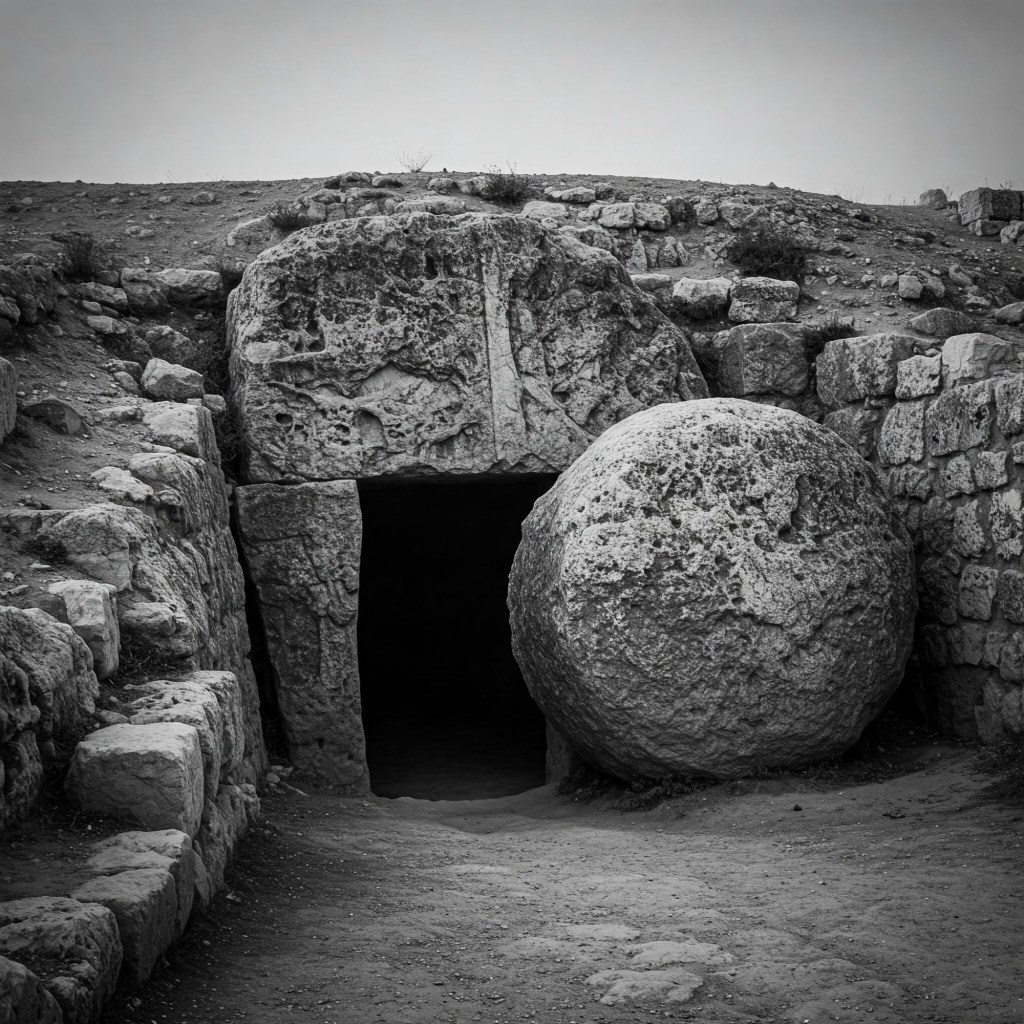
An AI generated image of the garden tomb in black-and-white set against grey sky. The entrance to the tomb is partially open, with a large stone across the right hand side of it. 

Here’s the passage in full : John 19:38–42 (ESV)

“After these things Joseph of Arimathea, who was a disciple of Jesus, but secretly for fear of the Jews, asked Pilate that he might take away the body of Jesus, and Pilate gave him permission. So he came and took away his body. Nicodemus also, who earlier had come to Jesus by night, came bringing a mixture of myrrh and aloes, about seventy-five pounds in weight. So they took the body of Jesus and bound it in linen cloths with the spices, as is the burial custom of the Jews. Now in the place where he was crucified there was a garden, and in the garden a new tomb in which no one had yet been laid. So because of the Jewish day of Preparation, since the tomb was close at hand, they laid Jesus there.”

Secret Disciples: Joseph and Nicodemus

Joseph of Arimathea, a wealthy member of the Sanhedrin, is described as a “secret disciple” of Jesus, concealing his faith due to fear of the Jews. His position in Jewish society made public allegiance to Jesus risky, potentially threatening his status and safety. Yet, in a bold act, Joseph approaches Pilate to request Jesus’ body, an action that could have exposed him to scrutiny. Similarly, Nicodemus, who previously visited Jesus at night (John 3:1–2), likely out of fear, joins Joseph in this act of devotion. He brings approximately seventy-five pounds of myrrh and aloes, an extravagant amount of spices, signaling his commitment. Their actions challenge modern Christians to examine their own faith. Many face pressure to hide their beliefs in hostile or secular environments. Rather than concealing faith, believers are called to proclaim it sensitively but unashamedly, as Jesus instructs in Matthew 5:16: “Let your light shine before others.” How can we move from secrecy to courageous witness in our daily lives?

Jewish Burial Customs in the Passage

In the first century, Jewish burial practices were rooted in respect for the deceased and adherence to purity laws. Deuteronomy 21:23 required prompt burial to avoid defilement, especially before the Sabbath. The body was typically washed, wrapped in linen cloths, and anointed with spices like myrrh and aloes to honor the deceased and mask the odour of decay. In John 19:38–42, Joseph and Nicodemus meticulously follow these customs. They wrap Jesus’ body in linen with the spices Nicodemus provides, a quantity far exceeding typical burials, reflecting deep reverence. Their care fulfills Isaiah 53:9, which prophesies the Messiah’s burial with the rich. This deliberate act underscores Jesus’ dignity, even in death.

The Garden Tomb: Location and Significance

John 19:41 describes the burial site as a new tomb in a garden, unused by anyone else. Joseph’s offering of his own tomb represents a personal sacrifice. Theologically, the tomb is a temporary resting place, foreshadowing the resurrection. Two possible locations in Jerusalem are associated with this site. The Garden Tomb, located north of the Damascus Gate, is favored by some Protestants for its serene, garden-like setting and rock-hewn tomb, fitting John’s description. Alternatively, the Church of the Holy Sepulchre, supported by early Christian tradition and archaeological evidence of first-century tombs, is widely accepted by Catholic and Orthodox traditions. If you would like my opinion, I favour the Garden Tomb location over the Holy Sepulchre .But I am no biblical archaeologist! 

Regardless of the exact site, the garden tomb invites believers to trust God’s redemptive plan, even in moments of apparent defeat.

The Disciples’ Limbo and Our Hope

For the disciples, Jesus’ death was a devastating blow. They believed Him to be the Messiah, yet witnessed His execution, leaving them in fear and confusion. Unaware of the resurrection to come, they faced a limbo of shattered hopes. Their vulnerability reflects the human struggle with uncertainty. In contrast, modern believers have the benefit of hindsight, knowing that Resurrection Sunday follows Good Friday. This perspective transforms despair into hope, as Paul writes in 1 Corinthians 15:20, describing Christ as “the firstfruits of those who have fallen asleep.” The disciples’ experience encourages Christians to hold fast to faith during trials, trusting that God’s plan unfolds according to his will. 

So what do we do? 

Joseph and Nicodemus, once secretive, acted with courage to honour Jesus in His burial. Their example challenges us to proclaim our faith boldly, even in difficult circumstances. We are called to trust in the resurrection hope, knowing that God’s victory overcomes life’s darkest moments.

The darkness of Friday has been and gone, and we find ourselves in the limbo of its aftermath. Fear not though, Sunday is coming…

The Cross and the Crown: Reflecting on John 19:17–24 This Good Friday

As Christians gather on this Good Friday, we pause to reflect on the sacrifice of Jesus Christ, the pivotal moment of our faith. John 19:17–24 captures the raw reality of the crucifixion, where Jesus is declared “King of the Jews” and His clothes are divided by soldiers. This passage reveals Jesus as the sovereign King of all, fulfilling ancient prophecies and completing His mission as the Savior of humanity. On this sacred day, we are called to marvel at His love and respond with heartfelt worship.

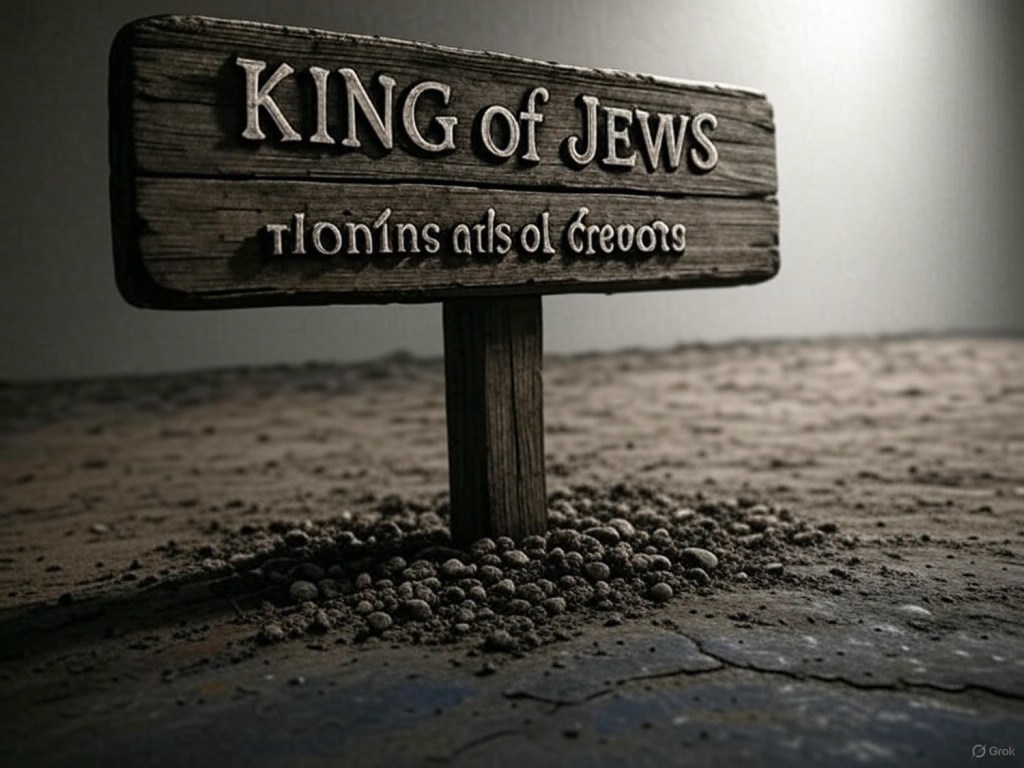
A wooden sign is planted in the ground, surrounded by small pebbles and dirt. The sign has the text “KING of JEWS” prominently displayed in large, bold letters. Below this, there is a line of text in a different script that reads ” πλοκίης αἰς οἱ ςρεοοης” which are random Greek letters for illustration . The background is a plain, slightly textured surface with a gradient of light and shadow.

Jesus: King of the Jews and King of All

John 19:17–19 recounts Jesus’ journey to the cross: “Carrying the cross by himself, he went to the place called Place of the Skull… There they nailed him to the cross… Pilate also had an inscription written and put on the cross. It read, ‘Jesus of Nazareth, the King of the Jews’” (NLT). The title “King of the Jews,” though meant as mockery by Pilate, proclaimed a profound truth. Despite opposition, Pilate refused to change the inscription (John 19:22), unwittingly affirming Jesus’ identity.

Jesus’ kingship transcends earthly boundaries. He is not only the King of the Jews but the “King of kings and Lord of lords” (Revelation 19:16, NLT). On the cross, His reign was established through sacrifice, challenging the powers of this world and offering hope to all who believe. Good Friday reminds us that Jesus’ kingship demands our allegiance. As Christians, we are called to live under His loving authority, trusting His sovereign plan even in the face of suffering.

The Soldiers and the Fulfillment of Prophecy

The scene at the cross continues in John 19:23–24: “When the soldiers had crucified Jesus, they divided his clothes among the four of them. They also took his robe, but it was seamless… So they said, ‘Rather than tearing it apart, let’s throw dice for it.’ This fulfilled the Scripture that says, ‘They divided my garments among themselves and threw dice for my clothing’” (NLT). This moment directly fulfills Psalm 22:18, written centuries earlier, proving Jesus as the promised Messiah.

This single fulfilled prophecy points to a greater truth: Jesus’ entire life and death align with God’s redemptive plan. From His birth in Bethlehem (Micah 5:2) to His suffering (Isaiah 53), Jesus fulfilled every Messianic prophecy, culminating in His sacrificial death. Good Friday marks the climax of His mission to save humanity, as He bore the weight of our sins on the cross. Even the soldiers’ callous actions, dividing His clothes, served God’s purpose, demonstrating His sovereignty over every detail. As we reflect on this, we stand in awe of Jesus’ obedience and God’s faithfulness.

Good Friday: The Weight and Wonder of the Cross

Good Friday is a day of somber reflection and profound gratitude.

Jesus’ death was the ultimate act of love, as He “gave his life to purchase freedom for everyone” (1 Timothy 2:6, NLT). John 19:17–24 anchors us in the reality of the cross—Jesus endured unimaginable pain to atone for our sins, fulfilling the Law and the prophets. His kingship, declared in the inscription, and His fulfillment of prophecy, seen in the soldiers’ actions, assure us of His victory over sin and death.

On this day, we are invited to pause and contemplate the cost of our salvation. The cross reveals both the depth of human sin and the boundless love of God. As we consider Jesus’ sacrifice, we find hope in His reign as King, knowing that His death was not the end but the beginning of eternal life for all who believe. Good Friday calls us to lift our eyes to the cross, where our Savior triumphed.

A Call to Worship

In response to Jesus’ kingship and sacrifice, our hearts turn to worship. Good Friday is a time to gather in worship services, pray, or meditate on Scripture, giving thanks for all Jesus has done. Reflect on His love, which led Him to the cross, and commit to living under His reign daily. Let this day inspire a life of worship, where every action honors Jesus as King and Savior. As Psalm 95:6 urges, “Come, let us worship and bow down. Let us kneel before the Lord our maker” (NLT).

Maundy Thursday and the Last Supper

On Maundy Thursday, we pause during Holy Week to reflect on the Last Supper, a sacred moment when Jesus shared a final meal with His disciples, instituted Holy Communion, and revealed Judas’ betrayal. This day, named from the Latin mandatum meaning “commandment,” centers on Jesus’ call to love one another (John 13:34). As we explore the events leading to this meal, the exposure of Judas’ intentions, and the origin of Communion, we deepen our understanding of Christ’s sacrifice and our calling as His followers. Grounded in Scripture, this reflection reminds us of the love and service at the heart of our faith.

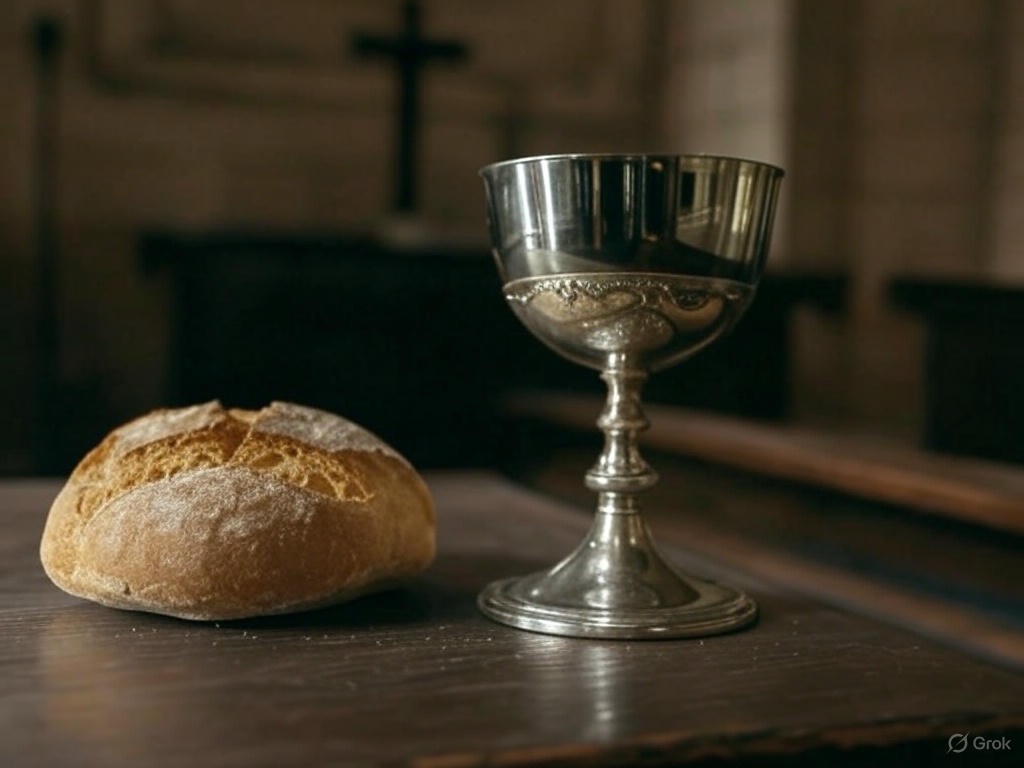
A close-up of a loaf of bread and a silver chalice depicting holy communion 

The Road to the Last Supper

Holy Week unfolds with events that prepare us for the Last Supper. On Palm Sunday, we recall Jesus’ triumphal entry into Jerusalem, greeted by crowds waving palm branches (Matthew 21:1-11). In the days following, He cleanses the temple (Matthew 21:12-13) and teaches parables, confronting religious leaders (Mark 11:27-12:44). These actions intensify opposition, as the chief priests and scribes plot to kill Him (Mark 14:1-2). Amid this tension, Jesus prepares for the Passover, the Jewish feast commemorating God’s deliverance of Israel from Egypt (Exodus 12:1-14).

Jesus instructs His disciples to arrange the meal in an upper room in Jerusalem (Luke 22:7-13). This setting, intimate and solemn, underscores the weight of the moment. Jesus knows His hour is near (John 13:1), and we should sense the gravity as He gathers with those He loves. The Passover meal becomes the backdrop for a new act of redemption, one that we commemorate to this day.

The Last Supper and Judas’ Betrayal

During the Last Supper, Jesus reveals a painful truth: one of His disciples will betray Him. John 13:21-30 captures this moment vividly:

“After he had said this, Jesus was troubled in spirit and testified, ‘Very truly I tell you, one of you is going to betray me.’ … When he had dipped the piece of bread, he gave it to Judas, the son of Simon Iscariot. As soon as Judas took the bread, Satan entered into him. So Jesus told him, ‘What you are about to do, do quickly.’ … As soon as Judas had taken the bread, he went out. And it was night.” (John 13:21, 26-27, 30, NIV)

Matthew’s account adds further clarity:

“And while they were eating, he said, ‘Truly I tell you, one of you will betray me.’ … Judas, the one who would betray him, said, ‘Surely you don’t mean me, Rabbi?’ Jesus answered, ‘You have said so.’” (Matthew 26:21, 25, NIV)

Jesus’ identification of Judas fulfills Old Testament prophecy, such as Psalm 41:9, which speaks of a trusted friend lifting his heel against another. By sharing bread with Judas, a gesture of fellowship, Jesus underscores the depth of the betrayal.

Judas does not leave of his own accord, but is called out in front of them all. It shows that the timing of these events were God ordained, and not planned by sinful humanity. Jesus was in full control. 

The Institution of Holy Communion

At the same meal, Jesus establishes Holy Communion, transforming the Passover elements into symbols of His sacrifice. Luke 22:19-20 records His words:

“And he took bread, gave thanks and broke it, and gave it to them, saying, ‘This is my body given for you; do this in remembrance of me.’ In the same way, after the supper he took the cup, saying, ‘This cup is the new covenant in my blood, which is poured out for you.’” (Luke 22:19-20, NIV)

Paul later affirms this practice, writing in 1 Corinthians 11:23-25:

“For I received from the Lord what I also passed on to you: The Lord Jesus, on the night he was betrayed, took bread, and when he had given thanks, he broke it and said, ‘This is my body, which is for you; do this in remembrance of me.’ In the same way, after supper he took the cup, saying, ‘This cup is the new covenant in my blood; do this, whenever you drink it, in remembrance of me.’”

Here, Jesus reinterprets the bread and wine. The bread represents His body, broken for our salvation; the wine signifies His blood, sealing the new covenant promised in Jeremiah 31:31-34. This act institutes Communion as a sacred rite, one we should observe to remember Christ’s sacrifice, experience His presence, and unite as His body. From the early church (Acts 2:42) to today, Communion remains central to our worship, a tangible reminder of God’s grace.

Moreover, the Last Supper foreshadows the cross. The bread and wine point to Good Friday, when Jesus’ body is broken and His blood is shed. As we participate in Communion, we proclaim His death until He returns (1 Corinthians 11:26). Maundy Thursday thus bridges the joy of Palm Sunday and the sorrow of Good Friday, preparing us for the glory of Easter.

A Time for Reflection

As we observe Maundy Thursday, we are called to reflect on Christ’s love, the cost of our redemption, and the pain of betrayal. The Last Supper invites us to the table, where we encounter Jesus’ sacrifice and receive His grace through Communion. We ought to examine our hearts, asking how we can love and serve as He did. Whether through attending a Maundy Thursday service or quietly meditating on these Scriptures, let us draw near to Jesus, who gave everything for us.

This day reminds us that even in the face of betrayal, Jesus chose love. May we, too, choose love, honoring Him in our worship and our lives.


My witnesses (audio)

Several weeks ago, my church held its annual meeting – APCM. I was hoping to speak at the service beforehand, but unfortunately was unwell. In preparation for the service, I was able to record the version of my sermon which I share below.

I hope you enjoy and are blessed by this.

This Sunday at Church: Being Grateful for the Resurrection of Christ

In light of today being Resurrection Sunday (Easter) its appropriate to say: Be grateful for the Resurrection of Jesus Christ. With each passing year…

This Sunday at Church: Being Grateful for the Resurrection of Christ

Just as He said He would – Andy Brown

On this Resurrection Sunday, I share the message I gave at last year’s sunrise service at our church.

He is risen! Just as he said he would! Praise the living God! 

Happy Easter! It was my privilege to share for a few minutes this morning at our early morning sunrise service on this Resurrection Sunday. I share below a recording of the message which I hope you enjoy. May you be eternally blessed this Easter weekend! A message from Andy on Easter Sunday morningA message from…
— Read on andy-brown.org/2022/04/17/just-as-he-said-he-would/

Good Friday

What does Good Friday mean to you? For the Christian, it means everything.

Good Friday is the day where we remember the cross, and the death that Jesus Christ died on our behalf. It is hard to grasp what that truly means. The perfect, sinless, Son of God gave up His life for us – imperfect, sinful, unholy creatures who called for His crucifixion in the crowd.

You might not think of yourself as a “sinner” but you need not be a murderer to qualify. Ever lied? Ever hurt someone’s feelings? Ever not done something you knew you should have? Then, like me, you are in the club…

Sin leads to death and separation from God. While that may not bother you now, one day you will leave this Earth and have to face God. In that moment, you will experience an eternity paying for those sins.

But praise God! He has made a way out by sending His Son – Jesus Christ – who lived and died for us.

If you want to be sure of your eternal future, then place your faith in Christ. Trust Him with your entire life.

I now share a few thoughts from a good friend – Andy Berry of the Berry Bunch, and pray that if you need to, you will respond today – on this Good Friday. And may I take this opportunity to wish you a very blessed Resurrection season!

https://www.berrybunch.org/Articles/660950/S05E068_Where_will.aspx

Of All the Mornings Revisited

Beautiful words penned by Bruce Cooper shared for you below on this Easter day. He is risen! Praise the Lord!

Of all the mornings that have ever occured, this Easter morning, when Jesus the Christ, the Son of God, rose from the dead, is the morning above all …

Of All the Mornings Revisited

Just as He said He would

Happy Easter!

It was my privilege to share for a few minutes this morning at our early morning sunrise service on this Resurrection Sunday.

I share below a recording of the message which I hope you enjoy.

May you be eternally blessed this Easter weekend!

A message from Andy on Easter Sunday morningA message from Andy on Easter Sunday morning