Mother’s Day

As one whom his mother comforts,
so I will comfort you.
You will be comforted in Jerusalem.”

Isaiah 66:13 (WEB)

Here in the UK, today is Mother’s Day or sometimes called Mothering Sunday.

It might be a rather unusual one this year due to the continuing impact of the Corona Virus. We might usually go and visit our mothers, or have them round for Sunday lunch, but we have all been advised not to gather in small or large numbers right now. It is a real shame but of course an understandable necessity.

I am not sure if the current situation will help or hinder this Mother’s Day. How can it “help” you might ask? All I am thinking is that as we mostly not able to visit our mothers today, will we make a special effort to call or video chat with them. Facing these tough times may make us realise the important things in life, and surely family is high up that list.

The verse above from Isaiah compares God to a comforting mother. Most of Scripture pictures God as Father, but there are verses which suggest the tenderness only a mother can bring. For instance, we discuss Psalm 91 yesterday where God was compared to a mother hen drawing her chicks under the protection of her wings.

I don’t know what kind of relationship you have or had with your mother. Perhaps it was wonderful, or perhaps not. Either way, she played a part in your life to a greater or lesser degree. Take time today to thank God, and if possible, her as well.

Also, take some time to reflect on your “spiritual” mothers and grandmothers. When I think back over my life in the church, I remember certain women of God who made a special impression on me. Their care, wisdom, grace and love have taught me much over the years. Perhaps there are those in your own life who fit this bill. It would not be inappropriate to let them know what they mean to you today.

To all of the mothers, grandmothers, female carers, whether natural, spiritual, adoptive or otherwise – may I wish you a very happy Mother’s Day! I pray God will bless you and you will be shown how much you mean to those around you this day.

What about the animals?

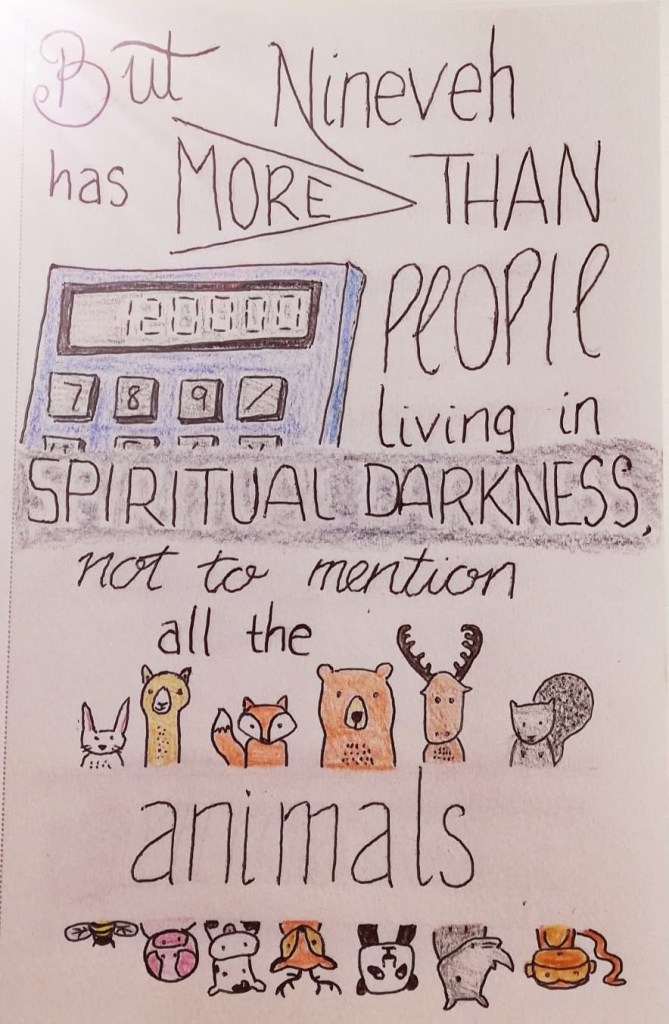
Jonah 4:11 (NLT) But Nineveh has more than 120,000 people living in spiritual darkness, not to mention all the animals. Shouldn’t I feel sorry for such a great city?”

As I write this, I’m overlooking a sort of forest woodland. In the last few minutes I have seen an abundance of nature! I’ve seen ducks, squirrels, deer, rabbits and even what I think was a stoat.

Due to the Coronavirus, the woodland has largely been abandoned at the moment. I suspect that the sudden drop in guests will quite badly affect the wildlife here. Over time I am sure they have become somewhat dependent on the food given to them by visitors. This area will be closed to the public for several weeks leaving the animals to fend for themselves for a while.

While the sudden drop in available food will be a bit of a shock to them, I am not overly worried about them. God cares for people, but He cares for His creation also.

There have been a number of posts on social media about panic buying and stockpiling. As a result, many food banks and charities have seen a dip in food donations. This is not limited to charities offering support for people either, and a number of animal rescue shelters are struggling too. The Coronavirus is affecting the whole world in myriad ways.

The verse above is quoted from the book of Jonah in the Old Testament. In fact, it is the closing verse of that book. Most people recall that Jonah was once swallowed by a big fish, but in case you don’t know the rest of the story, here is a brief summary.

God called Jonah to preach to the non-Jewish (Gentile) city of Nineveh. Instead, Jonah heads in the complete opposite direction and boards a ship to Tarshish. A great storm swamps the ship, and in the end Jonah confesses to the crew that he is the cause of their struggle. Ultimately they have to throw him overboard to still the storm.

It is at this point – more or less – that Jonah is swallowed by the fish. The fish later spews up the reluctant prophet on to the shoreline, and Jonah finally goes to Ninevah as he was instructed.

Jonah did not want to go to Ninevah and preach because he was afraid the people would listen to him… He knew that if they heard his message, they would repent and turn back to God – and God would forgive them. Imagine that?

After he gives his message, he goes and sits outside the city to see what would happen. The sun is burning hot, and he grows weary. God causes a vine to grow up beside him and offer him some shelter. Later however, a worm comes along and eats the root of the vine so it withers and Jonah loses his shade.

It’s something of an odd story right? Indeed it is, but it is really about who is in charge. God is running the show throughout, and He gives Jonah the vine and quickly takes it away to demonstrate to Jonah that he has no control in the situation. God wants Jonah to realise that He cares for the people of Ninevah.

The book of Jonah closes with the verse above. God tells Jonah He is right to care for the 120,000 people living there. We don’t know what happened to Jonah after this, but let’s hope he learned a lesson!

Perhaps 15 years ago, I had a dog who was very poorly. They had a particularly bad night, and we had to contact an emergency vet. The next day I happened to be reading this closing chapter of Jonah. I’ll always remember that because I recall very vividly this final verse. As well as the 120,000 people, God specifically mentions the animals also.

The word animals here is sometimes translated as cattle, so perhaps refers to farm animals or bovine species. Whatever it refers to though, it is clear that God cares for the animals also.

Animals are a part of God’s creation. While they are not as important as people, they are important. We have a responsibility to take care of them, and must certainly not mistreat them.

Spare a thought this week for all those affected by the Coronavirus. We must prioritise helping people with various needs at this time. We, the church, may not be able to gather together in large numbers, but we can and must continue to be Jesus’ hands and feet on the Earth. Call an isolated family member. Check on an elderly neighbour. Let’s do what we can to share God’s love in this difficult time.

As well as those things, and if you’re not overstretched, do consider whether there are ways to take care of God’s creation also. You might consider grabbing a can of dog food to pass on to a struggling pet owner. Perhaps you could walk a friend’s dog. Maybe, like me, there is a nearby animal shelter who could do with a helping hand at this difficult time.

Like many, I’m deeply disappointed to read stories of fighting in supermarkets and immoral seller hiking up prices. There are plenty of positives stories also, and we – the church – should be leading the way in that.

How can you be a blessing to those around you at this time? And remember, God cares about the animals also.

The Sinfulness of my Sin

I acknowledged my sin to thee, and my iniquity have I not hid. I said, I will confess my transgressions to the LORD; and thou forgavest the iniquity of my sin. Selah.

Psalm 32:5 (WEB)

The sinfulness of my sin… captivating title right? And I know what you are thinking – two blog posts in two days? What’s gotten into Andy?!

I’m pleased to report that all is well, and I’m not self-isolating with nothing to do. In fact, I am very conscious of how everyone is feeling right now, and hoping that a few extra blog posts will be well received.

A few weeks ago I spoke on Psalm 32. You can listen to that message here. It is a wonderful Psalm and I only had a short time to discuss it. This post covers one of the things I did not have time to explore.

The totality of the Psalm is about sin and repentance. It points out the depth of our wrongdoing, the wonder outs grace of God and our responsibility to confess and acknowledge our sin.

There is an interesting little phrase in verse 5 which says God forgives the “iniquity of our sin.” We might say the “sinfulness of our sin.”

Some translations of the Bible render this as the “guilt of our sin,” but this doesn’t quite cover it in my view.

If God forgives our sin, then what does it mean for Him to forgive the iniquity of our sin?

It is like saying the “saltiness of salt,” or the “chocolatey-ness of chocolate…” What is the psalmist getting at here?

Often when we say “Sorry,” we are not really sorry for what we did, but rather are sorry we got caught. When we see hardened criminals breaking down in tears in the dock of the courtroom, it is often about the loss of their freedom, money or reputation. Being sorry for the consequences of sin is of course very natural, and a great reason not to do it in the first place. But are we sorry for the sin itself? If we never got caught, are we truly repentant for the thing we did?

The sinfulness of our sin is the badness of our sin. It is to recognise that sin is wrong, not because it has terrible consequences, but because it is wrong in the sight of God.

When we are truly repentant, we are sorry to God for falling short of His perfection. We are saying that the thing we did – the things we all do – are very wrong irrespective of consequence and punishment.

God forgives us not just from the punishment of sin through Jesus’ death at the cross, but for sin’s sinfulness also. God forgives us for the wickedness of our sin, and all of its consequences. That is not to say that we are free from any consequence on Earth of course, just rob a bank to see what I mean. God can forgive a robber, but they’ll still go to jail for it.

The point is that we need to recognise that our sin is wrong. It is wrong in and of itself. The consequences are indeed terrible, if facing them without Christ, but the sinfulness alone is wicked before God.

As you reflect on and confess your own sins, ask yourself if you are sorry for what they are, or for their consequence.

Spend some time this week to reflect on where you have fallen short, and on the One who forgives all of your sins and covers all of your iniquity. Come to Jesus at the cross and surrender your whole life to Him. It will be the best decision you ever made!

Read the Bible… literally? (Psalm 91 part 1)

He who dwells in the secret place of the Most High
will rest in the shadow of the Almighty.
2 I will say of Yahweh, “He is my refuge and my fortress;
my God, in whom I trust.”
3 For he will deliver you from the snare of the fowler,
and from the deadly pestilence.
4 He will cover you with his feathers.
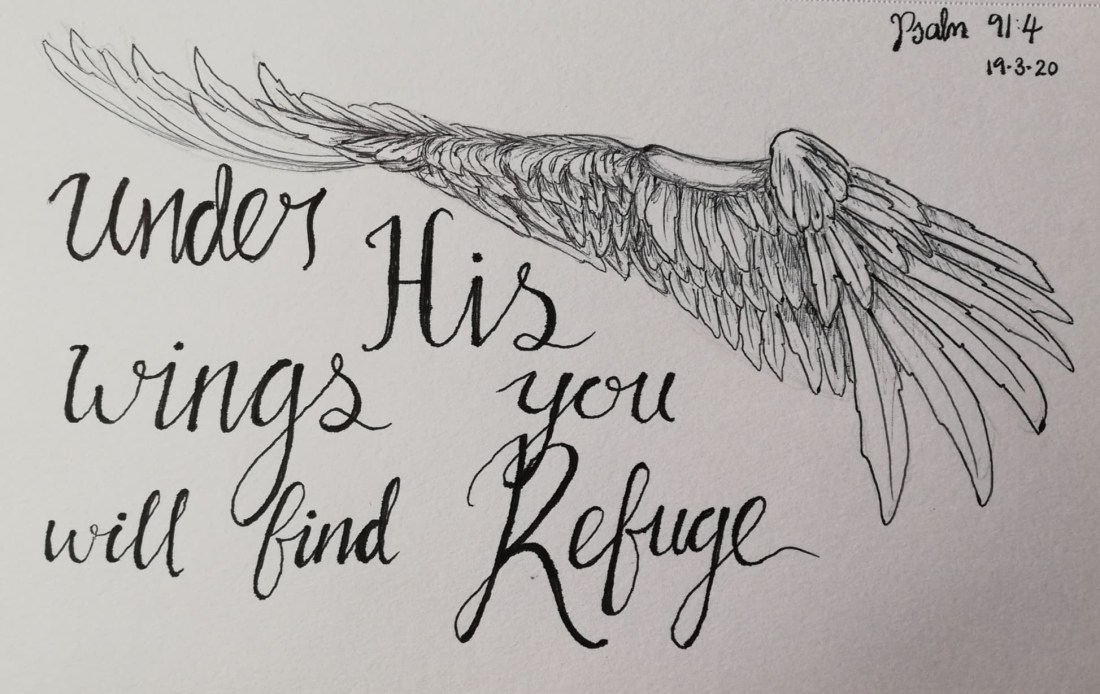
Under his wings you will take refuge.
His faithfulness is your shield and rampart.
5 You shall not be afraid of the terror by night,
nor of the arrow that flies by day,
6 nor of the pestilence that walks in darkness,
nor of the destruction that wastes at noonday.
7 A thousand may fall at your side,
and ten thousand at your right hand;
but it will not come near you.
8 You will only look with your eyes,
and see the recompense of the wicked.
9 Because you have made Yahweh your refuge,
and the Most High your dwelling place,
10 no evil shall happen to you,
neither shall any plague come near your dwelling.
11 For he will put his angels in charge of you,
to guard you in all your ways.
12 They will bear you up in their hands,
so that you won’t dash your foot against a stone.
13 You will tread on the lion and cobra.
You will trample the young lion and the serpent underfoot.
14 “Because he has set his love on me, therefore I will deliver him.
I will set him on high, because he has known my name.
15 He will call on me, and I will answer him.
I will be with him in trouble.
I will deliver him, and honor him.
16 I will satisfy him with long life,
and show him my salvation.”

Psalm 91 (WEB)

A cursory read of this Psalm and you might think all of your problems are over. The psalmist sings of God’s refuge, deliverance from deadly pestilence and being shielded in times of terror and violence. 

In the recent days where world governments have taken drastic measures to ward off the Corona-virus, I’ve seen many Christians quoting and meditating on the verses of this Psalm. But does this passage really suggest God will protect us from all illness, violence and trouble? If so, then why do we all face such troubled times in our lives? Let’s explore that in part two (to follow in the coming days).

For now, let’s think about taking the Bible literally. I recently heard a non-Christian source describing the “Pentacostals.” They were fairly general in their terms and what they said might have applied to any number of Christian denominations, whether they would consider themselves Pentacostal or not. One thin they said was that Pentacostals take the Bible literally – word-for-word. My ears pricked up at this. 

Is the Bible meant to be taken literally? It is not a Yes or No question i’m afraid. 

I hold Scripture in very high esteem. I believe that the Bible is inspired by God, and every Word can be trusted and relied upon. I base my entire life and eternity on the hope of the Bible. I know God and His Son Jesus Christ as revealed in the pages of Scripture. It is exactly as God intended it, and it without fault or mistake. 

Every Scripture is God-breathed and profitable for teaching, for reproof, for correction, and for instruction in righteousness,

2 Timothy 3:16 (WEB)

Does that mean I take the Bible literally? Sometimes yes, and sometimes no. 

The Bible is not a simple book. It is made up of all kinds of different writing styles. Some of the Bible is poetic, some of it is historic, some is prophetic, and some of it is made up of letters written from Christians to churches or other ministers. 

Where the Bible is giving instruction, it is certainly meant to be taken literally. 

Passages containing poetry or allegory are more than likely not meant to be taken literally. 

Psalm 91 is one of those poetic passages, and we know that some parts at least, are not intended to be read literally. How can I say this for sure? Just read verse 4 with me:

He will cover you with his feathers.
Under his wings you will take refuge.
His faithfulness is your shield and rampart.

Psalm 91:4 (WEB)

Does God have wings? How about feathers? I’ve studied the Bible for years, and read many books about it, and i’ve yet to hear anyone claim that God is a winged or feathered Being. This is a picture. It suggests a mother hen covering her vulnerable chicks under the protection of her wings. That’s the message the Psalmist is trying to create here. He is not trying to communicate that God literally has wings. 

It is therefore important when reading the Bible to try to discern whether a passage is meant to be read literally. Sometimes it is clear and sometimes not. Genesis 1 is a classic example of this. There are those who say it is a literal account of the creation, while others that it is just a poetic picture of how God did it. Whether you agree Genesis 1 is a scientific text or not, you catch my meaning (I hope!)

So, can we take the promises of Psalm 91 at face value? I hope that I have shown above that some parts of this psalm at least, are not intended to be taken literally. But can we claim the promises for our own? I will discuss this next time. Look out for part two!

Did you know you can subscribe to this blog? You can do so via WordPress or by entering your email address. Then you will be automatically notified of part two when it arrives! 

Psalm 32

Andy recently spoke at a Holy Communion service at St. John’s Church, Great Clacton. He spoke on Psalm 32, one of thhe Penitential Psalms, and you can see the text of the passage and listen to the sermon audio below.


By David. A contemplative psalm.

Blessed is he whose disobedience is forgiven,
whose sin is covered.
2
Blessed is the man to whom Yahweh doesn’t impute iniquity,
in whose spirit there is no deceit.
3
When I kept silence, my bones wasted away through my groaning all day long.
4
For day and night your hand was heavy on me.
My strength was sapped in the heat of summer. Selah.
5
I acknowledged my sin to you.
I didn’t hide my iniquity.
I said, I will confess my transgressions to Yahweh,
and you forgave the iniquity of my sin. Selah.
6
For this, let everyone who is godly pray to you in a time when you may be found.
Surely when the great waters overflow, they shall not reach to him.
7
You are my hiding place.
You will preserve me from trouble.
You will surround me with songs of deliverance. Selah.
8
I will instruct you and teach you in the way which you shall go.
I will counsel you with my eye on you.
9
Don’t be like the horse, or like the mule, which have no understanding,
who are controlled by bit and bridle, or else they will not come near to you.
10
Many sorrows come to the wicked,
but loving kindness shall surround him who trusts in Yahweh.
11
Be glad in Yahweh, and rejoice, you righteous!
Shout for joy, all you who are upright in heart!

Psalm 32 (WEB)


Lent is Coming

It’s only about a month until Ash Wednesday and the beginning of Lent.

I know that Christians mark Lent in many ways. Some observe fasting, while others start a spiritual habit.  I knw many who like to read a new book or follow Lent study throughout the period. And here comes the shameless plug…

If you are looking for something to read and study over Lent, then please consider getting a copy of my 40-day devotional – A Journey with Jesus.

It is available from your local Amazon store, both in paperback and Kindle.

It’s also available in large print for those who prefer.

I hope you enjoy it, but more importantly, I hope you grow closer to God as a result.

Quick to Listen (audio)

Understand this, my dear brothers and sisters: You must all be quick to listen, slow to speak, and slow to get angry.

James 1:19 (NLT)

A short audio message from Andy about this particular verse considering respectful debate, the General Election and social media.

Never more have we needed this lesson from James!

https://andy-brown.org/wp-content/uploads/2019/12/quick-to-listen-1.m4a


Chosen To Be Holy

Ephesians #3

“even as he chose us in him before the foundation of the world, that we should be holy and blameless before him. In love he predestined us for adoption to himself as sons through Jesus Christ, according to the purpose of his will,”

Ephesians 1:4-5 (ESV)

A while ago I was forced to reassess something extremely important in the Christian faith. I had to face the challenge of the sovereignty of God. And these verses played no small part in that journey.

I once believed that although God was supreme, He did not control every single little action in the universe. I believed that our response to Him was somehow our choice – an act of our free will. The more I think about that, the more ludicrous it sounds.

The Bible teaches that God chose us, and not the other way around. As hard as that may be to get our heads around sometimes, it must be true. The alternative goes something like this, and I hope you agree it makes little sense. When I was a sinner, and had nothing to do with God whatsoever; while I was far off and living (and enjoying) my sin and sinfulness, somehow… some way… I decided to turn from that sin and come to God…

That cannot be correct.

Instead, while I was in that sin and quite happy there, God reached down and saved me from and in spite of myself. He essentially saved me against my will because no sinner willingly wants God in their lives. I had no will to escape the sin that I was in. Nor did I have the power to do so. The truth is that God chose me and He chose you as well.

These verses clearly tell us that God chose us and He did so before the foundation of the world. He chose us before creation. He chose us before we did or thought or said anything. That means that his choice had absolutely nothing to do with us. He chose us because it was His sovereign will to do so.

When we hear this truth, we often ask the question: “If He chose us, then why not choose someone else?” That is to say, if the choice is His, what about the ones who reject Him? This is a difficult question, and when we realise that God chooses some and not others, we feel it is somehow unfair. I’ve said it before, but fairness is not what we want from God, rather we want grace and mercy.

It is a miracle He chose any of us at all.

Why did He choose us? To be holy and blameless before Him.

I’ve always believed that God saved us for our own sake, and of course He does, but i’m no longer convinced it is His primary reason for doing so. Rather, I am starting to think God saved us not for us, but primarily so that He would have a spotless bride to present to His Son.

God predestined us for adoption, as the verses above say, and put simply, that means that God decided in advance to bring us into His family forever. Adoption is such a wonderful picture because legal adoptions cannot be undone, and also entitle the adoptee to everything that a natural child would have access to. Adopted children are as equal as natural ones, and the word “sons” here is important because the son (in that culture) had a greater claim than a daughter.

The point is that this adoption does not make us somehow second-class children. We are not somehow lesser children to God because we are adopted, rather instead the text makes clear that we are welcomed and celebrated in God’s family.

God specially selected you to be His very own, and He has brought you into His adopted family. I hope, like me, that makes you feel very special indeed. Even if the entire world rejects you, you can be assured that God will never reject or forsake you (Hebrews 13:5).

Rejoice in God’s love for you today, and know that this love will never change. You are His adopted child!

Blessed 2x

Ephesians

Many months ago I began writing about the book of Ephiasians. You can find that post here – From an Apostle to the Saints.

For various reasons, I did not write more on the subject but I am very pleased to return to it today. I did promise you it might not be a series… and I make no further claims now!

“Blessed be the God and Father of our Lord Jesus Christ, who has blessed us with every spiritual blessing in the heavenly places in Christ”

Ephesians 1:3 (WEB)

After Paul’s introduction, he wastes no time and dives straight in! Blessed! Blessed be God! You can feel the power of his words leaping from the page as you read this. Before he says anything else on any other subject, he starts with praise.

It’s a great place to start a letter, and it’s a great place to start a prayer. In fact, it’s a great way to start anything really! Whatever you’re doing, be it work, washing up or watching TV, always start with a word of praise.

Praising God has many effects on us, which we can consider in a moment, but praise isn’t about us at all. It is about God Himself. We turn our attention off of ourselves and our own lives, and we focus as fully as possible on the One who made us. Worship is our reason for being, and on days when I feel I achieve little else, I want to be able to say I fulfilled my created purpose by praising the God of Heaven today.

Imagine the effect on us, if we uttered words of worship prior to any activity. Take the TV example above. How different might our TV viewing choices be if we were to spend a moment thanking and worshipping the Father before picking up the remote.

Paul identifies God as the Father of our Lord Jesus Christ, and we rejoice in that. There’s also a nod towards the Trinity here, so see if you can spot the Holy Spirit’s presence also. If not, I’ll pick up on that in a moment.

The word “Blessed,” appears twice in this verse, although they are slightly different Greek words. The way we read it naturally in English is how it was intended. The first “blessed,” is referring to God being blessed, or praised, and the second, refers to the blessing of God or invocation of God’s blessings on people.

What Paul says next is astonishing to me. He says, “who has blessed you with every spiritual blessing in heavenly places in Christ Jesus.” Read that again before you continue.

God has blessed us, which is wonderful. To simply say we’ve been blessed though, is something of an understatement!

God has “blessed us,” and we must first notice the tense. This is not a blessing we will get in the future, but something we hold right now.

What have we been blessed with exactly? “Every spiritual blessing,” That word translated as “every,” is the Greek word – pas – and means “every,” “any,” and “all.” That’s every spiritual blessing! Not some of them, not half, not most, but all of them!

You might not be feeling all that blessed at the moment, in fact, you might be looking at a stack of bills or a doctor’s report feeling anything but blessed. This verse shouldn’t be interpreted as “God is going to give me whatever I want…” as I don’t think that’s true. We do the Word and God Himself a great disservice however, when we diminish a verse like this and explain it away not accepting what it says.

You are more than just your body, and your life is more than just your bank balance. We must not limit the blessings of God to the physical realm. The spiritual world is far more real than this physical one, and came first. There was “spirit” long before there was any earthly matter.

Paul calls it “spiritual blessing,” and some therefore limit this to refer to things of the spirit such as sanctification, justification, salvation etc. And of course, all these are included. But the blessings here are “spiritual”, I believe, not because they are spiritual in nature, but because they are given by the Spirit of God. Christmas gifts are given at Christmas, that’s what makes them Christmas gifts, not because the gift itself has anything to do with Christmas (although it certainly might do).

Thus in this one verse Paul has pointed us to God the Father God the Son and God the Holy Spirit.

My point is that this blessing given by God is no small thing. It’s not limited to things of the spirit, although we would do well to focus on the eternal things more than the temporary.

So where is this blessing exactly? We find it in heavenly places in Christ Jesus. You might be thinking you’d rather have the blessing down here on Earth than locked away in heaven with Christ. Yet if the blessing is in Christ and Christ dwells in us then the blessing is not as far away as we might think.

We are too often guilty of thinking that blessing relates to money possessions or things this world holds so dear. Paul goes on to talk about many wonderful spiritual blessings in the next few verses and we will examine these another time.

The take home message today is really to think about what we mean by being blessed. If we ask God to bless us are we asking for something God has already done?

What we have as believers and adopted children of God is far greater than anything this world can offer. Our eternal hope is held securely in Christ and God can do no more than He already has to enable us to access heaven forever.

It is truly humbling to think about what God has done for us.

But God commends his own love toward us, in that while we were yet sinners, Christ died for us.

Romans 5:8 (WEB)

We in no way deserve “every spiritual blessing” but it is ours because of what Jesus did at the cross. That is grace. And I join with Paul in saying “Blessed be the God and Father of our Lord Jesus Christ!” Amen!

TV Reality

Do you ever watch reality TV? It is really anything but reality, and if not entirely scripted, then it’s heavily edited to give a very narrow view of what actually happened.

Instead of reality TV though, today I want to discuss “TV Reality”.

I started thinking about this the other day at a party. A dad was playing with his children, and it was great to see them all having such fun. To be truthful though, I felt a little guilty and questioned my own meager attempts at parenting . They seemed to be having such a good time, and I couldn’t imagine them ever having a falling out or a cross word.

They didn’t seem to have a care in the world, and appeared the perfect family.

That’s not reality though.

It is so easy to look at others and not see the problems that they face. It is all too easy to think we are the only ones having problems, or the only one going through a difficult time.

We glimpse the “perfect” life of another, and think it’s their day-to-day reality. It’s no more real than reality TV – in fact, it’s TV reality. TV Reality (my own idea) is where we see the portrayed reality put out into the world and believe it, whereas behind the scenes real life is going on and isn’t as good as it seems.

Social media makes this all the more problematic. No one ever puts their real life on Facebook, but only selected highlights. if you are scrolling through your Twitter feed thinking, “They’re all having such a great time, and I’m struggling!” Then you are not seeing the truth.

It is important to remember this, because when things get tough, it can be all too easy to believe the grass is greener on the other side. How many marriages broke down when things got tough, because one or both partners believed life would be better on the other side?

The Bible tells us to consider ourselves with sober judgement.

“For by the grace given to me I say to everyone among you not to think of himself more highly than he ought to think, but to think with sober judgment, each according to the measure of faith that God has assigned.”

Romans 12:3 (EVS)

To consider yourself with sober judgement means to be honest. It means we ought not to look on others, and believe all things are rosy for them, when it’s hard for us. Sober judgement means not being harder on ourselves than we should, or excusing our mistakes either. We beat ourselves up over our sin at times, and then at others gloss over it!

The big problem is comparison. We compare ourselves to each other (often on social media feeds) and no good can come of it. I’m not saying we can’t learn from each other, far from it. But comparing ourselves with each other only leads to disappointment.

The only true measure of our lives is against the Word of God. In His Word, God sets out the way He wants us to live. He tells us what to do and what not to do. More importantly, it points us to the only One whose opinion really matters – God Himself.

If we compare against another person, we either judge ourselves better or worse than them. Neither is a good place to be.

Don’t look to others’ TV realities and focus on everything that’s wrong in your life. Don’t waste your time and energy keeping up with the Jones’ or being jealous of others social media lives.

Look to God’s Word for reality, and when you do, you’ll realise you come up rather short. Don’t despair though, God knows we cannot meet His standards and that’s why He sent Jesus to meet them for us. Instead of pouring your precious energy into living up to false realities, pour it into your relationship with Jesus. It’s a whole lot more satisfying!

R. E. A. P.

I often read the Bible on the train, and so it is handy to have a number of tools to help study. A few days ago I encountered this little study technique and thought I would share it with you today.

It is called R. E. A. P. And stands for read, examine, apply and pray.

R is for Read – the first part of the technique is to read. You take a passage and read it. Simple right? Pay attention to the things that stand out to you . Always think about the context as this can affect the meaning. Ask yourself if the passage is poetic, historical, prophetic or another type of literature. Watch out for who is speaking, and to whom.

E is for Evaluate – Having read the passage thoroughly, we then move on to evaluate it. Here we go a little deeper and try to listen to the Holy Spirit and what He is saying to us through this part of the Bible. We consider the main themes of the passage and what it would have meant to those who first received it. Before we can apply it to our own lives, we need to understand how it would have applied to those originally hearing or reading it.

A is for Apply – At this stage, we start to think about how this passage applies to us. The Bible is timeless, but sometimes we need to think about the way that what we have read applies to our modern day lives. Does the passage require us to do anything? Is God asking us to give something up, or to start doing something positive? Do we learn something about God here, and if so, how does that affect the decisions we make today?

P is for Pray – Lastly, having read and applied the passage, we take it back to God. We pray about the passage at hand, and ask God to help us apply it and live for Him more. It may result in us praising God, and thanking Him for a particular blessing or worshipping an aspect of His character.  We may realise we need to pray for someone we know, or for ourselves, and it is great to be led by the Spirit in that respect.


So there you have it! It is not a perfect tool, nor should it replace dedicated study, but in certain situations, you may find it a helpful way of looking at a Bible passage.

Whatever you do, I pray that your Bible study time is fruitful this week.

Hears and Delivers

The righteous cry, and Yahweh hears, and delivers them out of all their troubles.

Psalm 34:17 (WEB)


If you are like me, when you read this verse you ask yourself “Am I righteous?” Or rather, “Am I righteous enough?” You may even start to question whether God hears your prayers, thinking you don’t qualify for the help He promises in this verse.

Righteousness however, is not about our performance nor is it something we earn.

Righteousness simply means to be in “right standing with God.” That is, to be in a good place with Him or to have a good relationship with Him. This is not something we can earn, but something we are gifted through the work of Jesus at the cross.

2 Corinthians 5:21 says:

For him who knew no sin he made to be sin on our behalf; so that in him we might become the righteousness of God.

2 Corinthians 5:21 (WEB)

We are righteous not because of anything we have or haven’t done, but because we’ve put our faith in Jesus. He exchanged His own righteousness for our sin, and now we can approach God in freedom through His blood.

So, in short, you do qualify!

If you are a follower of Christ and in relationship with Him, then you are righteous and can be assured that God does indeed hear you when you cry out. This isn’t the only verse to make such a claim, and so you can be sure that your prayers are heard.

This verse also says God delivers us from our troubles. This is a great promise, and I have no wish to limit it. I think we do need to carefully interpret it however.

If you turn on Christian TV, you might find a preacher claiming that Christians should never have another problem or that God will wave His hand over your life and all your troubles will disappear. The really unscrupulous ones may even suggest you exchange your money for such a result.

To put it plainly, that’s not biblical!

So am I saying this verse is a lie then? Not at all!

God does indeed deliver us from trouble. But that does not necessarily mean He takes it all away. Often, God will give us the strength we need to endure through a problem. We may pray that God will take it away, but He would rather we pray for the strength to endure it with a good attitude.

I am not aware of any New Testament prayer that asks God to remove all obstacles out of our way. Rather, saints like Paul prayed for inner strength, power, knowledge, peace, and more, and all to the glory of God.

Don’t misunderstand though, I am not saying God is limited or unwilling, and cannot help. The Creator of the universe is still in control, and very much looks out for the good of His children. We forget sometimes though that god’s primary concern is not our comfort, but His glory.

Whatever you are facing right now, you can trust that God not only hears your prayers, but is ready and willing to deliver you. If you’re stuck in the valley, you might want a helicopter ride out, but be prepared to push on one step at a time. God is with you!