Starving for God’s Truth (Amos 8:11) 

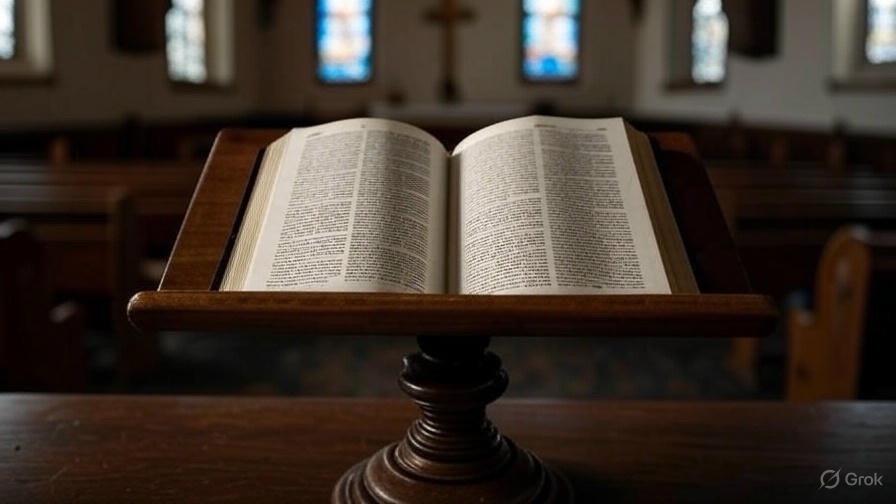
A blank Bible on a lectern indicating a famine of God‘s word 

In Amos 8:11, the prophet delivers a stark warning from God: “‘The days are coming,’ declares the Sovereign Lord, ‘when I will send a famine through the land—not a famine of food or a thirst for water, but a famine of hearing the words of the Lord.’” This Old Testament passage describes a divine judgement where God withholds His word as punishment for persistent disobedience. In our modern day, surrounded by unprecedented access to Scripture, this warning remains profoundly relevant, exposing a spiritual famine amidst apparent abundance.

In ancient Israel, God’s word through prophets was a lifeline, guiding the nation in covenant faithfulness. When the people embraced idolatry and injustice, God’s response was sometimes silence—a withdrawal of His voice. Amos 8:12 elaborates, stating that people would “stagger from sea to sea… searching for the word of the Lord, but they will not find it” (NIV). This spiritual famine was a deliberate act of judgement, leaving the nation desolate. Similarly, Hosea 4:6 declares, “My people are destroyed from lack of knowledge. Because you have rejected knowledge, I also reject you as my priests.” Here, God links spiritual ignorance to rejecting His truth, a precursor to the famine Amos foretells.

Today, such a famine seems unlikely. Smartphones and tablets provide instant access to countless Bible translations, sermons, and commentaries. A quick search yields devotionals, theological podcasts, and Christian blogs (including this one ). Yet, Amos’s warning persists. Despite this digital abundance, many churches fail to proclaim the full counsel of God’s word. Some prioritise uplifting messages over the call to repentance and faith in Christ. Others dilute the gospel, avoiding the reality of sin or the truth that “there is no other name under heaven given to mankind by which we must be saved” (Acts 4:12). This selective preaching creates a modern famine—not of Scripture’s availability, but of its faithful proclamation.

Consider the state of many churches. Is the gospel preached clearly, pointing to Christ’s atoning work and the need for repentance? Too often, sermons focus on self-help or cultural trends, neglecting the transformative power of God’s word. Hebrews 4:12 reminds us that Scripture is “living and active, sharper than any double-edged sword,” yet its edge is blunted when churches sidestep its harder truths. This echoes the judgement of Amos 8:11: God’s word is present, but its clarity and authority are withheld from those who refuse to heed it. Isaiah 55:2 questions, “Why spend money on what is not bread, and your labour on what does not satisfy?”—a challenge to those chasing spiritual substitutes over God’s truth.

This famine manifests in congregations unaware of biblical doctrines or unprepared to confront sin. It appears where the gospel is reduced to moralism, leaving souls hungry for the true “bread of life” (John 6:35). As believers, we must seek churches that faithfully proclaim God’s word in its entirety, urging repentance and pointing to Christ. We must also examine our hearts, ensuring we don’t contribute to this famine by ignoring Scripture’s call to holiness.

Amos 8:11 challenges us to hunger for God’s word, not merely its accessibility but its faithful preaching. Let’s pray for churches to boldly declare the full counsel of God, lest we wander in a self-inflicted famine, searching for truth we’ve chosen to ignore.

Transcript: Finding Hope in the midst of Turmoil -Unpacking Mica 5

For those who prefer to read rather than listen, here is a transcript of the sermon I preached yesterday on Mica five. Enjoy

Good morning everyone! It’s a pleasure to share some thoughts on a truly profound passage from the Bible today. Please forgive my notes – it’s a complex piece of scripture, and I wanted to do it justice! It has nothing to do with my age or memory, I promise!
Let’s begin with a prayer:
Father, we thank You so much for Your Word this morning. Thank You for gathering us together, Your people, to worship You. We thank You for Your majesty and Your presence among us. We thank You for this passage before us. Please help us to understand it, to learn from it, and to learn about You. We pray that what we learn today, Lord, we will apply in our lives, in Jesus’ name. Amen.
Now, who read Micah chapter 5 and fully understood it? Anyone? No? I’m not surprised! It’s quite a tricky passage, isn’t it? Even after reading many commentaries, I don’t think any single one fully agrees on its meaning. So, we’ll do our best this morning!
Layers of Meaning: Like Wallpaper in an Old House
Have you ever moved into a new house and had to decorate a room with ghastly wallpaper? You start to peel it off, only to reveal an even more hideous layer underneath. You keep going, layer after layer, until you finally expose the bare wall. I see today’s passage a little like that – lots of layers.
Micah’s prophecy moves from his present day to a future time. The clear references to Jesus and Bethlehem remind us of the coming great ruler. So, Micah is talking about his contemporary situation, but also a future time as well. It can be a little tricky to know which period he’s referring to at any given moment, but we’ll do our best.
A Quick Refresher: Understanding Micah
For those who might be new to Micah, he was a prophet around the 8th century BC, perhaps 720 BC. He spoke a lot about the Northern Kingdom of Israel and the Assyrian Empire’s threat to them. He was primarily addressing Judah, the Southern Kingdom, but often used the Northern Kingdom as a reference point. Sometimes the Bible refers to ‘Israel’ as the Northern Kingdom, sometimes as the Southern Kingdom (‘Judah’), and sometimes as the collective Israelites, the people of Israel. It can get a bit confusing, which is why some Old Testament passages are hard to follow. Do keep that in mind as you read.

  • Chapter 1: Micah focused on the people’s idolatry and their judgment for it.
  • Chapter 2: He addressed sins against the people, such as mistreating the poor and widows.
  • Chapter 3: This chapter dealt with the sins of the leaders.
  • Chapter 4: Here, the focus shifts to the ‘Mountain of the Lord’ – a hopeful, future time when all people would flow to it, perhaps referring to the coming of Jesus. It also mentions the Assyrian Empire again.
    Micah 5:1 – A Disputed Beginning
    Micah 5:1 often sparks debate about its placement. In the Hebrew Bible, it’s actually at the end of chapter 4. One commentary I read couldn’t understand why anyone would put it at the start of chapter 5. I have a theory why, though I might be completely wrong!
    We’re only looking at six verses this morning, but they are packed with powerful imagery. We must stay rooted in Micah’s immediate context: he’s speaking to people living under the looming shadow of the Assyrian Empire. While some of the prophecy certainly looks ahead, it’s easy to get lost in the imagery and forget the immediate concerns of his audience.
    Jerusalem Under Siege and Humiliation (Micah 5:1)
    Verse 1 says: “Marshal your troops, city of troops!” This refers to Jerusalem, though it’s called the ‘city of troops’ rather than ‘Jerusalem’ or ‘Daughter Zion’. It describes Jerusalem under siege, a dangerous time as the Assyrian Empire gathers.
    Then it says, “They will strike the ruler of Israel on the cheek with a rod.” This is a powerful image of humiliation. While it could be a physical blow, striking someone on the cheek with a rod was primarily about public shame. When Jesus spoke about ‘turning the other cheek’, it wasn’t about inviting further blows, but about refusing to engage in a cycle of humiliation. This is about Jerusalem, the great city of God, facing profound humiliation.
    From Humiliation to Hope: The Rise of Bethlehem (Micah 5:2)
    Then the passage shifts gears dramatically to Bethlehem: “But you, Bethlehem Ephrathah, though you are small among the clans of Judah, out of you will come for Me one who will be ruler over Israel, whose origins are from of old, from ancient times.”
    This is why I believe verses 1 and 2 belong together. You have the powerful capital city of Jerusalem, under siege and its leader humiliated, facing God’s judgement. Yet, Bethlehem, this tiny village, just a few miles from Jerusalem, the home of David, is contrasted with this mighty city. From this humble place, God calls forth a great ruler.
    Ron Hamilton and the Power of Humble Beginnings
    Have you ever heard of Ron Hamilton? He’s from Rutherglen in Scotland. Ever used daily disposable contact lenses? Well, Ron Hamilton invented them, from that small fishing village. From humble origins, a technology emerged that affects countless lives.
    In a similar way, from Bethlehem, this small town, a great ruler would be called forth by God.
    Bethlehem: The House of Bread
    Do you know what the name Bethlehem means? ‘House of Bread’. ‘Beth’ means house (think of Bethsaida, or Bethany), and ‘lechem’ means bread. So, Bethlehem is the “House of Bread”.
    It’s fascinating how this links to the Christmas story. In Matthew chapter 2, the wise men follow the star, arrive in Jerusalem, and Herod asks the teachers of the law where the Christ is to be born. They quote Micah 5:2, saying, “He will be born in Bethlehem.” And it’s from this ‘House of Bread’ that Jesus, who later declares, “I am the bread of life,” comes forth. There’s a beautiful connection here.
    A Ruler From Ancient Times
    The verse also states that this ruler’s “origins are from of old, from ancient times.” This isn’t just a regular human leader. This suggests a divine, Messianic figure, someone special. As Christians, we immediately think of Jesus. Micah looks ahead to a time when, despite Israel and Judah’s present troubles, God would call forth a ruler from ancient times, one who would be their deliverer.
    Israel Abandoned, Then Reunited (Micah 5:3)
    Verse 3 is interesting: “Therefore Israel will be abandoned until the time when she who is in labour gives birth and the rest of his brothers return to join the Israelites.”
    This idea of Israel being abandoned could be their punishment for turning their backs on God. We know the Northern Kingdom was carried away by the Assyrians, and while Judah avoided the Assyrians, they fell to the Babylonians and went into exile. This was God’s judgment.
    We see this throughout Israel’s history: periods of trouble and exile under the Assyrians, Babylonians, Persians, Greeks, and Romans. But the verse sets a time limit: “until the time when she who is in labour gives birth to a son.” This clearly refers back to Bethlehem and the idea of this ruler from ancient times. It’s a picture of Israel giving birth to the Messiah. This could signify an end to their troubles with the coming of the Messiah.
    For us, it’s hard not to connect the ‘woman in labour giving birth to a son’ with Mary giving birth to Jesus.
    The Rest of the Israelites and the Church
    The passage then speaks of “the rest of his brothers return to join the Israelites.” Some people link this to the modern nation of Israel being formed in 1948 and 1967, and the gathering of scattered Jewish people. While I understand why some make that connection, I personally don’t think it refers to the current nation of Israel.
    Looking at the news today, it’s clear that the nation of Israel is not living securely. We don’t want to lose sight of God’s covenant with Abraham, promising descendants as numerous as the stars and sand, and a specific land. But I don’t believe this passage should be interpreted as referring to the modern political entity of Israel.
    Instead, I think the idea of Jesus, the Messiah, uniting the rest of the brothers to join the Israelites, could be a reference to the Church. It could be about Gentiles coming to believe in Jesus and being united with God’s people, the Israelites, forming this new entity, the Church, where believers live for God.
    The Shepherd King and His Greatness (Micah 5:4)
    Verse 4 tells us: “He will shepherd His flock in the strength of the Lord, in the majesty of the name of the Lord His God. And they will live securely, for then His greatness will reach to the ends of the earth.”
    This idea of a ruler being a shepherd is fascinating. Again, Jesus declared, “I am the good shepherd.” So, this ruler is not only the ‘bread of life’ but also the ‘great shepherd’. He will shepherd His flock in the ‘majesty of the name of the Lord His God’. That word ‘majesty’ resonates when we worship and feel God’s powerful presence.
    His greatness “will reach to the ends of the earth.” This certainly points to Jesus. There are few places in the world today where Jesus’ name isn’t known. The Church began humbly in Jerusalem and spread to Judea, and then to the rest of the world. The Gospel is being preached everywhere, and we look forward to the day when it truly reaches every place, giving everyone the opportunity to know Jesus. This could also refer to a future time when Jesus returns and establishes His kingdom.
    Our Peace and Deliverance (Micah 5:5)
    Verse 5 is powerful: “And He will be our peace.” This immediately reminds us of the Christmas story, linked so well to Bethlehem. The first people to hear about Christ’s birth were the shepherds, and the angels proclaimed, “Peace on earth.” This coming ruler will be our peace.
    However, Micah immediately links this back to the Assyrian invasion. He says that this ruler “will raise up seven shepherds, even eight commanders.” This is a common Hebrew phrase, meaning ‘X and X plus one’, used for emphasis. You see it in Proverbs (“There are six things… yes, seven…”) or Amos (“For three sins… even four…”). It’s a Hebrew way of emphasising a complete and abundant number. So, it’s probably not literally seven or eight people, but a sufficient and abundant number of leaders. Seven often represents completeness in the Bible, and eight could symbolise abundance.
    These shepherds will “rule the land of Assyria with the sword, the land of Nimrod with the bare blade. He will deliver us from the Assyrians when they invade our land and march across our borders.” Nimrod, mentioned here, is a character from Genesis 10, often translated as a ‘great hunter before the Lord’, but actually meaning ‘against the Lord’. He’s an antagonist. This speaks of the enemies of Israel, the Assyrians and their allies. The sword here simply means a sword, not a metaphor for the Word of God, as some suggest.
    This is a message of hope: when the Assyrians come, God will raise up sufficient leadership to deliver His people from this difficult time. The simple words “He will deliver us from the Assyrians” are enough. That’s the hope they could cling to.
    What Does This Mean for Us Today?
    So, what can we take from this rich passage? There’s so much to think about, from contact lenses to the Bread of Life! But what can we do with it in our lives?
    I think the final phrase, “He will deliver us from the Assyrians,” holds the key. It means we can have hope and trust in God that He will make things right. This isn’t a prosperity gospel – I’m not saying God will fix all your problems immediately. We know that’s not true. Israel faced centuries of trouble and difficulty. God never promised a life free of pain.
    But in the midst of troubled times, God’s message was: there is hope. There is someone we can trust. There is a future to look forward to. Micah was speaking to his contemporaries, but also looking ahead to a future time when God would make everything right.
    Perhaps that won’t be on this side of eternity. But we can trust that God is our deliverer. He brings us hope, and if we trust in Him, we know we have a future in heaven, a time where we can rise above all the troubles of this life and know that He will make everything right.
    Whatever you’re in the middle of today – doubt, financial difficulty, health concerns, or simply feeling under siege – passages like this remind us that God has a plan. Even in trouble, we can trust and hope in Him, knowing that one day He will deliver us. Whether that hope is realised in this life or the next, God is a God of eternity. We need to be eternally minded, not solely earthly minded. While I wish I could tell you God will fix all your problems in this life, that’s not what we see. But we know He will fix everything in the next. These passages tell us we can trust in that hope God gives.
    I hope that’s encouraging to you this morning, and that you’ve learned a few things from this passage.
    Shall we pray?
    Father, we thank You for the Book of Micah. Thank You for the prophetic message given to the people of Israel and Judah in those days. We thank You and hope it was an encouragement to them. May we too see Your Word as a great hope for us. We thank You for hope, and that even when the enemy is at our door, when we face troubled times, Lord, we trust in You. Not that You’ll necessarily deliver us from every problem and pain in our life, but that You’ll be right there with us. You have promised never to leave us, never to forsake us. Lord, we know that even if we face troubles in this life, You have a plan, and we trust and hope in You. Help us to learn from Your people, who so often turned their backs on You, and help us not to turn our backs on You, Lord, but to follow You more heartily. May we lean on You and trust You. As we pray today, bless us as we think about Your Word, and what it means. We thank You, Lord Jesus, that You stepped down into this world, into this world of trouble and difficulty. You didn’t demand we lift ourselves up, but You left Your heavenly throne, came to earth as a baby in Bethlehem. We always think that Your Word is true and powerful. We thank You that You came to set us free. We pray we would follow You with our whole hearts. In Jesus’ name. Amen.
    Thank you.

Finding Hope in the Midst of Turmoil: Unlocking Micah 5

As always, it was a pleasure to preach at our church this morning. Today’s passage was particularly challenging, and I must admit I found it quite hard to bring the message together. Here’s the passage, followed by the audio of what I said. Apologies for the audio quality which was not the best.

Micah 5:1-6 (NLT)
1 Mobilize! Marshal your troops!
The enemy is laying siege to Jerusalem.
They will strike Israel’s leader
in the face with a rod.
A Ruler from Bethlehem
2 But you, O Bethlehem Ephrathah,
are only a small village among all the people of Judah.
Yet a ruler of Israel,
whose origins are in the distant past,
will come from you on my behalf.
3 The people of Israel will be abandoned to their enemies
until the woman in labor gives birth.
Then at last his fellow countrymen
will return from exile to their own land.
4 And he will stand to lead his flock with the LORD’s strength,
in the majesty of the name of the LORD his God.
Then his people will live there undisturbed,
for he will be highly honored around the world.
5 And he will be the source of peace.
When the Assyrians invade our land
and break through our defenses,
we will appoint seven rulers to watch over us,
eight princes to lead us.
6 They will rule Assyria with drawn swords
and enter the gates of the land of Nimrod.
He will rescue us from the Assyrians
when they pour over the borders to invade our land.

The Word of God: A Lamp Unto Our Feet (Psalm 119:105)

Psalm 119:105 states, “Your word is a lamp to my feet and a light to my path.” This verse underscores the importance of studying and following God’s Word, while also suggesting that its guidance often illuminates only the next few steps of our journey, not the entire path. Imagine a traveller navigating a dark forest with a modest torch. The beam reveals just enough to avoid a stumble or choose a trail, but the path’s end remains hidden. This is how God’s Word functions: a guide for the immediate step, requiring faith for the destination.

A lit lamp 

The forest analogy highlights Scripture’s role. The traveller’s torch lights the ground ahead, but not the journey’s end. Similarly, we crave certainty about our future—careers, relationships, or spiritual growth—but God’s Word is a lamp, not a floodlight. It provides clarity for the present, urging us to act faithfully while trusting God for what lies beyond. Studying Scripture equips us to discern the next right step. For example, Micah 6:8—“act justly, love mercy, walk humbly with your God”—guides moral choices, while Philippians 4:6-7 offers peace through prayer. Immersing ourselves in the Bible keeps the lamp fuelled, preventing us from stumbling in life’s uncertainties.

The lamp’s limited glow also teaches faith. The traveller presses on, trusting the torch for each step. Likewise, God’s Word may not reveal our ultimate purpose, but it shows enough to move forward. Proverbs 3:5-6 reinforces this: “Trust in the Lord with all your heart, and do not lean on your own understanding. In all your ways acknowledge Him, and He will make your paths straight.” Obeying the next step—applying for a job, reconciling a relationship, or resisting temptation—aligns us with God’s plan, even if the full path is unclear.

This perspective frees us from overthinking. We often wait for a grand revelation, when God asks only for obedience in the obvious next step. Matthew 5:23-24 urges reconciliation; James 4:7 calls us to resist temptation. The lamp shines on these choices, and our task is to act, trusting God for the rest. Over time, as we obey, the straight path promised in Proverbs emerges, leading to unexpected opportunities or deeper fulfilment.

Ultimately, we need not map the entire journey. God, the master cartographer, knows the way. Our role is to keep His Word close, study it diligently, and follow its light one step at a time. Open your Bible, seek God’s wisdom, and obey the next step. Trust Him, as Proverbs advises, and let Him make your path straight. The forest may be dark, but with God’s Word as your lamp, you’ll never walk alone.

The Holiness of God and the Lesson of Uzzah: A Reflection on 1 Chronicles 13

When we read the account of Uzzah in 1 Chronicles 13, we encounter a moment that can feel shocking, even unsettling. Uzzah, in a seemingly instinctive act, reaches out to steady the Ark of the Covenant as it wobbles, only to be struck down by God. At first glance, this seems harsh, perhaps even unfair. Why would God respond so severely to a man trying to protect something sacred? Yet, as we unpack this passage, we uncover profound truths about God’s holiness, the seriousness of worship, and the chasm between humanity and God—a chasm bridged only by Jesus Christ.

An AI generated image of oxen pulling a wooden cart with the ark of the covenant resting upon it 

In 1 Chronicles 13, King David is leading a joyful procession to bring the Ark of the Covenant to Jerusalem. The ark, a symbol of God’s presence, is being transported on a cart. As the oxen stumble, Uzzah reaches out to steady the ark, and God’s anger results in his immediate death. The text records, “And when they came to the threshing floor of Chidon, Uzzah put out his hand to take hold of the ark, for the oxen stumbled. And the anger of the Lord was kindled against Uzzah, and he struck him down because he put out his hand to the ark, and he died there before God” (1 Chronicles 13:9-10, ESV). To our modern sensibilities, Uzzah’s action seems reasonable, even commendable. He was trying to prevent the ark from falling to the ground. Yet, the severity of God’s response reveals a deeper spiritual reality: God’s holiness is not to be underestimated.

God’s holiness is perfect, unblemished, and utterly distinct from humanity. The ark was not merely a sacred object; it was the earthly representation of God’s presence, and God had given clear instructions for its handling (Numbers 4:15). Only the Levites were to carry the ark, using poles on their shoulders, and no one was to touch it directly. By placing the ark on a cart—a method borrowed from the Philistines (1 Samuel 6:7)—and allowing Uzzah, who was not a Levite, to touch it, the Israelites were disregarding God’s commands. Theologian R.C. Sproul offers a striking perspective: the muddy ground, untouched by human sin, was less offensive to God’s holiness than human hands tainted by sin. Uzzah’s act, though well-intentioned, violated the sanctity of God’s presence.

This leads us to our first key lesson: we cannot underestimate God’s holiness or the depth of our sinfulness. In our contemporary world, it’s easy to approach God casually, as if He were a friend or equal. Yet, God’s holiness sets Him infinitely apart. Isaiah 6:3 declares, “Holy, holy, holy is the Lord Almighty,” and in His presence, even the prophet Isaiah cried out, “Woe to me! I am ruined!” (Isaiah 6:5). Our sin creates a profound separation from God, and no amount of good intentions can bridge that gap. Uzzah’s story reminds us that God’s standards are not ours. His holiness demands reverence, and our sinfulness falls far short.

The second lesson from this passage is that how we worship and approach God matters deeply. The Israelites’ failure to follow God’s instructions for transporting the ark was not a minor oversight; it reflected a lack of seriousness about God’s word. Worship is not a free-for-all where anything goes. God has revealed how He desires to be worshipped, and while we live in an era of grace through Christ, this does not mean we approach God flippantly. Jesus Himself said, “God is spirit, and his worshippers must worship in the Spirit and in truth” (John 4:24). Our worship should be heartfelt, but it must also align with God’s truth as revealed in Scripture.

Uzzah’s story, though sobering, points us to the hope we have in Jesus Christ. The separation between God’s holiness and our sinfulness, so starkly illustrated in 1 Chronicles 13, finds its resolution at the cross. Jesus, the sinless Son of God, lived the holy life we could not and died in our place, taking the penalty for our sin. Through His death and resurrection, we receive His righteousness as a gift (2 Corinthians 5:21). Because of Christ, we can now “approach God’s throne of grace with confidence” (Hebrews 4:16). Where Uzzah faced death for touching the ark, we, through Jesus, are invited to draw near to God as His children.

As we reflect on Uzzah’s story, let us be humbled by God’s holiness and convicted to approach Him with reverence. Let us also rejoice in the gospel, which bridges the unbridgeable. May our worship be shaped by God’s word and empowered by His Spirit, and may we live in the confidence that Christ has made a way for us to stand in God’s holy presence.


Don’t forget, Andy‘s brand-new book has recently been published on Amazon! from Doubt to Disciples: Unlocking the Great Commission. Head over to the books section to find out more- Books


Beyond Doubt: John 20: 19–31

As ever, it was a tremendous privilege to speak at this morning’s church service. Continuing our Easter services, we were looking at the gospel of John and share below my sermon which I hope you enjoy.

A cartoon image of doubting Thomas standing in the middle of a room looking sceptical 

A Mighty Message in a Little Letter – 3 John: A Call to Faith, Hospitality, and Truth

Imagine receiving a personal letter from a trusted friend, filled with encouragement, warnings, and a call to live faithfully. The letter of 3 John is just that—a brief but powerful message that resonates with us today. Written by the Apostle John, this short epistle addresses Gaius, a faithful believer, and tackles issues in the early church. In this post,I will unpack the key themes of 3 John, outline its structure, and offer practical applications for our lives.

Though concise, 3 John reveals timeless truths about walking in truth, showing hospitality, and confronting challenges in the church.

A cartoon postman/mailman carrying a tiny letter with a church in the background as if he is delivering this small but important epistle

Context and Background

The letter of 3 John is traditionally attributed to the Apostle John, the same author of 1 and 2 John and the Gospel of John, based on its similar style and theological emphasis. Likely written in the late 1st century, the letter is addressed to Gaius, a beloved member of a Christian community, with references to two other figures: Diotrephes and Demetrius. The setting appears to be a church facing internal conflicts, particularly regarding the support of traveling missionaries and issues of authority.

John’s purpose in writing is multifaceted: to commend Gaius for his faithfulness, to warn against the disruptive behavior of Diotrephes, and to encourage continued support for missionaries spreading the gospel. Despite its brevity—only 14 verses—3 John holds significant value for understanding personal relationships, truth, and hospitality in the early church. It reminds us that even small acts of faithfulness can have a lasting impact.

Outline of Key Topics in 3 John

Greeting and Commendation (Verses 1-4)

The letter opens with John’s warm greeting to Gaius, whom he addresses with affection and describes as beloved. John expresses joy upon hearing that Gaius is “walking in the truth,” a phrase that underscores Gaius’ faithfulness to the gospel. This section highlights the importance of living a life aligned with God’s truth, a central theme of John’s writings. For John, truth is not merely intellectual assent but a way of life that reflects commitment to Christ.

Hospitality and Support for Missionaries (Verses 5-8)

John praises Gaius for his hospitality toward traveling Christian workers, likely itinerant missionaries spreading the gospel. Gaius has provided practical support, such as food and shelter, enabling these workers to continue their ministry. John urges Gaius to persist in this generosity, noting that supporting such workers makes believers “co-workers for the truth.” This section emphasizes the role of hospitality in advancing God’s kingdom and our shared responsibility to support gospel work.

Warning Against Diotrephes (Verses 9-10)

John then addresses a troubling issue: the behavior of Diotrephes, a church member who rejects John’s authority and refuses to welcome traveling missionaries. Diotrephes’ actions are driven by pride, as he seeks preeminence and even expels those who disagree with him. John promises to address this behavior directly if he visits, highlighting the dangers of pride and division in the church. This section serves as a caution against self-centered leadership that undermines the unity and mission of the Christian community.

Commendation of Demetrius (Verses 11-12)

In contrast to Diotrephes, John commends Demetrius, who has a good reputation among the church and is likely a missionary or leader. John encourages Gaius to “imitate what is good” rather than evil, presenting Demetrius as a godly example. This brief section underscores the value of positive role models in the Christian life and the importance of character in leadership.

Closing and Personal Note (Verses 13-14)

John concludes with a personal note, expressing his desire to visit Gaius in person rather than communicate only through letters. He sends greetings from mutual friends and blesses Gaius with peace. This closing reinforces the value of personal connection in the Christian community, reminding us that relationships are central to the life of the church.

Practical Applications for Today

The letter of 3 John, though written to a specific individual in a specific context, offers timeless lessons for us today. Here are five practical applications for living out its teachings:

Walking in Truth

John’s joy over Gaius’ faithfulness encourages us to prioritize studying and applying Scripture in daily life. We ought to live out biblical truth in our actions and decisions, not just understand it intellectually. We should foster accountability by engaging in Bible study groups or mentoring relationships to stay rooted in God’s truth.

Practicing Hospitality

Gaius’ support for missionaries challenges us to open our homes and resources to those in need, particularly those serving in ministry. We should consider hosting a missionary, supporting a local outreach, or providing practical help to church workers. We ought to cultivate a culture of generosity in our churches by organizing initiatives to support global or local missions.

Addressing Division

The example of Diotrephes serves as a warning against prideful or divisive behavior in the church. We should confront such issues with humility and grace, seeking reconciliation and unity. We ought to promote a shared focus on the gospel to prevent self-centeredness from fracturing our communities.

Imitating Godly Examples

Demetrius’ good reputation highlights the importance of seeking and becoming godly role models. We should identify mentors who reflect Christlike character and strive to emulate their faith and integrity. Likewise, we ought to inspire others by living with consistency and humility in our communities.

Building Personal Connections

John’s desire for a face-to-face visit underscores the value of personal relationships in the church. We should invest in meaningful interactions, whether through small groups, one-on-one discipleship, or sending encouraging notes. Building strong connections strengthens our churches’ witness and fosters mutual support.

Conclusion

The letter of 3 John, though only 14 verses long, is a rich and relevant message for us today. It calls us to walk in truth, practice hospitality, confront division, follow godly examples, and build personal connections. These timeless principles challenge us to live faithfully in our churches and communities. We should reflect on how we can apply these lessons—perhaps by supporting a missionary, fostering unity, or mentoring others. Let 3 John inspire us to love generously and strengthen the body of Christ.

If you would be interested in doing a verse by verse study of this letter, do let me know in the comments! Thanks 


Check out Andy‘s brand-new book… From Doubt to Disciples: Unlocking the Great Commission. Now available on Amazon 

From Doubt to Disciples: Unlocking the Great Commission

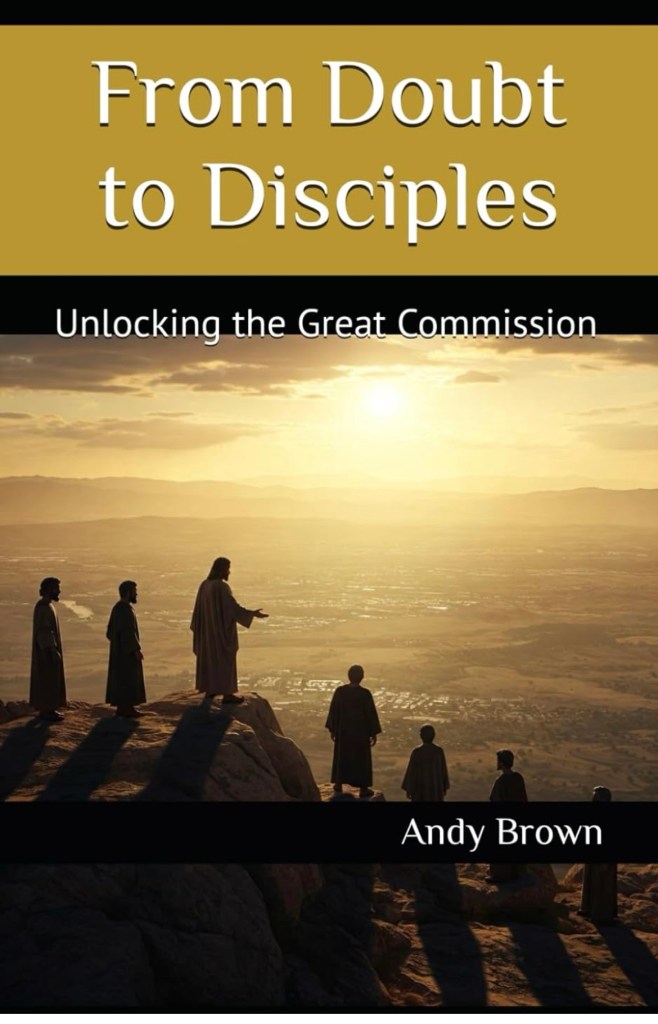
The front cover of Andy‘s new book… From doubt to disciples: unlocking the great commission. 

New Book Announcement! From Doubt to Disciples 

I am very excited to announce the publication of my second book! From Doubt to Disciples: Unlocking the Great Commission is now available on Kindle e-book and paperback from Amazon. 

A photograph of the book cover for From Doubt to Disciples: Unlocking the Great Commission by Andy Brown 

I began writing this little book a number of years ago, based on a series I had written on the blog about the Great commission. While the manuscript was mostly complete, it sat untouched for awhile… I like to think it was maturing! I was very pleased to complete the final edit and get it published this week!

With huge thanks to Andy B of the Berry Bunch and Pure 24/7 Radio, who kindly wrote the foreward for this book.

The book takes a deep dive into the words of the Great Commission which Jesus left us. the commission goes far beyond simply telling others about Jesus, although that is clearly a part of it.

To find out more, I guess you’ll have to read it…


From Doubt to Disciples on Amazon

Here is the blurb from the back cover:

Jesus’ final instructions weren’t just a suggestion – they were a commission. This book delves deep into the Great Commission as revealed in Matthew and Mark, culminating in the vital understanding from Acts: don’t go it alone. Explore the call to make disciples, baptise, and teach, and grasp the essential role of the Holy Spirit in fulfilling this monumental task. Discover how to move forward prayerfully and powerfully, playing your part in God’s enduring mission to the ends of the earth.

If you read and enjoy it, please do recommend to a friend or leave a review.

Finally, a massive thank you to everybody who follows this blog-sporadic as it is-and praise to the Lord Jesus Christ for all that he has done for us. 

From Secret Faith to Bold Devotion: John 19:38–42

Following Jesus’ crucifixion, John 19:38–42 describes the burial of His body, a moment of devotion amidst fear and uncertainty. This passage introduces Joseph of Arimathea and Nicodemus, two figures who step forward to honour Jesus in death. This study explores the significance of Jesus’ burial, Jewish customs, the garden tomb’s possible locations, and the disciples’ limbo, encouraging Christians to proclaim their faith boldly. The burial of Jesus reveals both human fear and profound devotion, pointing to the hope of resurrection.

An AI generated image of the garden tomb in black-and-white set against grey sky. The entrance to the tomb is partially open, with a large stone across the right hand side of it. 

Here’s the passage in full : John 19:38–42 (ESV)

“After these things Joseph of Arimathea, who was a disciple of Jesus, but secretly for fear of the Jews, asked Pilate that he might take away the body of Jesus, and Pilate gave him permission. So he came and took away his body. Nicodemus also, who earlier had come to Jesus by night, came bringing a mixture of myrrh and aloes, about seventy-five pounds in weight. So they took the body of Jesus and bound it in linen cloths with the spices, as is the burial custom of the Jews. Now in the place where he was crucified there was a garden, and in the garden a new tomb in which no one had yet been laid. So because of the Jewish day of Preparation, since the tomb was close at hand, they laid Jesus there.”

Secret Disciples: Joseph and Nicodemus

Joseph of Arimathea, a wealthy member of the Sanhedrin, is described as a “secret disciple” of Jesus, concealing his faith due to fear of the Jews. His position in Jewish society made public allegiance to Jesus risky, potentially threatening his status and safety. Yet, in a bold act, Joseph approaches Pilate to request Jesus’ body, an action that could have exposed him to scrutiny. Similarly, Nicodemus, who previously visited Jesus at night (John 3:1–2), likely out of fear, joins Joseph in this act of devotion. He brings approximately seventy-five pounds of myrrh and aloes, an extravagant amount of spices, signaling his commitment. Their actions challenge modern Christians to examine their own faith. Many face pressure to hide their beliefs in hostile or secular environments. Rather than concealing faith, believers are called to proclaim it sensitively but unashamedly, as Jesus instructs in Matthew 5:16: “Let your light shine before others.” How can we move from secrecy to courageous witness in our daily lives?

Jewish Burial Customs in the Passage

In the first century, Jewish burial practices were rooted in respect for the deceased and adherence to purity laws. Deuteronomy 21:23 required prompt burial to avoid defilement, especially before the Sabbath. The body was typically washed, wrapped in linen cloths, and anointed with spices like myrrh and aloes to honor the deceased and mask the odour of decay. In John 19:38–42, Joseph and Nicodemus meticulously follow these customs. They wrap Jesus’ body in linen with the spices Nicodemus provides, a quantity far exceeding typical burials, reflecting deep reverence. Their care fulfills Isaiah 53:9, which prophesies the Messiah’s burial with the rich. This deliberate act underscores Jesus’ dignity, even in death.

The Garden Tomb: Location and Significance

John 19:41 describes the burial site as a new tomb in a garden, unused by anyone else. Joseph’s offering of his own tomb represents a personal sacrifice. Theologically, the tomb is a temporary resting place, foreshadowing the resurrection. Two possible locations in Jerusalem are associated with this site. The Garden Tomb, located north of the Damascus Gate, is favored by some Protestants for its serene, garden-like setting and rock-hewn tomb, fitting John’s description. Alternatively, the Church of the Holy Sepulchre, supported by early Christian tradition and archaeological evidence of first-century tombs, is widely accepted by Catholic and Orthodox traditions. If you would like my opinion, I favour the Garden Tomb location over the Holy Sepulchre .But I am no biblical archaeologist! 

Regardless of the exact site, the garden tomb invites believers to trust God’s redemptive plan, even in moments of apparent defeat.

The Disciples’ Limbo and Our Hope

For the disciples, Jesus’ death was a devastating blow. They believed Him to be the Messiah, yet witnessed His execution, leaving them in fear and confusion. Unaware of the resurrection to come, they faced a limbo of shattered hopes. Their vulnerability reflects the human struggle with uncertainty. In contrast, modern believers have the benefit of hindsight, knowing that Resurrection Sunday follows Good Friday. This perspective transforms despair into hope, as Paul writes in 1 Corinthians 15:20, describing Christ as “the firstfruits of those who have fallen asleep.” The disciples’ experience encourages Christians to hold fast to faith during trials, trusting that God’s plan unfolds according to his will. 

So what do we do? 

Joseph and Nicodemus, once secretive, acted with courage to honour Jesus in His burial. Their example challenges us to proclaim our faith boldly, even in difficult circumstances. We are called to trust in the resurrection hope, knowing that God’s victory overcomes life’s darkest moments.

The darkness of Friday has been and gone, and we find ourselves in the limbo of its aftermath. Fear not though, Sunday is coming…

The Cross and the Crown: Reflecting on John 19:17–24 This Good Friday

As Christians gather on this Good Friday, we pause to reflect on the sacrifice of Jesus Christ, the pivotal moment of our faith. John 19:17–24 captures the raw reality of the crucifixion, where Jesus is declared “King of the Jews” and His clothes are divided by soldiers. This passage reveals Jesus as the sovereign King of all, fulfilling ancient prophecies and completing His mission as the Savior of humanity. On this sacred day, we are called to marvel at His love and respond with heartfelt worship.

A wooden sign is planted in the ground, surrounded by small pebbles and dirt. The sign has the text “KING of JEWS” prominently displayed in large, bold letters. Below this, there is a line of text in a different script that reads ” πλοκίης αἰς οἱ ςρεοοης” which are random Greek letters for illustration . The background is a plain, slightly textured surface with a gradient of light and shadow.

Jesus: King of the Jews and King of All

John 19:17–19 recounts Jesus’ journey to the cross: “Carrying the cross by himself, he went to the place called Place of the Skull… There they nailed him to the cross… Pilate also had an inscription written and put on the cross. It read, ‘Jesus of Nazareth, the King of the Jews’” (NLT). The title “King of the Jews,” though meant as mockery by Pilate, proclaimed a profound truth. Despite opposition, Pilate refused to change the inscription (John 19:22), unwittingly affirming Jesus’ identity.

Jesus’ kingship transcends earthly boundaries. He is not only the King of the Jews but the “King of kings and Lord of lords” (Revelation 19:16, NLT). On the cross, His reign was established through sacrifice, challenging the powers of this world and offering hope to all who believe. Good Friday reminds us that Jesus’ kingship demands our allegiance. As Christians, we are called to live under His loving authority, trusting His sovereign plan even in the face of suffering.

The Soldiers and the Fulfillment of Prophecy

The scene at the cross continues in John 19:23–24: “When the soldiers had crucified Jesus, they divided his clothes among the four of them. They also took his robe, but it was seamless… So they said, ‘Rather than tearing it apart, let’s throw dice for it.’ This fulfilled the Scripture that says, ‘They divided my garments among themselves and threw dice for my clothing’” (NLT). This moment directly fulfills Psalm 22:18, written centuries earlier, proving Jesus as the promised Messiah.

This single fulfilled prophecy points to a greater truth: Jesus’ entire life and death align with God’s redemptive plan. From His birth in Bethlehem (Micah 5:2) to His suffering (Isaiah 53), Jesus fulfilled every Messianic prophecy, culminating in His sacrificial death. Good Friday marks the climax of His mission to save humanity, as He bore the weight of our sins on the cross. Even the soldiers’ callous actions, dividing His clothes, served God’s purpose, demonstrating His sovereignty over every detail. As we reflect on this, we stand in awe of Jesus’ obedience and God’s faithfulness.

Good Friday: The Weight and Wonder of the Cross

Good Friday is a day of somber reflection and profound gratitude.

Jesus’ death was the ultimate act of love, as He “gave his life to purchase freedom for everyone” (1 Timothy 2:6, NLT). John 19:17–24 anchors us in the reality of the cross—Jesus endured unimaginable pain to atone for our sins, fulfilling the Law and the prophets. His kingship, declared in the inscription, and His fulfillment of prophecy, seen in the soldiers’ actions, assure us of His victory over sin and death.

On this day, we are invited to pause and contemplate the cost of our salvation. The cross reveals both the depth of human sin and the boundless love of God. As we consider Jesus’ sacrifice, we find hope in His reign as King, knowing that His death was not the end but the beginning of eternal life for all who believe. Good Friday calls us to lift our eyes to the cross, where our Savior triumphed.

A Call to Worship

In response to Jesus’ kingship and sacrifice, our hearts turn to worship. Good Friday is a time to gather in worship services, pray, or meditate on Scripture, giving thanks for all Jesus has done. Reflect on His love, which led Him to the cross, and commit to living under His reign daily. Let this day inspire a life of worship, where every action honors Jesus as King and Savior. As Psalm 95:6 urges, “Come, let us worship and bow down. Let us kneel before the Lord our maker” (NLT).

Maundy Thursday and the Last Supper

On Maundy Thursday, we pause during Holy Week to reflect on the Last Supper, a sacred moment when Jesus shared a final meal with His disciples, instituted Holy Communion, and revealed Judas’ betrayal. This day, named from the Latin mandatum meaning “commandment,” centers on Jesus’ call to love one another (John 13:34). As we explore the events leading to this meal, the exposure of Judas’ intentions, and the origin of Communion, we deepen our understanding of Christ’s sacrifice and our calling as His followers. Grounded in Scripture, this reflection reminds us of the love and service at the heart of our faith.

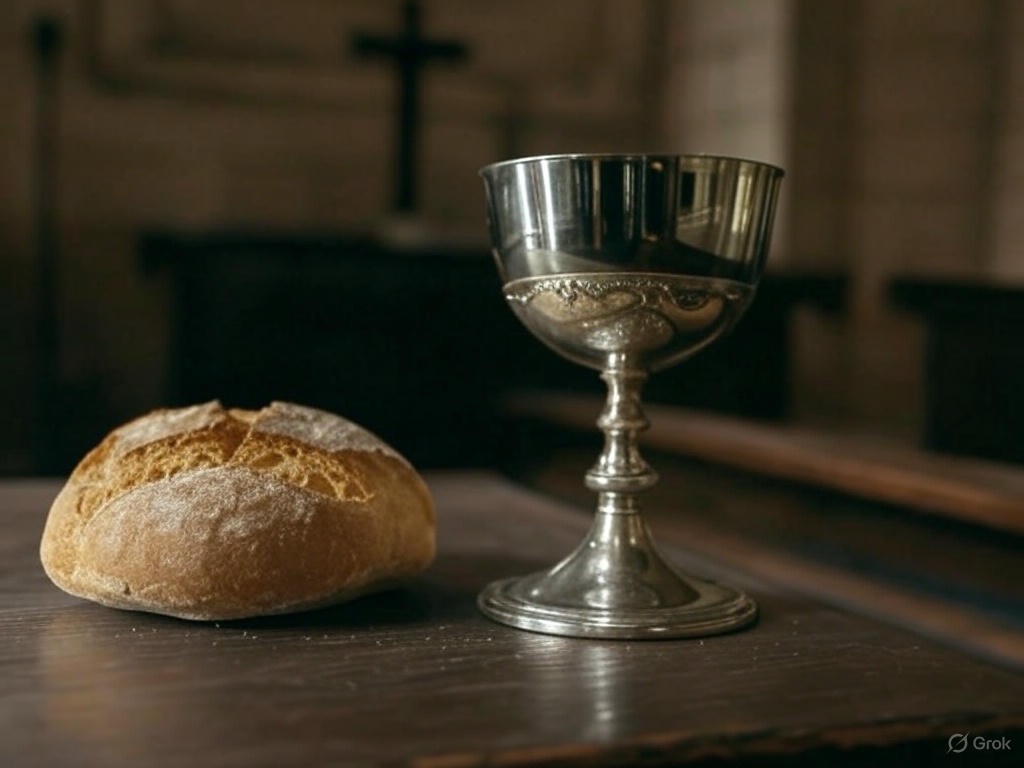
A close-up of a loaf of bread and a silver chalice depicting holy communion 

The Road to the Last Supper

Holy Week unfolds with events that prepare us for the Last Supper. On Palm Sunday, we recall Jesus’ triumphal entry into Jerusalem, greeted by crowds waving palm branches (Matthew 21:1-11). In the days following, He cleanses the temple (Matthew 21:12-13) and teaches parables, confronting religious leaders (Mark 11:27-12:44). These actions intensify opposition, as the chief priests and scribes plot to kill Him (Mark 14:1-2). Amid this tension, Jesus prepares for the Passover, the Jewish feast commemorating God’s deliverance of Israel from Egypt (Exodus 12:1-14).

Jesus instructs His disciples to arrange the meal in an upper room in Jerusalem (Luke 22:7-13). This setting, intimate and solemn, underscores the weight of the moment. Jesus knows His hour is near (John 13:1), and we should sense the gravity as He gathers with those He loves. The Passover meal becomes the backdrop for a new act of redemption, one that we commemorate to this day.

The Last Supper and Judas’ Betrayal

During the Last Supper, Jesus reveals a painful truth: one of His disciples will betray Him. John 13:21-30 captures this moment vividly:

“After he had said this, Jesus was troubled in spirit and testified, ‘Very truly I tell you, one of you is going to betray me.’ … When he had dipped the piece of bread, he gave it to Judas, the son of Simon Iscariot. As soon as Judas took the bread, Satan entered into him. So Jesus told him, ‘What you are about to do, do quickly.’ … As soon as Judas had taken the bread, he went out. And it was night.” (John 13:21, 26-27, 30, NIV)

Matthew’s account adds further clarity:

“And while they were eating, he said, ‘Truly I tell you, one of you will betray me.’ … Judas, the one who would betray him, said, ‘Surely you don’t mean me, Rabbi?’ Jesus answered, ‘You have said so.’” (Matthew 26:21, 25, NIV)

Jesus’ identification of Judas fulfills Old Testament prophecy, such as Psalm 41:9, which speaks of a trusted friend lifting his heel against another. By sharing bread with Judas, a gesture of fellowship, Jesus underscores the depth of the betrayal.

Judas does not leave of his own accord, but is called out in front of them all. It shows that the timing of these events were God ordained, and not planned by sinful humanity. Jesus was in full control. 

The Institution of Holy Communion

At the same meal, Jesus establishes Holy Communion, transforming the Passover elements into symbols of His sacrifice. Luke 22:19-20 records His words:

“And he took bread, gave thanks and broke it, and gave it to them, saying, ‘This is my body given for you; do this in remembrance of me.’ In the same way, after the supper he took the cup, saying, ‘This cup is the new covenant in my blood, which is poured out for you.’” (Luke 22:19-20, NIV)

Paul later affirms this practice, writing in 1 Corinthians 11:23-25:

“For I received from the Lord what I also passed on to you: The Lord Jesus, on the night he was betrayed, took bread, and when he had given thanks, he broke it and said, ‘This is my body, which is for you; do this in remembrance of me.’ In the same way, after supper he took the cup, saying, ‘This cup is the new covenant in my blood; do this, whenever you drink it, in remembrance of me.’”

Here, Jesus reinterprets the bread and wine. The bread represents His body, broken for our salvation; the wine signifies His blood, sealing the new covenant promised in Jeremiah 31:31-34. This act institutes Communion as a sacred rite, one we should observe to remember Christ’s sacrifice, experience His presence, and unite as His body. From the early church (Acts 2:42) to today, Communion remains central to our worship, a tangible reminder of God’s grace.

Moreover, the Last Supper foreshadows the cross. The bread and wine point to Good Friday, when Jesus’ body is broken and His blood is shed. As we participate in Communion, we proclaim His death until He returns (1 Corinthians 11:26). Maundy Thursday thus bridges the joy of Palm Sunday and the sorrow of Good Friday, preparing us for the glory of Easter.

A Time for Reflection

As we observe Maundy Thursday, we are called to reflect on Christ’s love, the cost of our redemption, and the pain of betrayal. The Last Supper invites us to the table, where we encounter Jesus’ sacrifice and receive His grace through Communion. We ought to examine our hearts, asking how we can love and serve as He did. Whether through attending a Maundy Thursday service or quietly meditating on these Scriptures, let us draw near to Jesus, who gave everything for us.

This day reminds us that even in the face of betrayal, Jesus chose love. May we, too, choose love, honoring Him in our worship and our lives.


The star, the journey and the Word 

As ever, it was a real privilege to share the message at my church this morning. Please see below a recording which I hope you enjoy. God bless you this Christmas time