The Isolation Test

Every Christian can act like one when they are home alone. But when we are trapped in the same four walls with our close family, not able to go out as we wish, it can be a lot harder to be a good witness for Christ. 

How are you coping with the Isolation Test?

I’m not quite sure how long we have been in lockdown now, but I know it has been over a month since I was last in a moving vehicle. I have not left the house since the weekend, and then only to walk our two dogs around the village where I live. My four children are fed up with being cooped up and all they want to do is run around.

For us, the sounds of children bickering about their latest make-believe game may be grating, but for those who live alone it would be a welcome noise.

How are you coping with the extended lockdown period? I call it the “Isolation Test”. And some days I’ve not doing a great job of passing it!

I saw on the news this morning that a charity in the UK are saying that as many as 1 in 6 relationships could break down as a result of this extended lockdown period. Those couples who thought they were in good shape have been shaken or broken by this strange time. We all need space at times, and even our closest friend or spouse can be a source of irritation if we indulge our selfish side.

Love is patient, love is kind. It does not envy, it does not boast, it is not proud. 5 It does not dishonour others, it is not self-seeking, it is not easily angered, it keeps no record of wrongs. 6 Love does not delight in evil but rejoices with the truth. 7 It always protects, always trusts, always hopes, always perseveres.

1 Corinthians 13:4-7 (NIVUK)

Paul has some very challenging words to say about love in these verses. Love is not easy, and especially so right now.

Love is patient

They say that patience is a virtue. I say it is a critical Fruit of the Spirit which we all need to live a successful Christian walk. You cannot defeat a patient person.

My own patience has been somewhat lacking in recent days. Working from home with childcare and all social events cancelled has made it much harder to bear this fruit. Yet, we are in a very blessed position compared to many, and my focus should be on that fact and not on what I feel I am missing out on.

It is all too easy to fall into the temptation to be impatient. Impatient with children. Impatient with spouses. Impatient with technology, supermarket staff or social media. We all need a healthy dose of patience right now, and we can only find it in walking close with the Lord.

Love is kind

Kindness is another fruit we need right now. It is so easy to forget others and focus on our own circumstances. Alongside all of the bad news stories we hear, I’m so pleased to hear of other stories of kindness. Kindness to key workers. Kindness to neighbours. Kindness to those in desperate need.

Be kind to those you live with. They are likely finding it just as difficult as you are. Go the extra mile and do it even when you really don’t feel like it. Ask God to give you ideas about innovative kindness.

Love is not self-seeking

Love is not self-seeking. This statement alone stops me in my tracks. Love – God’s kind of love – is not about serving ourselves. Love is outward facing. It focuses on other people and sometimes doesn’t even consider itself.

When I lose my temper, it is nearly always because something or someone is getting in the way of what “I” want to do. While this is understandable at times, it is very humbling for me. I clearly have a long way to go in crucifying my flesh and dealing with my pride. I tend to fail the isolation test when I don’t put others before myself. I am guessing that I am not alone in this.

Selfishness is an ugly thing, and one we do not like to talk about or focus on. Yet it is something which affects us all to some degree. The more we deal with our selfishness and pride, the more loving we will be.

How do we do that though?

Then Jesus said to his disciples, ‘Whoever wants to be my disciple must deny themselves and take up their cross and follow me.

Matthew 16:24 (NIVUK)


Those who belong to Christ Jesus have crucified the flesh with its passions and desires.

Galatians 5:24 (NIVUK)

Crucifying the flesh means putting it to death. It means that each and every day we deny its desires and wants, and we put love first. Every time we feel that temper rise, we deny it and put the needs of others first. It is hard, but will only get harder if we choose not to do it. Likewise, the more we do it, the easier it will become.

There are no miracles or shortcuts to cure selfishness. It is a step-by-step, day-by-day process. We will only conquer it by consistently putting it down over and over again. And we will all have to do that for the rest of our lives.

Testing times

There is much more we could say about the words from 1 Corinthians on love. In fact, we could do a whole series of studies on it. For today, suffice it to say that passing the Isolation Test will be in no small part to do with how loving we can be to others.

It is an extremely hard time for many people, and so I do not write this to condemn you or make you feel worse than you perhaps already do. I have found it hard to be a good witness during the last few weeks, but that conviction drives me onward to want to do better.

I cannot behave better just because I want to, as my own strength of will isn’t enough and is too easily swayed by circumstances. I need the guiding hand of God to bring about lasting change in my life. I must renew my mind in His Word and allow Him to do the work of crucifying the flesh. Every moment of every day i must surrender to Him. It’s not easy, but God loves us.

I pray that you are able to not just survive this time of social distancing and isolation, but that you can bless others while you do.

Catch someone (PoW )

Pearls of Wisdom

Delight in catching someone doing something right

Whether it be a celebrity, a politician, or some other high-profile person, there is often a lot of social media activity trying to catch those doing something wrong. The newspapers post photographers outside of nightclubs and parties trying to catch people in a compromising situation.

For some reason, we often delight in seeing others fail or embarrassing themselves. Perhaps in some way it makes us feel better about ourselves if we know the others trip over sometimes.

Today though, instead of trying to catch someone else out, why not try to catch them doing something good?

There are people doing good all around us all of the time. It only takes a moment to mark that. We have seen many examples of this in the recent period of lockdown. People thanking key workers or medical staff with little acts of random kindness.

Just last night, a friend of mine described how he bought a case of beers which he then left outside for those collecting the bins from his house. Now you might choose to show gratitude in a very different way of course, but the point is made. 

If you see someone doing something good, take a moment to tell them. Thank them. If you are able to give them a little gift or encouragement, then it is a great use of resources.

Instead of trying to catch people out, let’s all try to delight in catching someone doing good!

I think you will find the reward far outweighs the effort it takes.  God bless. 

Prayer Video #2

I was planning on writing a follow up to yesterday’s post – Spiritual Distancing #1– but actually felt I needed to record another prayer video today. Hope you enjoy it, and please join me in prayer.

You can find the first prayer video here – Praying for you. 

For some strange reason, the video looks upside down in the post preview… but when you play it, it comes out fine. Not sure why, but just wanted to point that out!

Please do send in any more prayer request, as I’d be glad to pray for you too.

God bless you and yours.

What about the animals?

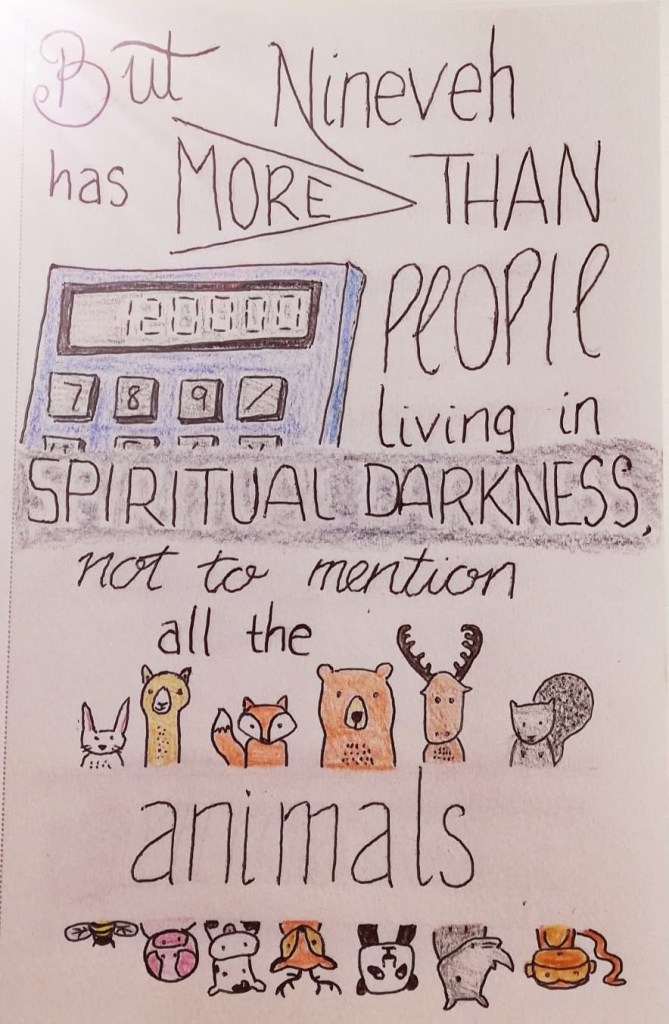
Jonah 4:11 (NLT) But Nineveh has more than 120,000 people living in spiritual darkness, not to mention all the animals. Shouldn’t I feel sorry for such a great city?”

As I write this, I’m overlooking a sort of forest woodland. In the last few minutes I have seen an abundance of nature! I’ve seen ducks, squirrels, deer, rabbits and even what I think was a stoat.

Due to the Coronavirus, the woodland has largely been abandoned at the moment. I suspect that the sudden drop in guests will quite badly affect the wildlife here. Over time I am sure they have become somewhat dependent on the food given to them by visitors. This area will be closed to the public for several weeks leaving the animals to fend for themselves for a while.

While the sudden drop in available food will be a bit of a shock to them, I am not overly worried about them. God cares for people, but He cares for His creation also.

There have been a number of posts on social media about panic buying and stockpiling. As a result, many food banks and charities have seen a dip in food donations. This is not limited to charities offering support for people either, and a number of animal rescue shelters are struggling too. The Coronavirus is affecting the whole world in myriad ways.

The verse above is quoted from the book of Jonah in the Old Testament. In fact, it is the closing verse of that book. Most people recall that Jonah was once swallowed by a big fish, but in case you don’t know the rest of the story, here is a brief summary.

God called Jonah to preach to the non-Jewish (Gentile) city of Nineveh. Instead, Jonah heads in the complete opposite direction and boards a ship to Tarshish. A great storm swamps the ship, and in the end Jonah confesses to the crew that he is the cause of their struggle. Ultimately they have to throw him overboard to still the storm.

It is at this point – more or less – that Jonah is swallowed by the fish. The fish later spews up the reluctant prophet on to the shoreline, and Jonah finally goes to Ninevah as he was instructed.

Jonah did not want to go to Ninevah and preach because he was afraid the people would listen to him… He knew that if they heard his message, they would repent and turn back to God – and God would forgive them. Imagine that?

After he gives his message, he goes and sits outside the city to see what would happen. The sun is burning hot, and he grows weary. God causes a vine to grow up beside him and offer him some shelter. Later however, a worm comes along and eats the root of the vine so it withers and Jonah loses his shade.

It’s something of an odd story right? Indeed it is, but it is really about who is in charge. God is running the show throughout, and He gives Jonah the vine and quickly takes it away to demonstrate to Jonah that he has no control in the situation. God wants Jonah to realise that He cares for the people of Ninevah.

The book of Jonah closes with the verse above. God tells Jonah He is right to care for the 120,000 people living there. We don’t know what happened to Jonah after this, but let’s hope he learned a lesson!

Perhaps 15 years ago, I had a dog who was very poorly. They had a particularly bad night, and we had to contact an emergency vet. The next day I happened to be reading this closing chapter of Jonah. I’ll always remember that because I recall very vividly this final verse. As well as the 120,000 people, God specifically mentions the animals also.

The word animals here is sometimes translated as cattle, so perhaps refers to farm animals or bovine species. Whatever it refers to though, it is clear that God cares for the animals also.

Animals are a part of God’s creation. While they are not as important as people, they are important. We have a responsibility to take care of them, and must certainly not mistreat them.

Spare a thought this week for all those affected by the Coronavirus. We must prioritise helping people with various needs at this time. We, the church, may not be able to gather together in large numbers, but we can and must continue to be Jesus’ hands and feet on the Earth. Call an isolated family member. Check on an elderly neighbour. Let’s do what we can to share God’s love in this difficult time.

As well as those things, and if you’re not overstretched, do consider whether there are ways to take care of God’s creation also. You might consider grabbing a can of dog food to pass on to a struggling pet owner. Perhaps you could walk a friend’s dog. Maybe, like me, there is a nearby animal shelter who could do with a helping hand at this difficult time.

Like many, I’m deeply disappointed to read stories of fighting in supermarkets and immoral seller hiking up prices. There are plenty of positives stories also, and we – the church – should be leading the way in that.

How can you be a blessing to those around you at this time? And remember, God cares about the animals also.

Feed My Sheep (Audio)

Here is a short talk Andy gave at the Morning Praise service in the Parish Church in St Osyth. It was on John 21:1-19 – text below.


After these things, Jesus revealed himself again to the disciples at the sea of Tiberias. He revealed himself this way. 2 Simon Peter, Thomas called Didymus, Nathanael of Cana in Galilee, and the sons of Zebedee, and two others of his disciples were together. 3 Simon Peter said to them, “I’m going fishing.”

They told him, “We are also coming with you.” They immediately went out, and entered into the boat. That night, they caught nothing. 4 But when day had already come, Jesus stood on the beach, yet the disciples didn’t know that it was Jesus. 5 Jesus therefore said to them, “Children, have you anything to eat?”

They answered him, “No.”

6 He said to them, “Cast the net on the right side of the boat, and you will find some.”

They cast it therefore, and now they weren’t able to draw it in for the multitude of fish. 7 That disciple therefore whom Jesus loved said to Peter, “It’s the Lord!”

So when Simon Peter heard that it was the Lord, he wrapped his coat around him (for he was naked), and threw himself into the sea. 8 But the other disciples came in the little boat (for they were not far from the land, but about two hundred cubits[a] away), dragging the net full of fish. 9 So when they got out on the land, they saw a fire of coals there, and fish laid on it, and bread. 10 Jesus said to them, “Bring some of the fish which you have just caught.”

11 Simon Peter went up, and drew the net to land, full of great fish, one hundred fifty-three; and even though there were so many, the net wasn’t torn.

12 Jesus said to them, “Come and eat breakfast.”

None of the disciples dared inquire of him, “Who are you?” knowing that it was the Lord.

13 Then Jesus came and took the bread, gave it to them, and the fish likewise. 14 This is now the third time that Jesus was revealed to his disciples, after he had risen from the dead. 15 So when they had eaten their breakfast, Jesus said to Simon Peter, “Simon, son of Jonah, do you love me more than these?”

He said to him, “Yes, Lord; you know that I have affection for you.”

He said to him, “Feed my lambs.” 16 He said to him again a second time, “Simon, son of Jonah, do you love me?”

He said to him, “Yes, Lord; you know that I have affection for you.”

He said to him, “Tend my sheep.” 17 He said to him the third time, “Simon, son of Jonah, do you have affection for me?”

Peter was grieved because he asked him the third time, “Do you have affection for me?” He said to him, “Lord, you know everything. You know that I have affection for you.”

Jesus said to him, “Feed my sheep. 18 Most certainly I tell you, when you were young, you dressed yourself, and walked where you wanted to. But when you are old, you will stretch out your hands, and another will dress you, and carry you where you don’t want to go.”

19 Now he said this, signifying by what kind of death he would glorify God. When he had said this, he said to him, “Follow me.”

John 21:1-19 (WEB)

New Book Announcement – A Journey with Jesus

I’m excited to announce that my book – A Journey with Jesus: 40-day devotional – is now available on Amazon as a Kindle eBook and paperback!

Some years ago, I wrote this devotional for a Lent series at Bramerton Road Community Church. I’ve now updated this and released it as both an eBook and paperback.

Free Kindle Version!

Between Saturday 2nd March and Wednesday 6th Mach 2019, the Kindle eBook version will be available completely free of charge! This is for anyone wanting to use it over Lent.

After that, it will still be available for free as part of the Kindle Unlimited and Kindle Owner’s Lending Library programs. For anyone else, it only costs 99p!

Find it on Amazon here: A Journey With Jesus (Kindle)

Also available outside of the UK on the relevant Amazon site.

Paperback

Prefer to read on paper? Not a problem, as a paperback version is now also available for £3.99. This covers the cost of printing the book and Amazon’s share, so no large profits are made (well, 3p per copy!). I think it is important you know that and indeed, any sales go towards funding this site and blog.

The paperback version is available here: A Journey With Jesus (Paperback)

Please also note that anyone buying the paperback will qualify for a free copy of the Kindle version also.

About the book

Jesus spent forty days in the Wilderness – but what did He spend His time thinking about?

Of course, we don’t know for sure, but this devotional explores some possibilities, focusing on God’s love, Jesus’ teaching, who we are in Christ and much more.

Each day is a short read, and is great for individuals and groups alike. There is a Bible verse for each day, some questions to get you thinking plus a word of encouragement.

I hope you enjoy reading it!

Christ is… Enough?

I’ve been thinking about worship songs recently. In particular, their content and origin.

This began several months ago when singing the song “Christ is Enough for me…” It got me thinking… is Christ really enough? Of course He is, but what I mean is – is enough an adequate term to describe the One Who redeemed us?

Perhaps it’s just semantics, and maybe some feel it doesn’t matter all that much. I understand that, and certainly don’t want to come across as overly picky here. But for me at least, Christ isn’t just enough, He is everything – He is so far above enough that it can’t easily be put into words.

Maybe that’s the point – some of these truths can’t easily be put into words and so writing a worship song isn’t as easy as we might think.

I listened to a discussion the other day about this very subject. This particular group were rather critical of certain well known churches and ministries where many famous worship songs originate. They were especially scathing of Hillsong, Jesus Culture and Bethel.

Similar to my point above, they were disecting the song “Wreckless Love.” A quick examination of the definition of “wreckless” will show you that it really doesn’t apply to God. Again, perhaps it’s just semantics and there is no adequate way to describe God in words, and so, we must make do with the limitations of our language.

Likewise, we often sing about being “desperate for you,” when referring to God. The word desperate comes from the same word as “despair,” and again is not a suitable term for our relation to God.

So, what am I getting at?

Firstly, I think we should be very careful about the words we use, and sing. Words are extremely powerful and important, and I believe have a great impact on us. Many do not respect the power of our words, and yet the Bible teaches very clearly that words have power.

God made the world with His words, and so words can be creative. They can also be destructive too. I’m sure we can all remember a time when someone else’s words cut us deeply, and we still feel those wounds today.

James, in his letter, said this:

Look at the ships also: though they are so large and are driven by strong winds, they are guided by a very small rudder wherever the will of the pilot directs. 5 So also the tongue is a small member, yet it boasts of great things.

How great a forest is set ablaze by such a small fire! 6 And the tongue is a fire, a world of unrighteousness. The tongue is set among our members, staining the whole body, setting on fire the entire course of life, and set on fire by hell. 7 For every kind of beast and bird, of reptile and sea creature, can be tamed and has been tamed by mankind, 8 but no human being can tame the tongue. It is a restless evil, full of deadly poison. 9 With it we bless our Lord and Father, and with it we curse people who are made in the likeness of God.

James 3:4-9 (ESV)

Some very strong words about the power of the tongue.

The point I am making is that the words we sing do matter. And therefore we should choose them carefully.

So what ought we to consider when choosing appropriate worship songs?

Theology

For some it will seem obvious, and for others it may not be something you’ve thought about very much.

The theology of songs matter. Put simply, what we are singing must be biblical and accurate.

The most important thing about a worship song is not a catchy tune, but instead a good sound theology.

For example, a song that pleads with God to forgive us over and over is not good theology. Of course we must seek forgiveness, but once received from God through Christ, we no longer need to plead over and over again.

Think of some of your favourite worship songs, and ask yourself if they are biblical. It may be that you’ve never thought about it before, but we live in a time now where just because someone is singing about God, does not mean it is biblically sound.

Sadly, there are those writing worship songs who do not have a strong grasp of the Bible.

Similarly, there are churches and ministries who have questionable theology and the music coming from them mirror that theology. As mentioned above, there are those who criticise Hillsong and Jesus Culture, and it’s not my intention to comment on that here. But let’s say you did not agree with their stance on certain doctrines. It may be that some of their music reflects those doctrines.

Just be sure of what you believe the Bible says, and try to ensure your music reflects those biblical beliefs.

Romance

Worship is an expression of love – no doubt. It is right for us to love our God and Father. But worship is not romance.

Some songs you hear are more akin to love songs than worship songs. Is that wrong?

We need to be a little careful in this space I believe. While the Bible does use romantic imagery between God and His people, such as the church being the “Bride of Christ,” we need to be clear what we mean by “love.”

We love God, and He loves us. No arguments here. However, it is not accurate to describe this as a romantic kind of love. I grow concerned when I hear certain songs which seem to portray our relationship with God as a romantic one.

Repetition

I once heard someone describe modern worship songs as “7-11” songs – meaning the same seven words repeated eleven times. This was a tongue-in-cheek comment, but has a ring of truth about it.

Are you familiar with the song “Set a Fire” by Jesus Culture? I was humming it the other day and wondering not just about its theology, but also the constant repetition.

The song asks for “more of God,” over and over again. This can be taken two ways. Firstly, I cannot see how God can give us any more than He already has. He gave His Only Son to us that whoever believes in Him will not perish (John 3:16). He has blessed us with every spiritual blessing in heavenly places in Christ Jesus (Eph. 1:3). He has given us His Spirit to dwell in us, His forgiveness, His justification, His redemption, He has promised never to leave us nor forsake us, and on and on and on.

Given all of that, can we really ask for “more of God?”

I appreciate that if you accept what I’ve said, then perhaps the song is really asking for God to help us receive more fully the things God has already done. In that sense, I have no issue.

The constant repetition concerns me though. I know I’ve mentioned “Set a Fire,” but don’t want to single that out. There are other similar songs too.

Most songs have a repetition in them, such as a chorus or repeated verse – that’s not what I’m talking about. I’m referring to those songs which repeat short phrases over and over again, in a melodic way.

There is a danger here – either willingly or unwittingly – to wander into Eastern practices.

Hinduism and Buddhism use mantras to “concentrate the mind for meditation.” A mantra is a phrase which is repeated over and over. Rather than increase concentration, it actually dulls the mind.

Singing the same phrase over and over, even if a good one, can have the same effect. Add to that the loud music and flashing lights that often accompanies large worship gatherings now, and we can open ourselves up to risk.

Jesus told us to avoid repetition in prayer:

But when ye pray, use not vain repetitions, as the heathen do: for they think that they shall be heard for their much speaking.

Matthew 6:7 (KJV)

Entertainment or worship?

Worship is not entertainment.

As mentioned above, some worship services are more like concerts now. I have no problem with worship being modernised, or the use of instruments, lights and AV, as long as it enhances worship.

Worship can be fun, and at times it absolutely should be! But worship can also be hard. It also can require sacrifice on our part. King David said that he would not give to God that which cost him nothing. Worship can sometimes be costly to us also.

Worship is not about making us feel better, nor about us having a great time. It is not about us at all.

I’m not trying to spoil your fun, nor do I want you to stand motionless in worship singing to a church organ. I just want to highlight the dangers of forgetting what we are there to do.

Give it some thought

There are many songs from many ministries, and we don’t always know where they come from. You could read the above and start crossing out lots of songs, even your favourites perhaps.

The point of this post was not to ruin your favourite worship songs. I just want you to give it some thought.

What we sing does indeed matter. How we worship does matter too. If you are being handed earplugs on the way in, then you have to wonder if worship is the primary focus.

We were made to worship God. Let’s do so appropriately!

From an Apostle to the Saints

Ephesians

My recent wanderings through the sovereignty of God led me to study the book of Ephesians in my quiet time. I am not certain if this will turn into a series, but it is such a rich letter with so much to explore that I’ll no doubt write a few posts about it.

In fact, in my study time, I’m still in chapter 1, which has more than enough to keep me occupied!

Paul, an apostle of Christ Jesus by the will of God,

To the saints who are in Ephesus, and are faithful in Christ Jesus:

Grace to you and peace from God our Father and the Lord Jesus Christ.

Ephesians 1:1-2 (ESV)

Like any letter, Paul begins by introducing himself. We often skip over these opening verses to get to the “meat” of the letter, but by doing so, miss out on important things.

Paul not only gives his name, but his role as well. “Paul, an apostle…”

An apostle is simply “one whom is sent,” but in the church context it is one of the founders of the church – often a church planter or one who has seen the Risen Lord.  The role of apostle was mentioned as one of the five-fold ministry gift or positions, which we will later encounter in Ephesians.

While “role” is one word, another is calling. Paul is not just some self-appointed saint, but is an “apostle by the will of God.” I’ve thought a lot lately about the will of God, and we will see in this first chapter of Ephesians that it comes up time and again. We cannot escape or resist God’s will.

We are sometimes a bit obsessed with our calling. We ask people, “What is your ministry?” or “What is God calling you to do?” While these questions have their place, I think sometimes we spend our lives searching for some grand call on our lives instead of getting on with the business of life.

Am I saying that calling is not important? Certainly not. I believe all Christians have a calling and should live it out as best we can. For many, if not all of us, we can summarise our calling as follows: we should glorify God in our life right where we are.

Certainly we should be listening to God for His direction, and this also should come from our relationship with Him. God is not a stone idol we pray to with nothing in return. Our prayer life should be two-way, and too many of us are talking when we should be listening.

It can be hard to achieve of course (regular and constant communication with God), but I believe life is to be lived with Him. Set times of extended prayer are definitely important, but so are moments of prayer throughout the day. Living like this, we can serve God wherever we are and whatever we are doing.

So we see this letter is from Paul, but to whom is it written?

The saints at Ephesus

It may be that this letter was in reality a circular which was shared among several churches. Some manuscripts omit the words “at Ephesus” and the lack of personal greetings suggest this. The letter was likely written around AD 60 while Paul was imprisoned in Rome. Some scholars dispute the date, believing it to have been between AD 80-100, and also that Paul was the author at all.

It is interesting to me that the New Testament epistles are always written to “saints,” “holy people,” or “consecrated ones.” We never see a letter written to the “sinners in Ephesus,” or the “heathen in Rome…”

This is an important point because I often feel we misunderstand our identity.

We sin, no argument from me, and we did so both before and after we gave our lives to Christ. Sin is a critical issue for the world at large, and is indeed the whole point of Christ’s coming.

Some churches focus too much on sin, and too little on the completed work of Christ. Other churches focus too little on sin, and fail to instruct their people on the dangers of committing “sins” and the overall effect of “sin” on the world.

Christ is the cure for sin. If we continue to think of ourselves as “sinners” after the work of the cross, then we are in danger of making that work of little effect. What do sinners do? They sin. And what ought we not to do in our lives? Same answer.

Rather, our identity (in Christ) is not as an old sinner saved by grace, but rather as an imperfect saint. When we give our lives to Jesus, God puts a new heart inside of us. That is the born again experience. That new birth is something which happens inside of us (in our spirits, not our internal organs). From that time on, we are re-training our mind, will and emotions (sometimes called “the flesh” or “sinful nature”) to come into line with what God has done in our spirits.

If you are still just a “sinner” then what has the cross achieved for you?

I appreciate this is partly down to semantics, and may not seem a point worth labouring, but I think it helps in our reading of the rest of this chapter. Paul emphasises what is ours in Christ, and that must begin by us accepting we are transformed in Him.

As we work through chapter one, I will point out some of the things that belong to us in Christ. Not things we have earned, but rather things which were bestowed upon us because of God’s great grace.

Grace is where Paul begins his letter, and it’s where I’m going to draw this post to a close. He wishes the saints both grace and peace from God. A deeply meaningful greeting and opening to his epistle.

Likewise, I pray God’s grace and peace on you this week.

Humble Pie (PoW#21)

Pearl of Wisdom #21

Humility isn’t thinking less of yourself, rather it is thinking of yourself less.

Humility isn’t exactly something we celebrate much in our culture. When we look to celebrities, we offer see arrogance, selfishness and pride.

Many of us misunderstand what true humility is. We believe that a humble person is someone who beats themselves up constantly, who treads themselves down and thinks very little of themselves.

That is not biblical humility.

Humility is not about mistreating ourselves, instead it’s about moving ourselves out of the way and keeping God in His proper place in our lives.

A humble person is someone who is totally reliant on Jesus. They don’t think of themselves more or less than they ought, and instead keep their minds on Christ.

Pride can be seen in arrogance of course, but it can also be seen in self-loathing. Pride is simply putting the emphasis on “us” rather than God.

Try to be humble this week. Don’t loathe yourself, love Jesus!

Make me “usable” (PoW#20)

Pearl of Wisdom #20

Don’t seek to be used by God, instead seek to be usable.

Many of us want to be used by God in some special way to do a great work for Him. There is nothing wrong with such a goal, and it comes from our love for Him.

We ask God to use us, but often times God won’t answer this prayer. It’s not that He doesn’t want to, but rather He doesn’t want us to be harmed. God cares more about us, than about how He can use us. He loves us, not what we can do for Him.

Think of it this way; He will not put us into a situation we cannot handle, bringing harm to us and to others, just to get something done. He would rather help us grow to a point where we can serve Him in this world.

Don’t ask God to “use you”, instead ask Him to help develop your character so that He can use you. When we become “usable” we no longer need to worry about God putting us into positions of service. Once we are mature or have the experience we need, God will put us to work to bless others.

God loves you more than you know.

Stepping Into Prophecy

Let love be your highest goal! But you should also desire the special abilities the Spirit gives–especially the ability to prophesy.

1 Corinthians 14:1 (NLT)

I’ve been reflecting on the reasons I originally started this blog. Of course, it was partly to share the Bible with people and some of my thoughts on it. But it was also to explore the spiritual gift of prophecy.

It has slowly become clear to me that I do have a spiritual gift in this area, but it is also something I’ve had little opportunity to really step out into. This blog was a chance for me to exercise this gift. It has taken me a long time to identify this in me, and so I don’t want you to think I’m arrogantly claiming this or that. I’ve found it quite humbling, but also realise an unused gift brings no glory to the Giver.

So that’s what I’m going to do… It may seem a little odd at first, and I hope you will bear with me as I go. But first…

What is the spiritual gift of prophecy?

The word “prophecy” can mean different things in the Bible. There is the “Office of Prophet” both in the New and Old Testament, and there is also biblical prophecy, such as some of the book of Daniel, or Ezekiel or Isaiah.

What I am referring to here is the spiritual gift of prophecy, as described by Paul in 1 Corinthians 12-14.

It is not about predicting the future, although there may be an element of understanding things that are to come. Rather it is sharing God’s will with people. Perhaps that may mean a word of encouragement, or pointing them towards Jesus, or confirming to them something God has already been saying to them.

It may mean receiving words, pictures or visions from the Holy Spirit, and describing them to the person concerned. It can take different forms, but must always be done in love.

During a conversation with a non-believer, I was once asked about the gift of prophecy – “How is it any different to what a psychic does?” That’s an insightful question from someone outside the church.

The spiritual gift of prophecy differs from what a psychic or medium might do for a number of reasons. Firstly, ignoring any fraudulent psychics who are only seeking money, the main difference is the source. Psychics may be tapping into the occult, or demonic powers, whereas when we use the gift of prophecy, we are seeking God’s Holy Spirit.

Secondly, they differ in terms of the goal. A psychic or medium may be offering words of advice or giving direction in one way or another, but if the source is “wrong”, that is, demonic, then those words as nicely framed as they may be, will only lead to trouble.

The enemy comes only to kill and steal and destroy (John 10:10) and so we ought to be very careful.

The spiritual gift of prophecy is intended to encourage and uplift believers. It’s an opportunity to share God’s will and purpose with someone, and to support them in time of need. Put simply, it is an expression of love.

Should it be used to correct a believer?

There are times when a prophetic word may be a warning or rebuke to a believer, but that should only be done in certain circumstances. The authority of the church, or in marital or parental situations for instance. A pastor may need to correct a member of the flock (with love and care) or a spouse or parent may need to do the same thing.

That does not mean anyone with a word of prophecy has the right or authority to do so.

In this blog, I want to listen to what God is saying and share it. Prophecy is not more difficult than that. However, it is not my place to bring correction to my readers. I can’t easily establish a relationship with people reading the blog, and nor do I see this as a place of authority over believers, as a church family might be. You will not therefore find words of correction or rebuke here.

How will this work?

Good question, and honestly, I’m not entirely certain yet. It is my intention to sit quietly and seek the Lord in prayer. I’ll then write down what I believe God is showing me.

Please keep in mind that I am not perfect, but thank God He is! I may make mistakes, misunderstand or get things wrong at times. Don’t ever take something I say here and base a major decision on it! That would not be wise. Instead, please use it as confirmation or inspiration. Discuss it with Jesus and be sure it is right and right for you before you act.

I hope that what you read is both encouraging and uplifting. If it speaks to you personally, then please get in touch by leaving a comment or writing me a message.


I see a barren landscape, with rocky ground here and about. There is a single yellow flower sprouting up from the ground, and before my eyes it is starting to spread and multiply. Before long, the entire landscape is covered in bright yellows, pinks, reds and blues. The rocky soil that was there before is completely gone, covered up and good ground in its place. 

It feels to me that this is a picture of hope. Perhaps you are a Christian, alone in your situation (maybe at work?) and feel like that single flower in the middle of the wilderness. God encourages you to stand firm and hang on, because your faithfulness will birth other “flowers” and the dry, stony sand will be replaced with new life. 

You may feel the ground is too dry, the wind too strong and the conditions just aren’t right for you. You wish to leave, to find somewhere more comfortable, but God is wanting you to stay put. It may feel difficult right now, but He is strengthening you and before long you will not be the only one. Your faithfulness at sharing the Gospel will bear much fruit until God changes the entire landscape through you. 


I see a gold pocket watch on a chain. This could symbolise time, or the passing of time but perhaps it is a specific object of meaning to someone. Someone is clutching it tightly and I wonder if it means that time is running out in some situation? Or maybe it just feels that way.

God is never late or early, but will always be on time. He has not forgotten you and has not abandoned you. Time’s not up yet!


I have a picture of waves crashing against a sea shore. They are refreshing, cold but invigorating. This seems to be a time of refreshing for someone who needs it. You feel weary and tired, but the waves are the rejuvenating of your spirit by the Holy Spirit. He has come alongside you and is holding you up. He will never leave you nor forsake you. I’m reminded of Philippians 4:13 from the Amplified Bible which says:

“I can do all things [which He has called me to do] through Him who strengthens and empowers me [to fulfill His purpose—I am self-sufficient in Christ’s sufficiency; I am ready for anything and equal to anything through Him who infuses me with inner strength and confident peace.]”

God is likewise infusing you with inner strength. Don’t rely on your physical strength, as that can drain. Instead, draw on the Spirit who will never run dry or grow weary. You are able! 


Faith and Unbelief

I want to draw this mini series on healing to a close by thinking about a passage from Matthew 17. There is, of course, much more to say about the subject of healing and this was not meant to be an exhaustive study.

One of the major questions people have is, “Why was I not healed when I asked?” Great question! Some will say that it is not always God’s will to heal, in which case, that is one possible answer. I personally don’t hold that view, but understand I am perhaps in the minority.

There are some things we can learn from Matthew 17, which says:

As they approached the crowd, a man came up to Jesus, knelt down in front of him, 15 and said, “Sir, have mercy on my son, because he is an epileptic and suffers terribly. Often he falls into fire and often into water. 16 I brought him to your disciples, but they couldn’t heal him.”

17 Jesus replied, “You unbelieving and perverted generation! How long must I be with you? How long must I put up with you? Bring him here to me!” 18 Then Jesus rebuked the demon and it came out of him, and the boy was healed that very hour.

19 Then the disciples came to Jesus privately and asked, “Why couldn’t we drive it out?”

20 He told them, “Because of your lack of faith. I tell all of you with certainty, if you have faith like a grain of mustard seed, you can say to this mountain, ‘Move from here to there,’ and it will move, and nothing will be impossible for you. 21 But this kind does not come out except by prayer and fasting.”

Matthew 17:14-21 (ISV)

These events happen shortly after the Transfiguration of Jesus. He and the chosen disciples returned from the mountaintop to the unfolding scene described above.

A man approaches Jesus, seeking healing for his son who is described as an epileptic. He had first gone to the disciples, and the text clearly states that they (the disciples) were not able to heal the boy.

Before we dig into this, look at Jesus’ reaction… was He pleased by this turn of events? Clearly not! In fact, He had some rather strong words to say about it.

Jesus replied, “You unbelieving and perverted generation! How long must I be with you? How long must I put up with you? Bring him here to me!”

Matthew 17:17 (ISV)

Jesus was clearly not impressed with this situation. He did not react with comforting words, or reassure the disciples that it was not their fault. Instead, He rebukes them! Obviously Jesus was here expecting them to be able to minister to this young boy. If not, He would have said so – “Don’t worry lads, this was too difficult for you to achieve. I’ll have to do it myself.” No, instead He criticises them for their unbelief.

Jesus healed the boy immediately. Don’t miss that fact. He clearly wanted this person well, and delivered him from this sickness.

Verse 19 is important. The disciples ask a similar question to what we often ask, “Why couldn’t we heal him?” Or rather, “Why didn’t it work when I prayed?”

The very fact that they asked this question shows that they expected him to recover from this sickness. If they didn’t expect that, then they would have just moved on. It also shows that they had prayed for and healed others, but for some reason this time it had not worked.

What is Jesus’ answer?

He told them, “Because of your lack of faith. I tell all of you with certainty, if you have faith like a grain of mustard seed, you can say to this mountain, ‘Move from here to there,’ and it will move, and nothing will be impossible for you. 21 But this kind does not come out except by prayer and fasting.”

Matthew 17:20-21 (ISV)

Let’s read these same verses in other translations so we get a proper picture.

The NIV says:

He replied, “Because you have so little faith. Truly I tell you, if you have faith as small as a mustard seed, you can say to this mountain, ‘Move from here to there,’ and it will move. Nothing will be impossible for you.”

Matthew 17:20-21 (NIV)

The ESV says:

He said to them, “Because of your little faith. For truly, I say to you, if you have faith like a grain of mustard seed, you will say to this mountain, ‘Move from here to there,’ and it will move, and nothing will be impossible for you.”

Matthew 17:20-21 (ESV)

And the KJV says:

And Jesus said unto them, Because of your unbelief: for verily I say unto you, If ye have faith as a grain of mustard seed, ye shall say unto this mountain, Remove hence to yonder place; and it shall remove; and nothing shall be impossible unto you.

21 Howbeit this kind goeth not out but by prayer and fasting.

Matthew 17:20-21 (KJV)

So, put simply, Jesus says you couldn’t heal this boy because of “something”. This “something” is translated slightly differently in the verses above. I think the differences are critical to understanding what Jesus was saying.

The “something” is:

  • Little faith
  • Lack of faith
  • Unbelief

Let’s look at each of these in turn.

Little Faith

If this is correctly translated, then I struggle to understand this verse. Jesus says, you couldn’t do it because of your “little faith” and then says, “You only need little faith to move a mountain.” This is an apparent contradiction. On one hand, little faith is not enough and the other it can move mountains.

Lack of faith

This, if correct, makes more sense to me. Jesus says they lacked faith to heal, but points out they only need faith the size of a mustard seed to perform a miracle.

The issue I have with this is reflected in some of the comments I received in earlier blog posts on this subject.

An individual seeks prayer for healing, does not immediately receive it and is then told they “lack faith” for healing. They come away feeling condemned, unworthy and offended. It leaves them in a worse state than they were before.

Let me say this categorically. If you seek prayer for healing, and the individual or church tells you that you lack faith for it, they are letting you down and you should walk away. Such a person is not ministering to you, but judging you. They lack compassion and beyond that, I think they lack understanding of what the Bible teaches.

Am I saying you don’t need faith to be healed? Of course not, clearly having no faith in healing would prevent healing, but that is not the situation above. When a faithful believer seeks healing, they do so “in faith”. If they lacked faith, they would not come forward to ask for prayer in the first place! Something else is happening here.

Unbelief

The KJV translates this as “unbelief” rather than “little” or “lack” of “faith”.

In the Greek, we see that “unbelief” is the word – apistia – and “faith” used here as in “mustard seed sized faith” is – pistis. They are two different words – although clearly connected. This leads me to conclude that actually the KJV is probably the more accurate translation here, and even that “unbelief” is something different to little or no faith.

Many suggest that faith and unbelief are somehow mutually exclusive. If you have faith, then you have no unbelief, and vice versa. I don’t believe this to be true however, and don’t take “unbelief” to mean the same thing as “disbelief”.

In Mark 9, a man approaches Jesus seeking help. Jesus tells him not to doubt, and to only believe.

And straightway the father of the child cried out, and said with tears, Lord, I believe; help thou mine unbelief.

Mark 9:24 (KJV)


Jesus did not correct this man, saying, “You’ve got it all wrong! You can’t have belief and unbelief at the same time!” So it seems possible to me that we can both believe and “unbelieve” at the same time. That, in my mind, is distinct from “believing” and “disbelieving”, which clearly cannot be done at the same time.

I think that this man believed, but that he also had unbelief. We might use the word “doubt” instead.

It is entirely possible that we should have faith in God, and yet have doubts at the same time. We don’t question God’s existence, or our salvation, but perhaps we do have doubts about God’s will to heal, or our ability to receive. Many feel unworthy and so have faith that God heals, but doubt God heals them.

I believe that a sufficient amount of doubt can hinder our faith. So how do we deal with it?

We lack space here to truly deal with the matter at hand, but here are a few ideas of mine.

Focus on the right things

Our minds generally guide the direction of our lives. IF our minds are focused on the wrong things, then that can certainly increase our doubts. If we focus on the problem, rather than the solution, which is Christ, then we cannot help but have doubts.

If you are seeking healing, are you spending time with Jesus and understanding what His Word says about the subject? Or are you googling the symptoms you have and telling everyone how terrible you feel? Don’t misunderstand, i’m not saying you cannot talk about your problems or gain understanding of things through research, but we must try to do these things in a positive way.

Paul says in Colossi ans 3 that we must keep our minds set on the “higher things” that is, the things that are above and not on the things that are below. I’m not talking about “positive mental attitude” here, as that alone saves no one. Rather, I’m saying we should train our minds to focus on the things of God – His promises – instead of the garbage this world offers.

And finally…

What I have said over the last few posts is by no means definitive evidence of guaranteed healing. Nor was that my intention. The subject of healing is more complex than we have had time to really get to grips with .

Some of you will disagree with much of what I have said, and that’s ok. I, like all of us, am still growing and learning. If nothing else, then I hope that what you have read has given you pause for thought. If you disagree, then that’s fine, but I have tried to evidence my points from the Bible and offer alternatives to the traditional views.

I state simply that I believe God wants His people to be well. The healthier we are, the better we can serve Him. The longer our lives are, the more opportunity we have to share our faith with others. That’s not to say anyone who is sick cannot do these things, but what more could we do if we were not hampered by ill-health.

If nothing else, then please pray about these things and seek the Lord for yourself. Pray for me also, not only that I would have a deeper understand of God and His Word, but that I too may be in good health. Thank you.