Warm Greetings and Walking in Truth (3 John 1–4) 

In my previous post, A Mighty Message in a Little Letter, I provided an overview of the Third Epistle of John, a brief yet profound letter in the New Testament. This post marks the beginning of a new series where I will examine all 14 verses of 3 John, verse by verse, to uncover the depth of its message. Today, we focus on the first four verses, exploring the warmth of John’s greetings, the significance of spiritual and physical health, and the call to walk in truth. This study aims to provide practical insights for living out our faith, grounded in the text’s historical and theological context.

A man walking alone on a sunlit forest path, holding two books—one in each hand. He is seen from behind, heading toward a bright, misty clearing. To his left, there is a signpost with the word “TRUTH” and an arrow pointing forward in the direction he is walking. The path is surrounded by lush green foliage and tall trees, with sunlight streaming through the leaves, creating a peaceful and contemplative atmosphere. In the distance, there is a large, scroll-like object with writing on it, partially obscured by the light and trees, adding a sense of mystery and symbolism to the scene.

Verse 1: A Warm and Personal Greeting

“The elder, To my dear friend Gaius, whom I love in the truth.” (3 John 1, NIV)

John, identifying himself simply as “the elder,” opens the letter with a warm address to Gaius, a beloved friend. The phrase “whom I love in the truth” reflects not only personal affection but also a shared commitment to the gospel. The warmth of John’s greeting is striking. In an era where letters were rare and precious, receiving such a personal message from an apostle must have been profoundly encouraging. Imagine Gaius, perhaps weary from challenges in the church, opening this letter and feeling the weight of John’s care and affirmation. This sets the tone for the letter, reminding us that Christian relationships are rooted in love and truth, fostering encouragement and mutual support.

Verse 2: A Prayer for Health, with a Deeper Meaning

“Dear friend, I pray that you may enjoy good health and that all may go well with you, even as your soul is getting along well.” (3 John 2, NIV)

Verse 2 is often cited by prosperity gospel preachers as evidence that Christians should expect physical health and material success. However, a closer look reveals a more nuanced meaning. John’s prayer for Gaius’s good health and prosperity is a common epistolary greeting, akin to a standard well-wishing in ancient letters. It expresses a heartfelt desire for Gaius’s well-being but does not guarantee it as a divine promise. The key phrase, “even as your soul is getting along well,” prioritises spiritual health over physical. John acknowledges Gaius’s strong faith and implies that spiritual vitality is primary, with physical health being secondary. This counters prosperity teachings by grounding our ultimate hope in spiritual flourishing, not earthly circumstances. While God cares for our physical needs, John’s focus is on the soul’s alignment with God’s truth, which sustains us through life’s trials.

Verse 3: Walking in the Truth

“It gave me great joy when some believers came and testified about your faithfulness to the truth, telling how you continue to walk in it.” (3 John 3, NIV)

The phrase “walking in the truth” is central to this verse and the letter’s message. For John, walking in the truth is more than intellectual assent to biblical doctrine; it is a daily, practical expression of faith in our words, thoughts, and actions. It means living in alignment with the gospel, allowing its truth to shape every aspect of life. To illustrate, we can compare this to Galatians 2:11-14, where Paul confronts Peter for not “walking in line with the gospel.” Peter, under pressure, withdrew from eating with Gentiles, implying that adherence to Jewish customs was necessary for fellowship. This contradicted the gospel’s truth of unity in Christ, regardless of cultural or ethnic distinctions. Peter’s failure to walk in the truth caused division and confusion. For us, walking in the truth involves consistency between our beliefs and behaviour, ensuring our actions reflect Christ’s love, grace, and justice. It challenges us to examine whether our daily choices—how we treat others, handle conflicts, or steward resources—align with the gospel.

Verse 4: The Joy of Faithful Disciples

“I have no greater joy than to hear that my children are walking in the truth.” (3 John 4, NIV)

John concludes this opening section with a heartfelt expression of joy. The term “my children” likely refers to those John has mentored or led to faith, including Gaius. His “greatest joy” comes from knowing they are walking in the truth, faithfully living out the gospel. This verse underscores the deep satisfaction of seeing others grow in faith. As I write this blog, I feel a similar privilege and humility. Knowing that readers might be encouraged to walk in the truth through these reflections is profoundly humbling and joyful. It reminds us that our greatest legacy is not personal achievements but the impact of our faith on others, nurturing a community rooted in truth and love.

Conclusion: A Call to Faithful Living

These first four verses of 3 John set a foundation for the letter’s themes of hospitality, faithfulness, and truth. John’s warm greeting encourages us to build relationships grounded in love and gospel truth. His prayer for Gaius reminds us to prioritise spiritual health, trusting God with our physical needs. The call to walk in the truth challenges us to live consistently with the gospel, as Paul urged Peter to do. Finally, John’s joy in his disciples’ faithfulness inspires us to invest in others’ spiritual growth. As we continue this series, may we be encouraged to walk in the truth, finding joy in faithful living and community.

Love in Action: Living out Jesus‘s Commands

Introduction: The Call to Obey God’s Commandments

What does it mean to love God in a world filled with challenges? The Bible provides a clear answer: loving God is inseparable from obeying His commands. In 1 John 5:2–3 (NIV), we read, “This is how we know that we love the children of God: by loving God and carrying out his commands. In fact, this is love for God: to keep his commands. And his commands are not burdensome.” The apostle John emphasises that obedience is the tangible expression of our love for God. Far from being oppressive, God’s commands are designed to lead us into abundant life.

This post begins a series exploring how we can live out our love for God by obeying the commands of Jesus. Today, we focus on three specific commands: loving our neighbour, forgiving others, and making disciples. Each command offers practical ways to reflect God’s love in our daily lives. By examining their meaning and application, we can take steps toward a deeper, more obedient faith.

A group of seven people, including both older adults and younger adults, standing together outdoors on a sunny day. They are smiling and appear to be enjoying each other’s company. Several of them are holding bags filled with fresh produce, such as leafy greens and other vegetables. The group is casually dressed, and they are standing on a paved street with yellow buildings and green trees in the background. In the distance, a church steeple is visible. The overall mood is cheerful and communal, suggesting they may have just come from a market or community event.

Examining Three Commands of Jesus

Command 1: Love Your Neighbour as Yourself (Mark 12:31)

Jesus declares in Mark 12:31 (NIV), “The second is this: ‘Love your neighbour as yourself.’ There is no commandment greater than these.” Paired with loving God, this command forms the foundation of Christian ethics. It calls us to treat others with the same care, respect, and selflessness we desire for ourselves.

Loving our neighbour does not mean accepting or endorsing sinfulness. True love seeks the ultimate good of others, which may involve graciously challenging sinful behaviour and sharing the Gospel. This command is radically inclusive, extending to friends, strangers, and even those who oppose us. It reflects God’s heart for all people, urging us to see others through His eyes.

Practically, we can obey this command by serving those around us—perhaps helping a struggling neighbour with practical needs or listening empathetically to a friend. Loving our neighbour might also mean gently pointing someone toward God’s truth through the Gospel, offering hope and redemption. For example, consider a church member who invited a colleague to a Bible study, patiently answering their questions about faith. Such actions embody Christ’s love. Reflect on your daily interactions: are they marked by this selfless, Gospel-centred love?

Command 2: Forgive Others (Matthew 6:14–15)

In Matthew 6:14–15 (NIV), Jesus teaches, “For if you forgive other people when they sin against you, your heavenly Father will also forgive you. But if you do not forgive others their sins, your Father will not forgive your sins.” Spoken in the context of the Lord’s Prayer, this command underscores forgiveness as a cornerstone of Christian life.

Forgiveness means releasing resentment and extending grace, mirroring the forgiveness God offers us. It is not always easy—deep hurts, such as betrayal or injustice, can feel insurmountable. Yet Jesus calls us to forgive, relying on God’s strength to heal our wounds. Forgiveness does not excuse sin but frees us from bitterness and aligns us with God’s heart.

To apply this command, start by praying for those who have hurt you, asking God to soften your heart. Journaling can help process emotions, while seeking reconciliation—where appropriate—can restore relationships. For instance, forgiving a family member who apologised after a dispute can rebuild trust. Forgiveness is often a process, not a one-time act. Begin with small steps, trusting God to guide you toward healing and peace.

Command 3: Make Disciples (Matthew 28:19–20)

Jesus’s final charge, known as the Great Commission, is found in Matthew 28:19–20 (NIV): “Therefore go and make disciples of all nations, baptising them in the name of the Father and of the Son and of the Holy Spirit, and teaching them to obey everything I have commanded you.” This command calls every believer to share the Gospel and nurture others in faith.

Making disciples involves sharing the good news of Jesus, mentoring new believers, and living as an example of His teachings. This command connects directly to loving our neighbour: there is no greater act of love than sharing God’s love through the Gospel, offering others the hope of eternal life. While the scope is global, discipleship begins in our immediate communities—with friends, family, or colleagues.

Practically, you can obey by sharing your faith with a friend, joining a small group to grow together, or mentoring a new believer. For deeper insight into the Great Commission, I recommend my book, From Doubt to Disciples, which explores how to live out this command with confidence. Grab a copy to discover practical steps for disciple-making. By modelling Christ’s love, your faith can become contagious, inspiring others to follow Him.

Conclusion: Living Out Love Through Obedience

The commands to love our neighbour, forgive others, and make disciples are powerful expressions of loving God, as outlined in 1 John 5:2–3. Loving our neighbour includes sharing the Gospel, not affirming sin, ensuring our love points to God’s truth. Forgiving others reflects God’s grace, freeing us to live in peace. Making disciples, the ultimate act of neighbourly love, spreads God’s hope to others. These commands, though challenging, are not burdensome—they lead to a life aligned with God’s purpose.

Start small: choose one command to focus on this week. Perhaps offer a kind word to a neighbour, forgive a lingering hurt, or share your faith with a friend. God’s grace empowers us to grow in obedience, transforming our lives and communities. This post is the first in a series exploring Jesus’s commands. Future posts will examine others, such as “Do not judge” or “Follow me,” to deepen our journey.

Jesus said if you love me, you will obey me… How much will you love him this week?

A Mighty Message in a Little Letter – 3 John: A Call to Faith, Hospitality, and Truth

Imagine receiving a personal letter from a trusted friend, filled with encouragement, warnings, and a call to live faithfully. The letter of 3 John is just that—a brief but powerful message that resonates with us today. Written by the Apostle John, this short epistle addresses Gaius, a faithful believer, and tackles issues in the early church. In this post,I will unpack the key themes of 3 John, outline its structure, and offer practical applications for our lives.

Though concise, 3 John reveals timeless truths about walking in truth, showing hospitality, and confronting challenges in the church.

A cartoon postman/mailman carrying a tiny letter with a church in the background as if he is delivering this small but important epistle

Context and Background

The letter of 3 John is traditionally attributed to the Apostle John, the same author of 1 and 2 John and the Gospel of John, based on its similar style and theological emphasis. Likely written in the late 1st century, the letter is addressed to Gaius, a beloved member of a Christian community, with references to two other figures: Diotrephes and Demetrius. The setting appears to be a church facing internal conflicts, particularly regarding the support of traveling missionaries and issues of authority.

John’s purpose in writing is multifaceted: to commend Gaius for his faithfulness, to warn against the disruptive behavior of Diotrephes, and to encourage continued support for missionaries spreading the gospel. Despite its brevity—only 14 verses—3 John holds significant value for understanding personal relationships, truth, and hospitality in the early church. It reminds us that even small acts of faithfulness can have a lasting impact.

Outline of Key Topics in 3 John

Greeting and Commendation (Verses 1-4)

The letter opens with John’s warm greeting to Gaius, whom he addresses with affection and describes as beloved. John expresses joy upon hearing that Gaius is “walking in the truth,” a phrase that underscores Gaius’ faithfulness to the gospel. This section highlights the importance of living a life aligned with God’s truth, a central theme of John’s writings. For John, truth is not merely intellectual assent but a way of life that reflects commitment to Christ.

Hospitality and Support for Missionaries (Verses 5-8)

John praises Gaius for his hospitality toward traveling Christian workers, likely itinerant missionaries spreading the gospel. Gaius has provided practical support, such as food and shelter, enabling these workers to continue their ministry. John urges Gaius to persist in this generosity, noting that supporting such workers makes believers “co-workers for the truth.” This section emphasizes the role of hospitality in advancing God’s kingdom and our shared responsibility to support gospel work.

Warning Against Diotrephes (Verses 9-10)

John then addresses a troubling issue: the behavior of Diotrephes, a church member who rejects John’s authority and refuses to welcome traveling missionaries. Diotrephes’ actions are driven by pride, as he seeks preeminence and even expels those who disagree with him. John promises to address this behavior directly if he visits, highlighting the dangers of pride and division in the church. This section serves as a caution against self-centered leadership that undermines the unity and mission of the Christian community.

Commendation of Demetrius (Verses 11-12)

In contrast to Diotrephes, John commends Demetrius, who has a good reputation among the church and is likely a missionary or leader. John encourages Gaius to “imitate what is good” rather than evil, presenting Demetrius as a godly example. This brief section underscores the value of positive role models in the Christian life and the importance of character in leadership.

Closing and Personal Note (Verses 13-14)

John concludes with a personal note, expressing his desire to visit Gaius in person rather than communicate only through letters. He sends greetings from mutual friends and blesses Gaius with peace. This closing reinforces the value of personal connection in the Christian community, reminding us that relationships are central to the life of the church.

Practical Applications for Today

The letter of 3 John, though written to a specific individual in a specific context, offers timeless lessons for us today. Here are five practical applications for living out its teachings:

Walking in Truth

John’s joy over Gaius’ faithfulness encourages us to prioritize studying and applying Scripture in daily life. We ought to live out biblical truth in our actions and decisions, not just understand it intellectually. We should foster accountability by engaging in Bible study groups or mentoring relationships to stay rooted in God’s truth.

Practicing Hospitality

Gaius’ support for missionaries challenges us to open our homes and resources to those in need, particularly those serving in ministry. We should consider hosting a missionary, supporting a local outreach, or providing practical help to church workers. We ought to cultivate a culture of generosity in our churches by organizing initiatives to support global or local missions.

Addressing Division

The example of Diotrephes serves as a warning against prideful or divisive behavior in the church. We should confront such issues with humility and grace, seeking reconciliation and unity. We ought to promote a shared focus on the gospel to prevent self-centeredness from fracturing our communities.

Imitating Godly Examples

Demetrius’ good reputation highlights the importance of seeking and becoming godly role models. We should identify mentors who reflect Christlike character and strive to emulate their faith and integrity. Likewise, we ought to inspire others by living with consistency and humility in our communities.

Building Personal Connections

John’s desire for a face-to-face visit underscores the value of personal relationships in the church. We should invest in meaningful interactions, whether through small groups, one-on-one discipleship, or sending encouraging notes. Building strong connections strengthens our churches’ witness and fosters mutual support.

Conclusion

The letter of 3 John, though only 14 verses long, is a rich and relevant message for us today. It calls us to walk in truth, practice hospitality, confront division, follow godly examples, and build personal connections. These timeless principles challenge us to live faithfully in our churches and communities. We should reflect on how we can apply these lessons—perhaps by supporting a missionary, fostering unity, or mentoring others. Let 3 John inspire us to love generously and strengthen the body of Christ.

If you would be interested in doing a verse by verse study of this letter, do let me know in the comments! Thanks 


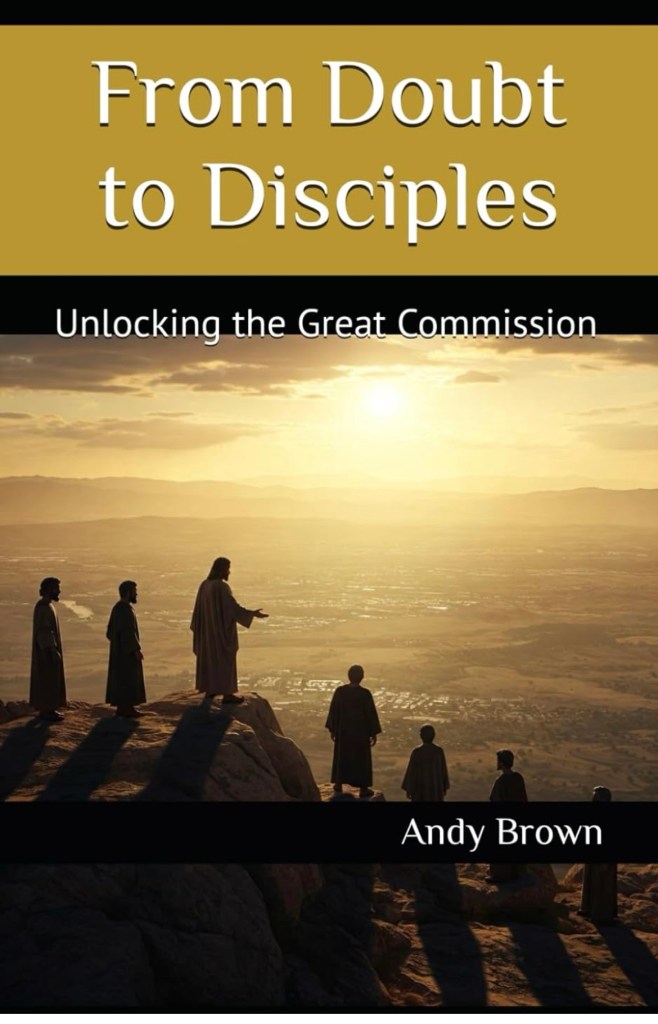
Check out Andy‘s brand-new book… From Doubt to Disciples: Unlocking the Great Commission. Now available on Amazon 

From Doubt to Disciples: Unlocking the Great Commission

The front cover of Andy‘s new book… From doubt to disciples: unlocking the great commission. 

Greetings! (RB)

Sunrising High Over Letham, Fife. Photography courtesy of Ben Bremner, https://www.facebook.com/ben.donna.grand.day.out Greet every saint in Christ …

Greetings!

This Sunday at Church: Let your wife know you thank God for her being a Mother

For this Sunday here’s what you can do: Let your wife know you thank God for her being a mother.   In the past I have written “This Sunday at Church:…

This Sunday at Church: Let your wife know you thank God for her being a Mother

This Sunday at Church: Thank Someone who Encourages You

This Sunday at Church I want to encourage you to do the following: Thank someone who encourages you. Sometimes we can take people and things for …

This Sunday at Church: Thank Someone who Encourages You

Christ is… Enough? – Andy Brown

I am reposting this article about worship songs today. There are some wonderful songs out there, and tremendous hymns of praise. The point of the below is not to ruin that!

We need to give thought to our worship. And we should be careful about what songs we sing when it comes to worship. Not every song with a Christian label is good for us. I hope the below gives you some thought and make your worship be pure before God today. 

I’ve been thinking about worship songs recently. In particular, their content and origin. This began several months ago when singing the song “Christ is Enough for me…” It got me thinking… is Christ really enough? Of course He is, but what I mean is – is enough an adequate term to describe the One Who redeemed us?…
— Read on andy-brown.org/2019/02/25/christ-is-enough/

This Sunday at Church: Pray for those who recently got married in your Church

Marriage is never easy, and couples starting out their journey together require much prayer. Are there couples in your church you could pray for today?

This Sunday at Church I want to encourage you to do the following: Pray for those who recently got married in your Church. Someone in our Tuesday …

This Sunday at Church: Pray for those who recently got married in your Church

Live the Love Life

In yesterday’s post – God is good – I shared how God had reminded me of His goodness, and that I was encouraging us all to keep this in mind as we enter into 2023. Keeping a conscious focus on God’s goodness will do wonders in our lives, and – I believe – will diffuse worry, amp up our prayer lives and enhance our joy. If God is in charge, and He is good, and He loves us deeply, then we can stand up against anything this world throws at us.

Another thing that God has reminded me of over the last few days is to be loving. In a way, it is kind of a shame that God had to bring this to my attention! Surely I should already be living and acting in a loving manner, right? Well yes, I do try… but in many respects I am quite an introvert and so effervescent acts of love and kindness do not always spring forth naturally from me. That is no excuse though, and I (and perhaps you too?) need to desire and discipline ourselves to act lovingly towards others.

A pair of feet walking… To signify walking in love.

Live the Love Life

The Bible reminds us that:

Follow God’s example, therefore, as dearly loved children 2 and walk in the way of love, just as Christ loved us and gave himself up for us as a fragrant offering and sacrifice to God.

Ephesians 5:1-2 NIV

Follow God’s example, therefore, as dearly loved children 2 and walk in the way of #love, just as #Christ loved us and gave himself up for us as a fragrant offering and sacrifice to #God. Eph 5:1-2 #Bible

God is not asking us to do anything He is not first doing Himself. We are to follow His example, learning from the way He loves us and applying it in our own lives. Jesus loved us by sacrifice. He gave up His own life and comfort so that you and I might go free. While, in most cases, you will not be expected to give up your life unto death, living the love life will require some kind of sacrifice. This is “dying to self…” and means that sometimes we go without so that others can go ahead of us.

Note the verse above instructs us to walk in love. This command is not a one-time thing. We do not love once, and tick the box. Instead it is something we do day-by-day, step-by-step. Walking in love rarely requires some grand gesture. It is often the frequent but smaller acts that really count.  Bringing your spouse a hot drink, picking up the litter/garbage from the street on your daily walk, leaving a room in a better state than you entered it, or a simple note or text message of encouragement are all examples.

Put on love

Therefore, as God’s chosen people, holy and dearly loved, clothe yourselves with compassion, kindness, humility, gentleness and patience. 13 Bear with each other and forgive one another if any of you has a grievance against someone. Forgive as the Lord forgave you. 14 And over all these virtues put on love, which binds them all together in perfect unity.

Colossians 3:12-14 NIV

Therefore, as God’s chosen people, holy and dearly loved, clothe yourselves with compassion, #kindness, humility, gentleness and #patience Col 3:12 #Bible #Jesus

More wisdom from Paul here, and words I cannot hope to add to.

Notice once again that Paul points out that we are dearly loved children. God is not expecting us to give out what we have not first received. We love because we have been loved by God.

Compassion, humility, kindness, patience etc are all reminiscent of the Fruit of the Spirit, and are all subsets of love. If we want to know what love looks like, then it looks like these fruits. 1 Corinthians 13 is the famous passage on love, and clearly shows that love is… not rude, patient, kind, does not envy and so on. If you see these characteristics in your life, then you can be assured that you are living in a loving way.

Paul tells us to “put on love.” This is a definite action – a choice we make. This is the conscious choice I need to make each day and even each hour. A shirt won’t jump on my body all by itself, and so, similarly, neither will love. I must put it on intentionally.

Let each of us clothe ourselves with love and the Lord Jesus Christ. Let our love so shine forth in our homes, places of work, communities and churches that no one can doubt who we serve. Let us live love life for all to see.


God’s Grace (RB)

Gods grace is indeed truly amazing!

Caring for a close relative suffering with dementia, this post from Bruce Cooper was very touching when I read it a few days ago.

When facing this terrible disease, or indeed, any other tremendous trial, I thank God for his grace which is more than sufficient.

I pray you are blessed by Bruce‘s words, and can rest in gods grace in whatever you are facing today.

As one endeavours to walk with God, in this life that we have been given, the grace that God so often extends to us becomes more and more apparent. …

God’s Grace

A God of Justice (Psalm 36:7-12)

We conclude our trio of studies on Psalm 36 today by reviewing the final six verses. So far, we have considered David’s revelation of sinfulness in part 1 – A Revelation of Wickedness, and then yesterday we thought about some of the attributes of God in – Faithful to the Skies.

How precious is your unfailing love, O God!

All humanity finds shelter

    in the shadow of your wings.

8 You feed them from the abundance of your own house,

    letting them drink from your river of delights.

9 For you are the fountain of life,

    the light by which we see.

10 Pour out your unfailing love on those who love you;

    give justice to those with honest hearts.

11 Don’t let the proud trample me

   or the wicked push me around.

12 Look! Those who do evil have fallen!

    They are thrown down, never to rise again.

Psalm 36:7-12 NLT

Verse seven reminds us of how precious God’s unfailing love is. In many ways, this is obvious but that makes it all too easy to just pass it over. Preciousness means value, not necessarily financial, but something we prize. God does not have to love us (in a sense). Although it would be against His character and nature, He could look upon our sinfulness and reject us outright. God’s love is not to be taken lightly or for granted. The more precious something is, the more it tends to cost, and God’s love cost Him His Son.

Many Christians ask themselves if God really loves them. They may not feel loved, and so question whether God cares at all. In the hectic world we live in, it can be difficult to hear from God at times. This leads us to think He is distant, or even uncaring. Not so! I often ask myself how well or often I hear from God, and my answer is usually the same. When I set aside other things, sit down in the quiet with Him, and listen – truly listen – I inevitably hear what God is telling me. To hear God speak into my life through His Word or in other ways is a true privilege, and it reminds me how much He really does care for me. And the same is true for you.

God’s love is not just restricted to us however, but extends to all humanity (as verse seven reminds us). John 3:16 springs to mind here:

For this is how God loved the world: He gave[a] his one and only Son, so that everyone who believes in him will not perish but have eternal life

John 3:16 NLT

God’s love extends to all humanity. While this does not mean all will accept it, it does affirm that it is available to all. The Bible does not support the idea that all people will be saved, no matter what, for that idea cheapens the cross and leaves little incentive to live a godly life in Christ Jesus. There is a hell to avoid, and while the thought does not bless me, I rejoice that God has made a way for us. Let each of us tell as many as we can of God’s saving love which never fails.

Upon first reading of verse eight, I am not certain if it refers to physical food and drink, or rather points to something more spiritual. God does indeed provide us food and sustenance, and it is certainly important to take a moment to thank Him at each meal time. Not everyone has the abundance of food we do, so it is right not to take our material blessings for granted.

Looking to verse nine as well, I wonder if David was thinking of more spiritual food in verse eight. Verse nine shows us that God is the fountain of life for us. While we need food to survive, we need God no less so. He controls all things, sustains all things, and our next breath is utterly dependent on Him and His grace towards us. God is not just our life, but our light as well. 1 John 1:5 echoes this psalm in telling us God is light. We cannot hope to see our way through this life or the next without the light of God. We cannot hope to understand, nor can we see the right way to go unless God first shows us the way. His Word is indeed a lamp unto our feet as Psalm 119:105 tells us.

Verse ten and eleven turn into an apparent word of prayer. The psalmist asks God to pour out His unfailing love on those who love Him. As referred to above, God has done this at the cross of Calvary. I am not sure we now need ask God to pour out His love, but perhaps it is better to pray that we understand and perceive the love He has already shown. David asks God to give justice to those with honest hearts. Justice is a common theme in the Bible, and we trust God to make all things well in the end. Justice in this life is not guaranteed, but we know that the God of justice will indeed comfort the afflicted and wipe every tear from their eye.

Pour out your unfailing #love on those who love you; give #justice to those with honest hearts. Psa 36:10 NLT #Bible

Verse eleven seeks protection from the proud. I like the phrasing of the NLT here, as no one likes to be “pushed around.” This continues the theme of justice, and the cry to protect the downtrodden. The proud pick on the weak, exploiting them for their own gain. We, as the people of God, must not be like this. We must not show favouritism, nor exploit those who we think are beneath us. Time and time again the Bible speaks of looking after orphans and widows, and we must look after those who are in need or marginalised.

This psalm of contrasts comes to an end with an almost prophetic note. Behold, the psalmist cries out, the wicked are no more! David knows the justice of his God, and knows that the wicked cannot stand before Him. A time will come when sin will end. A time is coming soon when the wicked will see justice. At the end of all things, God will separate the sheep from the goats, and will take care of His sheep for all eternity. I want to be among them, and want you to be too.

You cannot have #love without #justice. #Bible #Jesus #Christianity

God’s love touched on in this psalm is not so far removed from His justice. To love someone means hating anyone or anything that would harm them. You cannot have love without justice. We give thanks that our God is both full of unfailing love, and a God of true justice. Receive His love today, and allow Jesus to pay the penalty for your sin so that justice is satisfied.

Blessings on you this day.

A Gentle Answer – Andy Brown

“A gentle answer deflects anger, but harsh words make tempers flare.”Proverbs 15:1 (NLT) This particular verse came up in my Bible reading this morning. It may be very familiar to you or perhaps it’s the first time you’ve read it. Either way, there is much wisdom in its words. A gentle answer can make a…
— Read on andy-brown.org/2021/02/24/a-gentle-answer/