Misery into Hope (Micah 7:1–10)

It was a pleasure and an honour to preach at church yesterday we have been working our way through the book of Micah, and finally reached the last chapter.

The chapter opens with a rather bleak picture, but turns to the Lord in hope. You might find it helpful to read Micah 7: 1–10 before listening.

A cartoon image of a man hiding in a bush with a long butterfly net, ready to pounce 

Partnering for the Truth in a Digital Age (3 John 5–8)

In this instalment of our series exploring the Book of 3 John, we examine verses 5–8, where the Apostle John commends Gaius for supporting travelling missionaries. This passage underscores the critical role of hospitality and partnership in advancing the gospel. As we study each verse, we’ll explore its significance and consider its application in our modern context, where physical itinerant preaching has largely been replaced by digital ministries. These “digital missionaries” spread the gospel online, and this passage offers guidance for supporting their work. We’ll also delve into verse 7, which highlights the missionaries’ refusal to accept support from non-believers, emphasising how this choice serves as a powerful witness to the world while preserving the gospel’s integrity. Additionally, we’ll clarify that while our tithes belong primarily to the local church, our offerings can be directed as the Lord leads to support missionaries, digital or otherwise, with discernment to ensure our giving aligns with God’s purposes.

3 John 5 – Faithful Hospitality

“Dear friend, you are faithful in what you are doing for the brothers and sisters, even though they are strangers to you.”

John praises Gaius for his faithful support of fellow believers, particularly travelling missionaries, whom he calls “brothers and sisters.” The inclusion of “strangers” underscores Gaius’ generosity toward those he doesn’t personally know, reflecting a selfless commitment to God’s work.

Gaius’ faithfulness shines through in his practical support for missionaries, providing resources like food, shelter, or funds despite lacking personal ties with them. This hospitality was essential for enabling itinerant ministers to spread the gospel, demonstrating a love that transcends familiarity and fosters unity in the early church’s mission.

3 John 6 – Commending Generosity

“They have told the church about your love. Please send them on their way in a manner that honours God.”

The missionaries Gaius supported shared testimonies of his love before the church, affirming his reputation for generosity. John urges him to continue equipping these workers “in a manner that honours God,” ensuring their journey is supported with dignity and resources.

Gaius’ support not only sustained the missionaries but also strengthened the church’s witness through their public praise. The call to send them off honourably suggests providing practical aid—such as provisions, encouragement, or travel assistance—that reflects God’s generosity and upholds the mission’s integrity, ensuring missionaries could continue their work unhindered.

3 John 7 – Sacrificial Service and Witness to the World

“It was for the sake of the Name that they went out, receiving no help from the pagans.”

John highlights the missionaries’ sacrifice: they ventured out “for the sake of the Name” (Christ), relying solely on believers’ support and refusing aid from “pagans” (non-believers). This choice ensured their mission remained a clear testimony to the world.

Primarily, refusing pagan support allowed the missionaries to present a powerful witness to non-believers. By depending solely on the church, they demonstrated that the gospel is self-sufficient, sustained by God’s provision through His people, not by worldly resources. This independence signalled to pagans that the message of Christ stood apart from secular agendas, inviting curiosity and respect for the faith. A notable example is the Apostle Paul, who worked as a tentmaker to support himself, as described in Acts 18:3: “and because he was a tentmaker as they were, he stayed and worked with them.” Paul also writes in 1 Thessalonians 2:9, “Surely you remember, brothers and sisters, our toil and hardship; we worked night and day in order not to be a burden to anyone while we preached the gospel of God to you.” By labouring with his hands, Paul avoided burdening those he ministered to, reinforcing the gospel’s credibility as a message free from reliance on non-believers. Additionally, this practice preserved the gospel’s purity, preventing entanglement with external influences that might dilute or compromise its truth. While both witness and integrity were crucial, the outward testimony to the world was paramount, showcasing the missionaries’ trust in God and the church’s unity in supporting the mission.

The Need for Discernment in Giving

When supporting missionaries, particularly digital ones, we must exercise wisdom and discernment in our giving. Unlike travelling ministers, whose character and lifestyle could often be observed directly by the communities they served, digital missionaries operate in a virtual space, making it harder to assess whether they bear good fruit for the gospel. While we can evaluate their teaching at face value, their personal conduct—how they live out their faith behind the scenes—remains less visible. To ensure our offerings honour God, we should seek ministries that demonstrate transparency, such as those publishing financial accounts or clearly outlining their mission and impact. For example, supporting a digital ministry that provides detailed reports on how donations are used reflects wise stewardship, ensuring our gifts advance the gospel through trustworthy channels.

3 John 8 – Partners in Truth

“We ought therefore to show hospitality to such people so that we may work together for the truth.”

John concludes by urging believers to support these missionaries, becoming “fellow workers for the truth.” By aiding them, Gaius and others actively participate in their gospel mission, sharing in its impact.

Supporting God’s workers makes believers partners in spreading the truth. The term “fellow workers” implies a collaborative effort, where every act of hospitality—however small—contributes to the mission of proclaiming Christ, uniting the church in a shared purpose.

Application Today: The message of 3 John 5–8 resonates in our digital age, where online ministries serve as modern equivalents of travelling missionaries. Just as Gaius supported strangers for the sake of the gospel, we can back “digital missionaries”—pastors, podcasters, or content creators—who spread God’s Word through platforms like YouTube, social media, or apps. This support might include engaging with their content, sharing posts to amplify their reach, or contributing offerings to sustain their work, such as donations to maintain websites, fund outreach campaigns, or develop Christian apps. However, we must prioritise our tithes to the local church, which serves as the primary hub for worship, teaching, and community, ensuring its ministries thrive. Our offerings, beyond the tithe, can be directed as the Lord leads to support missionaries, whether digital or traditional, provided we use discernment to ensure their credibility. The principle of refusing pagan support, as seen in verse 7, remains vital. Many digital ministries avoid secular sponsorships to maintain a clear witness to the world, showing that the gospel relies on God’s provision through His people, not on commercial or ideological influences. By supporting these ministries, we help them uphold this testimony, demonstrating to non-believers the power and independence of the Christian faith. For example, donating to a Christian podcast that refuses secular ads or promoting a YouTube channel that relies solely on believer support reinforces this witness. As we partner with these ministries through our offerings, we become fellow workers for the truth, advancing Christ’s mission in a digital world.

Conclusion: The example of Gaius in 3 John 5–8 challenges us to support those who proclaim the gospel, just as he did for travelling missionaries. In today’s context, this means standing with digital missionaries who carry God’s truth to global audiences. While our tithes belong first to the local church, our offerings can be given as the Lord leads to support these ministries, using discernment to ensure they are worthy of our gifts. By refusing pagan support, these missionaries maintain a strong witness to the world, and through our resources, engagement, and prayers, we uphold the gospel’s integrity and become partners in spreading the truth in our time.

Warm Greetings and Walking in Truth (3 John 1–4) 

In my previous post, A Mighty Message in a Little Letter, I provided an overview of the Third Epistle of John, a brief yet profound letter in the New Testament. This post marks the beginning of a new series where I will examine all 14 verses of 3 John, verse by verse, to uncover the depth of its message. Today, we focus on the first four verses, exploring the warmth of John’s greetings, the significance of spiritual and physical health, and the call to walk in truth. This study aims to provide practical insights for living out our faith, grounded in the text’s historical and theological context.

A man walking alone on a sunlit forest path, holding two books—one in each hand. He is seen from behind, heading toward a bright, misty clearing. To his left, there is a signpost with the word “TRUTH” and an arrow pointing forward in the direction he is walking. The path is surrounded by lush green foliage and tall trees, with sunlight streaming through the leaves, creating a peaceful and contemplative atmosphere. In the distance, there is a large, scroll-like object with writing on it, partially obscured by the light and trees, adding a sense of mystery and symbolism to the scene.

Verse 1: A Warm and Personal Greeting

“The elder, To my dear friend Gaius, whom I love in the truth.” (3 John 1, NIV)

John, identifying himself simply as “the elder,” opens the letter with a warm address to Gaius, a beloved friend. The phrase “whom I love in the truth” reflects not only personal affection but also a shared commitment to the gospel. The warmth of John’s greeting is striking. In an era where letters were rare and precious, receiving such a personal message from an apostle must have been profoundly encouraging. Imagine Gaius, perhaps weary from challenges in the church, opening this letter and feeling the weight of John’s care and affirmation. This sets the tone for the letter, reminding us that Christian relationships are rooted in love and truth, fostering encouragement and mutual support.

Verse 2: A Prayer for Health, with a Deeper Meaning

“Dear friend, I pray that you may enjoy good health and that all may go well with you, even as your soul is getting along well.” (3 John 2, NIV)

Verse 2 is often cited by prosperity gospel preachers as evidence that Christians should expect physical health and material success. However, a closer look reveals a more nuanced meaning. John’s prayer for Gaius’s good health and prosperity is a common epistolary greeting, akin to a standard well-wishing in ancient letters. It expresses a heartfelt desire for Gaius’s well-being but does not guarantee it as a divine promise. The key phrase, “even as your soul is getting along well,” prioritises spiritual health over physical. John acknowledges Gaius’s strong faith and implies that spiritual vitality is primary, with physical health being secondary. This counters prosperity teachings by grounding our ultimate hope in spiritual flourishing, not earthly circumstances. While God cares for our physical needs, John’s focus is on the soul’s alignment with God’s truth, which sustains us through life’s trials.

Verse 3: Walking in the Truth

“It gave me great joy when some believers came and testified about your faithfulness to the truth, telling how you continue to walk in it.” (3 John 3, NIV)

The phrase “walking in the truth” is central to this verse and the letter’s message. For John, walking in the truth is more than intellectual assent to biblical doctrine; it is a daily, practical expression of faith in our words, thoughts, and actions. It means living in alignment with the gospel, allowing its truth to shape every aspect of life. To illustrate, we can compare this to Galatians 2:11-14, where Paul confronts Peter for not “walking in line with the gospel.” Peter, under pressure, withdrew from eating with Gentiles, implying that adherence to Jewish customs was necessary for fellowship. This contradicted the gospel’s truth of unity in Christ, regardless of cultural or ethnic distinctions. Peter’s failure to walk in the truth caused division and confusion. For us, walking in the truth involves consistency between our beliefs and behaviour, ensuring our actions reflect Christ’s love, grace, and justice. It challenges us to examine whether our daily choices—how we treat others, handle conflicts, or steward resources—align with the gospel.

Verse 4: The Joy of Faithful Disciples

“I have no greater joy than to hear that my children are walking in the truth.” (3 John 4, NIV)

John concludes this opening section with a heartfelt expression of joy. The term “my children” likely refers to those John has mentored or led to faith, including Gaius. His “greatest joy” comes from knowing they are walking in the truth, faithfully living out the gospel. This verse underscores the deep satisfaction of seeing others grow in faith. As I write this blog, I feel a similar privilege and humility. Knowing that readers might be encouraged to walk in the truth through these reflections is profoundly humbling and joyful. It reminds us that our greatest legacy is not personal achievements but the impact of our faith on others, nurturing a community rooted in truth and love.

Conclusion: A Call to Faithful Living

These first four verses of 3 John set a foundation for the letter’s themes of hospitality, faithfulness, and truth. John’s warm greeting encourages us to build relationships grounded in love and gospel truth. His prayer for Gaius reminds us to prioritise spiritual health, trusting God with our physical needs. The call to walk in the truth challenges us to live consistently with the gospel, as Paul urged Peter to do. Finally, John’s joy in his disciples’ faithfulness inspires us to invest in others’ spiritual growth. As we continue this series, may we be encouraged to walk in the truth, finding joy in faithful living and community.

From Doubt to Disciples: the interview on YouTube 

It has been an excellent week on the blog, with lots of readers and comments so thank you to everyone who has contributed.

It was also exciting to feature on Pure 24/7 Radio this week to discuss my book, so a massive thank you to the team over there for having me.

If you happen to miss the interview, here is a link to it on YouTube so you can find out more about the book. And even grab yourself a copy…

Andy‘s interview on YouTube

Have a blessed day! 

Screenshot

Love in Action: Living out Jesus‘s Commands

Introduction: The Call to Obey God’s Commandments

What does it mean to love God in a world filled with challenges? The Bible provides a clear answer: loving God is inseparable from obeying His commands. In 1 John 5:2–3 (NIV), we read, “This is how we know that we love the children of God: by loving God and carrying out his commands. In fact, this is love for God: to keep his commands. And his commands are not burdensome.” The apostle John emphasises that obedience is the tangible expression of our love for God. Far from being oppressive, God’s commands are designed to lead us into abundant life.

This post begins a series exploring how we can live out our love for God by obeying the commands of Jesus. Today, we focus on three specific commands: loving our neighbour, forgiving others, and making disciples. Each command offers practical ways to reflect God’s love in our daily lives. By examining their meaning and application, we can take steps toward a deeper, more obedient faith.

A group of seven people, including both older adults and younger adults, standing together outdoors on a sunny day. They are smiling and appear to be enjoying each other’s company. Several of them are holding bags filled with fresh produce, such as leafy greens and other vegetables. The group is casually dressed, and they are standing on a paved street with yellow buildings and green trees in the background. In the distance, a church steeple is visible. The overall mood is cheerful and communal, suggesting they may have just come from a market or community event.

Examining Three Commands of Jesus

Command 1: Love Your Neighbour as Yourself (Mark 12:31)

Jesus declares in Mark 12:31 (NIV), “The second is this: ‘Love your neighbour as yourself.’ There is no commandment greater than these.” Paired with loving God, this command forms the foundation of Christian ethics. It calls us to treat others with the same care, respect, and selflessness we desire for ourselves.

Loving our neighbour does not mean accepting or endorsing sinfulness. True love seeks the ultimate good of others, which may involve graciously challenging sinful behaviour and sharing the Gospel. This command is radically inclusive, extending to friends, strangers, and even those who oppose us. It reflects God’s heart for all people, urging us to see others through His eyes.

Practically, we can obey this command by serving those around us—perhaps helping a struggling neighbour with practical needs or listening empathetically to a friend. Loving our neighbour might also mean gently pointing someone toward God’s truth through the Gospel, offering hope and redemption. For example, consider a church member who invited a colleague to a Bible study, patiently answering their questions about faith. Such actions embody Christ’s love. Reflect on your daily interactions: are they marked by this selfless, Gospel-centred love?

Command 2: Forgive Others (Matthew 6:14–15)

In Matthew 6:14–15 (NIV), Jesus teaches, “For if you forgive other people when they sin against you, your heavenly Father will also forgive you. But if you do not forgive others their sins, your Father will not forgive your sins.” Spoken in the context of the Lord’s Prayer, this command underscores forgiveness as a cornerstone of Christian life.

Forgiveness means releasing resentment and extending grace, mirroring the forgiveness God offers us. It is not always easy—deep hurts, such as betrayal or injustice, can feel insurmountable. Yet Jesus calls us to forgive, relying on God’s strength to heal our wounds. Forgiveness does not excuse sin but frees us from bitterness and aligns us with God’s heart.

To apply this command, start by praying for those who have hurt you, asking God to soften your heart. Journaling can help process emotions, while seeking reconciliation—where appropriate—can restore relationships. For instance, forgiving a family member who apologised after a dispute can rebuild trust. Forgiveness is often a process, not a one-time act. Begin with small steps, trusting God to guide you toward healing and peace.

Command 3: Make Disciples (Matthew 28:19–20)

Jesus’s final charge, known as the Great Commission, is found in Matthew 28:19–20 (NIV): “Therefore go and make disciples of all nations, baptising them in the name of the Father and of the Son and of the Holy Spirit, and teaching them to obey everything I have commanded you.” This command calls every believer to share the Gospel and nurture others in faith.

Making disciples involves sharing the good news of Jesus, mentoring new believers, and living as an example of His teachings. This command connects directly to loving our neighbour: there is no greater act of love than sharing God’s love through the Gospel, offering others the hope of eternal life. While the scope is global, discipleship begins in our immediate communities—with friends, family, or colleagues.

Practically, you can obey by sharing your faith with a friend, joining a small group to grow together, or mentoring a new believer. For deeper insight into the Great Commission, I recommend my book, From Doubt to Disciples, which explores how to live out this command with confidence. Grab a copy to discover practical steps for disciple-making. By modelling Christ’s love, your faith can become contagious, inspiring others to follow Him.

Conclusion: Living Out Love Through Obedience

The commands to love our neighbour, forgive others, and make disciples are powerful expressions of loving God, as outlined in 1 John 5:2–3. Loving our neighbour includes sharing the Gospel, not affirming sin, ensuring our love points to God’s truth. Forgiving others reflects God’s grace, freeing us to live in peace. Making disciples, the ultimate act of neighbourly love, spreads God’s hope to others. These commands, though challenging, are not burdensome—they lead to a life aligned with God’s purpose.

Start small: choose one command to focus on this week. Perhaps offer a kind word to a neighbour, forgive a lingering hurt, or share your faith with a friend. God’s grace empowers us to grow in obedience, transforming our lives and communities. This post is the first in a series exploring Jesus’s commands. Future posts will examine others, such as “Do not judge” or “Follow me,” to deepen our journey.

Jesus said if you love me, you will obey me… How much will you love him this week?

Starving for God’s Truth (Amos 8:11) 

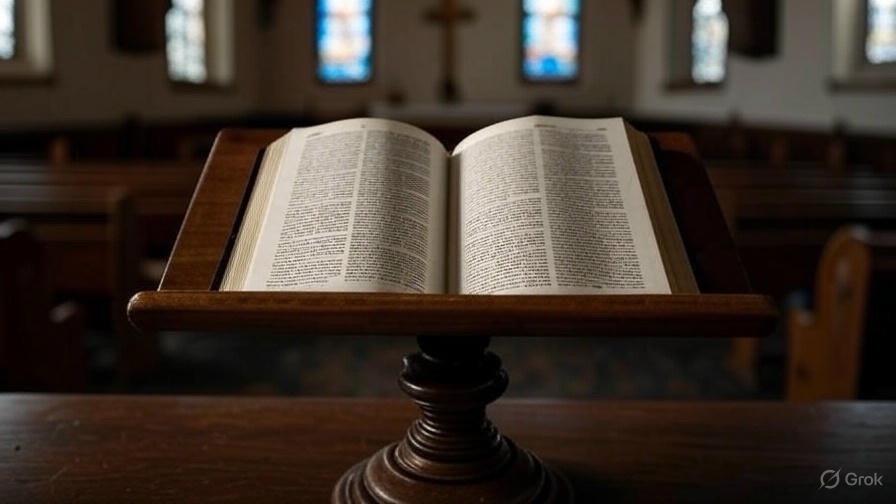
A blank Bible on a lectern indicating a famine of God‘s word 

In Amos 8:11, the prophet delivers a stark warning from God: “‘The days are coming,’ declares the Sovereign Lord, ‘when I will send a famine through the land—not a famine of food or a thirst for water, but a famine of hearing the words of the Lord.’” This Old Testament passage describes a divine judgement where God withholds His word as punishment for persistent disobedience. In our modern day, surrounded by unprecedented access to Scripture, this warning remains profoundly relevant, exposing a spiritual famine amidst apparent abundance.

In ancient Israel, God’s word through prophets was a lifeline, guiding the nation in covenant faithfulness. When the people embraced idolatry and injustice, God’s response was sometimes silence—a withdrawal of His voice. Amos 8:12 elaborates, stating that people would “stagger from sea to sea… searching for the word of the Lord, but they will not find it” (NIV). This spiritual famine was a deliberate act of judgement, leaving the nation desolate. Similarly, Hosea 4:6 declares, “My people are destroyed from lack of knowledge. Because you have rejected knowledge, I also reject you as my priests.” Here, God links spiritual ignorance to rejecting His truth, a precursor to the famine Amos foretells.

Today, such a famine seems unlikely. Smartphones and tablets provide instant access to countless Bible translations, sermons, and commentaries. A quick search yields devotionals, theological podcasts, and Christian blogs (including this one ). Yet, Amos’s warning persists. Despite this digital abundance, many churches fail to proclaim the full counsel of God’s word. Some prioritise uplifting messages over the call to repentance and faith in Christ. Others dilute the gospel, avoiding the reality of sin or the truth that “there is no other name under heaven given to mankind by which we must be saved” (Acts 4:12). This selective preaching creates a modern famine—not of Scripture’s availability, but of its faithful proclamation.

Consider the state of many churches. Is the gospel preached clearly, pointing to Christ’s atoning work and the need for repentance? Too often, sermons focus on self-help or cultural trends, neglecting the transformative power of God’s word. Hebrews 4:12 reminds us that Scripture is “living and active, sharper than any double-edged sword,” yet its edge is blunted when churches sidestep its harder truths. This echoes the judgement of Amos 8:11: God’s word is present, but its clarity and authority are withheld from those who refuse to heed it. Isaiah 55:2 questions, “Why spend money on what is not bread, and your labour on what does not satisfy?”—a challenge to those chasing spiritual substitutes over God’s truth.

This famine manifests in congregations unaware of biblical doctrines or unprepared to confront sin. It appears where the gospel is reduced to moralism, leaving souls hungry for the true “bread of life” (John 6:35). As believers, we must seek churches that faithfully proclaim God’s word in its entirety, urging repentance and pointing to Christ. We must also examine our hearts, ensuring we don’t contribute to this famine by ignoring Scripture’s call to holiness.

Amos 8:11 challenges us to hunger for God’s word, not merely its accessibility but its faithful preaching. Let’s pray for churches to boldly declare the full counsel of God, lest we wander in a self-inflicted famine, searching for truth we’ve chosen to ignore.

Transcription of Beyond Doubt: John 20: 19-31 

For those who prefer to read rather than listen, please see below an edited transcript of my sermon which I shared with you yesterday. 

Peace, Power, and Purpose: Meeting the Risen Lord

Good morning. It’s wonderful to share some thoughts with you today. I was due to speak a little while ago but was unwell, so I’m really pleased to be here now.

Thinking back, I believe I spoke around Easter last year too.
Last year, we looked at the resurrection story through the book of Luke, focusing on the road to Emmaus. This year, we’ve been considering it through John’s Gospel, and today’s passage (John 20:19-31) actually overlaps a little with the end of that Emmaus story, describing events later on that same Resurrection Sunday evening. The disciples from Emmaus may well have been in the very room we read about today. What we know for sure is that Thomas wasn’t with them. We’ll explore more about Thomas, also known as Didymus (the twin), in a few minutes.

There’s a lot in this passage, perhaps more than we can fully unpack in one go, but I hope we can learn a great deal from this powerful story.

In the Locked Room

The passage begins on the evening of that first Easter Sunday. The disciples were gathered together, having been through the tumultuous events of Holy Week. They had witnessed Jesus’ actions in the temple, seen him wash their feet, and then watched him be arrested, illegally tried, crucified, and die.

That very day, they’d also heard the astonishing reports from the women at the tomb – that Jesus’ body was gone. John tells us he and Peter had run to the tomb themselves and confirmed it was empty. Some had even reported seeing the Lord.

Now, huddled together in a locked room, they were terrified. They were afraid of the Jewish leaders who had been willing to kill their leader and wouldn’t hesitate to kill them too. So they were locked away, probably praying, certainly fearful.

Suddenly, Jesus appears among them. He comes and stands right there. There’s some discussion about whether this was a truly supernatural appearance, like a sudden ‘poof’, or if perhaps Jesus simply used a key to enter the locked room. The text itself simply says he “appeared among them”.
However, regardless of how he entered, the event itself is undeniably supernatural. Just a day or two before, this man was dead, crucified. They had seen him die. And now he stands before them, alive. If that isn’t supernatural, I’m not sure what is.

He shows them his hands and his side, displaying the wounds. There is no mistake; this is Jesus, resurrected from the dead.


Peace Be With You


Three times in this passage, Jesus says to the disciples, “Peace be with you.” Considering their backdrop of being locked away and terrified, Jesus appearing and offering this peace is incredibly comforting and reassuring.

They had been unsure about who he was, much like the disciples on the road to Emmaus initially didn’t fully recognise him. By showing them the wounds, Jesus demonstrated his identity. Just as perhaps the Emmaus disciples recognised him as he broke bread (maybe seeing his hands then), Jesus confirms he is the one who was crucified. This is no hoax, no trick.

The Three Things Jesus Said

In that room that night, Jesus says or does three significant things. Let’s look at each one:

“As the Father has sent me, I am sending you.” These words echo the sentiment of the Great Commission, although that event occurred later on a mountain in Galilee (Matthew 28). Here, Jesus is already giving his disciples their mission. He is sending them out into the world. This wasn’t just for the original twelve (or eleven, as it was then); it is for us too. We are not called just to gather inside the church walls, as wonderful as that is, but also to go out and tell everyone about Jesus. As one church worker I heard put it, Jesus didn’t say “Get your programme together and invite them in.” He said, “Go.” We are to go and meet people where they are, in our communities, and tell them about Jesus.

He breathes on them and says, “Receive the Holy Spirit.” This might seem strange to us today, but it’s deeply symbolic. It reminds us of Genesis, where God formed Adam from dust and breathed the breath of life into him. The Old Testament word ‘Ruach’ can mean wind, breath, or spirit. Here, Jesus is breathing life and the Spirit into them. This wasn’t the full outpouring of the Spirit at Pentecost (which we will celebrate in a few weeks), but rather a promise, a ‘down payment’ if you like, of the Spirit that would empower them fully after Jesus’ ascension. Jesus gives them the Spirit because this great mission he’s sending them on is not something they can do in their own strength or wisdom. It’s not about how clever or good we are at talking; it’s about the power and presence of the Spirit working through us and in the hearts of those who hear.

He says, “If you forgive anyone’s sins, their sins are forgiven; if you do not forgive them, they are not forgiven.” This is perhaps the most challenging verse in the passage, and there isn’t necessarily one single, easy interpretation.

Some have suggested this refers to church discipline, where the church has the authority to ‘forgive’ or ‘withhold forgiveness’ in a disciplinary sense. However, the context here isn’t really about church discipline.

Others see it as a specific, apostolic gift given only to this particular group of disciples, not extending to others or future believers. But I struggle with this too.

Consider the story of the paralysed man brought to Jesus (Mark 2:1-12). When they lowered him through the roof, Jesus didn’t immediately heal him; he said, “Son, your sins are forgiven.” The religious leaders were outraged, rightly observing, “Who can forgive sins but God alone?” Jesus then proved his authority to forgive sins by healing the man, demonstrating the invisible (forgiveness) through the visible (healing). They were correct: ultimate forgiveness of sins against God is God’s prerogative alone. While we forgive one another personally, we don’t have the authority to grant divine forgiveness on God’s behalf.

Also, think about Thomas not being present that night. If this was a special apostolic gift to forgive sins, it would be unfortunate for him to have missed out!
I believe the most consistent interpretation is that this verse refers to the declaration of forgiveness. As the disciples (and we) go out and preach the Good News, when people respond to Christ, believe in him, and follow him, we can confidently declare that their sins have been forgiven by God. Conversely, when people reject Christ, we can declare that they remain unforgiven, because forgiveness is found only in Jesus. It’s a power to announce the reality of a person’s standing before God based on their response to the gospel, rather than the ability to dispense or withhold forgiveness ourselves.

Doubting Thomas

The passage moves on to Thomas. John specifically notes that Thomas, also known as Didymus, was not with them when Jesus first appeared. We don’t know why – maybe he was running an errand! When the others excitedly told him, “We have seen the Lord!”, Thomas’s response was firm: “Unless I see the nail marks in his hands and put my finger where the nails were, and put my hand into his side, I will not believe.”


Because of this, he is often labelled “Doubting Thomas.” But perhaps that’s a little unfair. This is the same Thomas who, earlier in John’s Gospel (John 11), when Jesus decided to go to Jerusalem knowing it meant his death, bravely said to the other disciples, “Let us also go, that we may die with him.” Those are not the words of someone uncommitted!


Thomas didn’t want to rely on second-hand accounts. He needed to see, touch, feel, and know for himself that this extraordinary, unbelievable claim – that Jesus was alive after crucifixion – was true. He needed tangible proof. His demand highlights the reality of Jesus’ crucifixion and wounding. (Incidentally, this verse also definitively counters recent claims by some scholars that Jesus wasn’t nailed to the cross; Thomas’s demand for the “nail marks” and Old Testament prophecy about him being “pierced” are clear biblical evidence).


My Lord and My God


Eight days later (a week later, if you count inclusively), the disciples were together again, and this time Thomas was with them. Once more, Jesus appears among them, presumably in a similar manner. Again, he says, “Peace be with you.”


Then, he turns directly to Thomas. “Put your finger here; see my hands. Reach out your hand and put it into my side. Stop doubting and believe.”


The text doesn’t explicitly say whether Thomas actually touched him. What it does say is his immediate response: “My Lord and my God!”


What an incredible confession! It’s a step beyond Peter’s earlier confession of Jesus as the Christ, the Messiah. Here, Thomas recognises, after everything they had witnessed, that Jesus is indeed God in human form.


Jesus’ resurrected body, perhaps, had supernatural capabilities – appearing in a locked room, for instance. But importantly, it also carried the wounds inflicted on his earthly body. Those scars remained. One day, we too will have new, perfect bodies in heaven, free from pain and decay. But there will be one person in heaven who carries scars – Jesus. Those wounds will serve as an eternal reminder of the immense sacrifice he made for us. They are badges of honour that we will worship for all eternity.


“My Lord and my God,” Thomas declared.


Why John Wrote


John concludes this passage by stating, “Jesus performed many other signs in the presence of his disciples, which are not recorded in this book. But these are written that you may believe that Jesus is the Messiah, the Son of God, and that by believing you may have life in his name.” (John 20:30-31)


John is crystal clear about his purpose. He didn’t record every single thing Jesus did, but he carefully selected specific events and teachings for two reasons:

So that you might know that Jesus is the Messiah, the long-awaited one prophesied in the Old Testament.

So that by believing in him, by putting your trust in this Messiah, you might have eternal life.
This directly ties back to the commission Jesus gave his disciples: “As the Father has sent me, I am sending you.” John wrote his Gospel so that people might know who Jesus is and believe. Likewise, the disciples were sent out to tell the world who Jesus is so that others might believe and have eternal life.


In the same way, you and I today have that same mission. We are sent out to tell everyone about Jesus, so they too might believe he is the Messiah and have eternal life. So they too might join Thomas in saying, “My Lord and my God.”
Can We Say It?


“My Lord and my God.” These are not words to be said lightly. Where is Jesus in the tapestry of your life – your work, your home, your family, your leisure? Is he just somewhere in the picture, or is he at the very top? Is he your primary focus, your absolute priority in all things? Is he both your Lord and your God?


If he is truly both of those things, then nothing else can be more important. This doesn’t mean the other things in life are unimportant – our work, family, and how we spend our time all matter. But Jesus must be our ultimate priority.


The challenge for each of us today is: Can we honestly and truthfully say, alongside Thomas, “My Lord and my God”?


We don’t have the benefit of seeing Jesus physically with our own eyes today. Thomas saw Jesus and believed. But Jesus said to him, “Because you have seen me, you have believed; blessed are those who have not seen and yet have believed.”


That’s us. We haven’t seen Jesus physically, not like Thomas did. Yet, we believe. And Jesus calls us blessed because of that belief.


That seems a wonderful place to end. We are blessed because we know Jesus, and we believe in him even without seeing him. As we go out from here, let us carry the message of Jesus, encouraging others to say, “My Lord and my God,” and ensuring that we can honestly and truthfully say it ourselves, meaning it with our lives.


Amen.


Let’s pray.
Heavenly Father, we thank you for your word and its truth. Lord Jesus, we know Thomas came to you with doubts, and you graciously encouraged him. Lord, if we have doubts today, we pray that you would also encourage us. We thank you that you bless us even though we haven’t seen you physically; we know you are real. We pray, Lord, that we will keep you in your rightful place in our lives, first and foremost above everything else. We pray today that we can say, “My Lord and my God,” and truly mean those words, living out that commitment authentically. We pray that we would receive your Holy Spirit, empowering us to go out and take the good news of the gospel into our communities, our homes, our streets, our workplaces – into the lives of everyone we encounter. Help us to tell them not only that Jesus is the Messiah, but that by believing in and trusting him, they might inherit eternal life. Help us to go and make disciples. Help us to tell people how wonderful you are. In Jesus’ name, Amen.

Beyond Doubt: John 20: 19–31

As ever, it was a tremendous privilege to speak at this morning’s church service. Continuing our Easter services, we were looking at the gospel of John and share below my sermon which I hope you enjoy.

A cartoon image of doubting Thomas standing in the middle of a room looking sceptical 

A Mighty Message in a Little Letter – 3 John: A Call to Faith, Hospitality, and Truth

Imagine receiving a personal letter from a trusted friend, filled with encouragement, warnings, and a call to live faithfully. The letter of 3 John is just that—a brief but powerful message that resonates with us today. Written by the Apostle John, this short epistle addresses Gaius, a faithful believer, and tackles issues in the early church. In this post,I will unpack the key themes of 3 John, outline its structure, and offer practical applications for our lives.

Though concise, 3 John reveals timeless truths about walking in truth, showing hospitality, and confronting challenges in the church.

A cartoon postman/mailman carrying a tiny letter with a church in the background as if he is delivering this small but important epistle

Context and Background

The letter of 3 John is traditionally attributed to the Apostle John, the same author of 1 and 2 John and the Gospel of John, based on its similar style and theological emphasis. Likely written in the late 1st century, the letter is addressed to Gaius, a beloved member of a Christian community, with references to two other figures: Diotrephes and Demetrius. The setting appears to be a church facing internal conflicts, particularly regarding the support of traveling missionaries and issues of authority.

John’s purpose in writing is multifaceted: to commend Gaius for his faithfulness, to warn against the disruptive behavior of Diotrephes, and to encourage continued support for missionaries spreading the gospel. Despite its brevity—only 14 verses—3 John holds significant value for understanding personal relationships, truth, and hospitality in the early church. It reminds us that even small acts of faithfulness can have a lasting impact.

Outline of Key Topics in 3 John

Greeting and Commendation (Verses 1-4)

The letter opens with John’s warm greeting to Gaius, whom he addresses with affection and describes as beloved. John expresses joy upon hearing that Gaius is “walking in the truth,” a phrase that underscores Gaius’ faithfulness to the gospel. This section highlights the importance of living a life aligned with God’s truth, a central theme of John’s writings. For John, truth is not merely intellectual assent but a way of life that reflects commitment to Christ.

Hospitality and Support for Missionaries (Verses 5-8)

John praises Gaius for his hospitality toward traveling Christian workers, likely itinerant missionaries spreading the gospel. Gaius has provided practical support, such as food and shelter, enabling these workers to continue their ministry. John urges Gaius to persist in this generosity, noting that supporting such workers makes believers “co-workers for the truth.” This section emphasizes the role of hospitality in advancing God’s kingdom and our shared responsibility to support gospel work.

Warning Against Diotrephes (Verses 9-10)

John then addresses a troubling issue: the behavior of Diotrephes, a church member who rejects John’s authority and refuses to welcome traveling missionaries. Diotrephes’ actions are driven by pride, as he seeks preeminence and even expels those who disagree with him. John promises to address this behavior directly if he visits, highlighting the dangers of pride and division in the church. This section serves as a caution against self-centered leadership that undermines the unity and mission of the Christian community.

Commendation of Demetrius (Verses 11-12)

In contrast to Diotrephes, John commends Demetrius, who has a good reputation among the church and is likely a missionary or leader. John encourages Gaius to “imitate what is good” rather than evil, presenting Demetrius as a godly example. This brief section underscores the value of positive role models in the Christian life and the importance of character in leadership.

Closing and Personal Note (Verses 13-14)

John concludes with a personal note, expressing his desire to visit Gaius in person rather than communicate only through letters. He sends greetings from mutual friends and blesses Gaius with peace. This closing reinforces the value of personal connection in the Christian community, reminding us that relationships are central to the life of the church.

Practical Applications for Today

The letter of 3 John, though written to a specific individual in a specific context, offers timeless lessons for us today. Here are five practical applications for living out its teachings:

Walking in Truth

John’s joy over Gaius’ faithfulness encourages us to prioritize studying and applying Scripture in daily life. We ought to live out biblical truth in our actions and decisions, not just understand it intellectually. We should foster accountability by engaging in Bible study groups or mentoring relationships to stay rooted in God’s truth.

Practicing Hospitality

Gaius’ support for missionaries challenges us to open our homes and resources to those in need, particularly those serving in ministry. We should consider hosting a missionary, supporting a local outreach, or providing practical help to church workers. We ought to cultivate a culture of generosity in our churches by organizing initiatives to support global or local missions.

Addressing Division

The example of Diotrephes serves as a warning against prideful or divisive behavior in the church. We should confront such issues with humility and grace, seeking reconciliation and unity. We ought to promote a shared focus on the gospel to prevent self-centeredness from fracturing our communities.

Imitating Godly Examples

Demetrius’ good reputation highlights the importance of seeking and becoming godly role models. We should identify mentors who reflect Christlike character and strive to emulate their faith and integrity. Likewise, we ought to inspire others by living with consistency and humility in our communities.

Building Personal Connections

John’s desire for a face-to-face visit underscores the value of personal relationships in the church. We should invest in meaningful interactions, whether through small groups, one-on-one discipleship, or sending encouraging notes. Building strong connections strengthens our churches’ witness and fosters mutual support.

Conclusion

The letter of 3 John, though only 14 verses long, is a rich and relevant message for us today. It calls us to walk in truth, practice hospitality, confront division, follow godly examples, and build personal connections. These timeless principles challenge us to live faithfully in our churches and communities. We should reflect on how we can apply these lessons—perhaps by supporting a missionary, fostering unity, or mentoring others. Let 3 John inspire us to love generously and strengthen the body of Christ.

If you would be interested in doing a verse by verse study of this letter, do let me know in the comments! Thanks 


Check out Andy‘s brand-new book… From Doubt to Disciples: Unlocking the Great Commission. Now available on Amazon 

From Doubt to Disciples: Unlocking the Great Commission

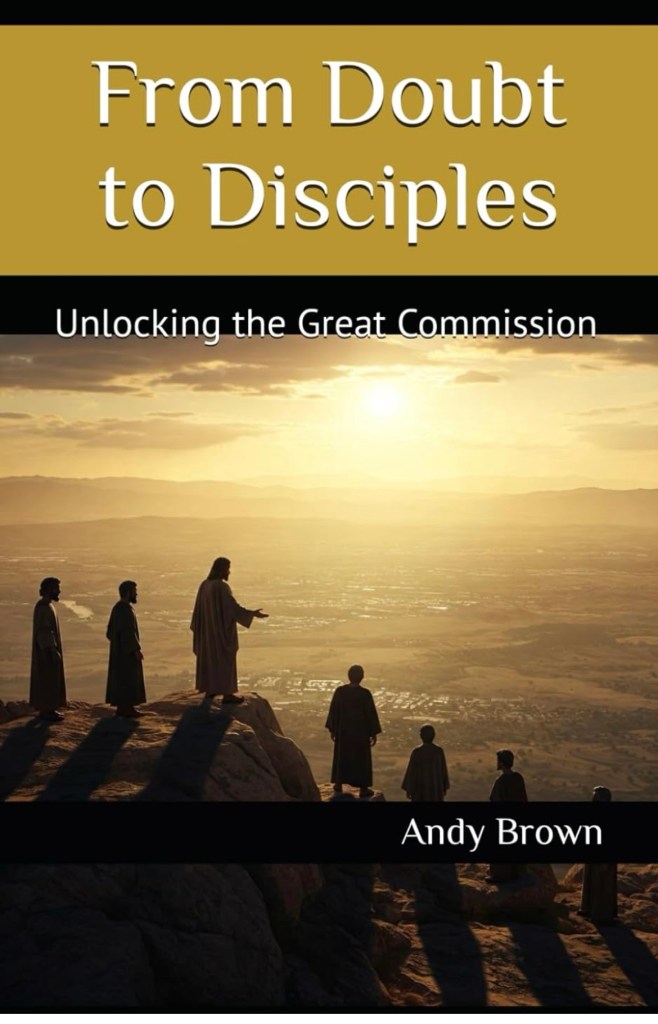
The front cover of Andy‘s new book… From doubt to disciples: unlocking the great commission. 

New Book Announcement! From Doubt to Disciples 

I am very excited to announce the publication of my second book! From Doubt to Disciples: Unlocking the Great Commission is now available on Kindle e-book and paperback from Amazon. 

A photograph of the book cover for From Doubt to Disciples: Unlocking the Great Commission by Andy Brown 

I began writing this little book a number of years ago, based on a series I had written on the blog about the Great commission. While the manuscript was mostly complete, it sat untouched for awhile… I like to think it was maturing! I was very pleased to complete the final edit and get it published this week!

With huge thanks to Andy B of the Berry Bunch and Pure 24/7 Radio, who kindly wrote the foreward for this book.

The book takes a deep dive into the words of the Great Commission which Jesus left us. the commission goes far beyond simply telling others about Jesus, although that is clearly a part of it.

To find out more, I guess you’ll have to read it…


From Doubt to Disciples on Amazon

Here is the blurb from the back cover:

Jesus’ final instructions weren’t just a suggestion – they were a commission. This book delves deep into the Great Commission as revealed in Matthew and Mark, culminating in the vital understanding from Acts: don’t go it alone. Explore the call to make disciples, baptise, and teach, and grasp the essential role of the Holy Spirit in fulfilling this monumental task. Discover how to move forward prayerfully and powerfully, playing your part in God’s enduring mission to the ends of the earth.

If you read and enjoy it, please do recommend to a friend or leave a review.

Finally, a massive thank you to everybody who follows this blog-sporadic as it is-and praise to the Lord Jesus Christ for all that he has done for us. 

From Secret Faith to Bold Devotion: John 19:38–42

Following Jesus’ crucifixion, John 19:38–42 describes the burial of His body, a moment of devotion amidst fear and uncertainty. This passage introduces Joseph of Arimathea and Nicodemus, two figures who step forward to honour Jesus in death. This study explores the significance of Jesus’ burial, Jewish customs, the garden tomb’s possible locations, and the disciples’ limbo, encouraging Christians to proclaim their faith boldly. The burial of Jesus reveals both human fear and profound devotion, pointing to the hope of resurrection.

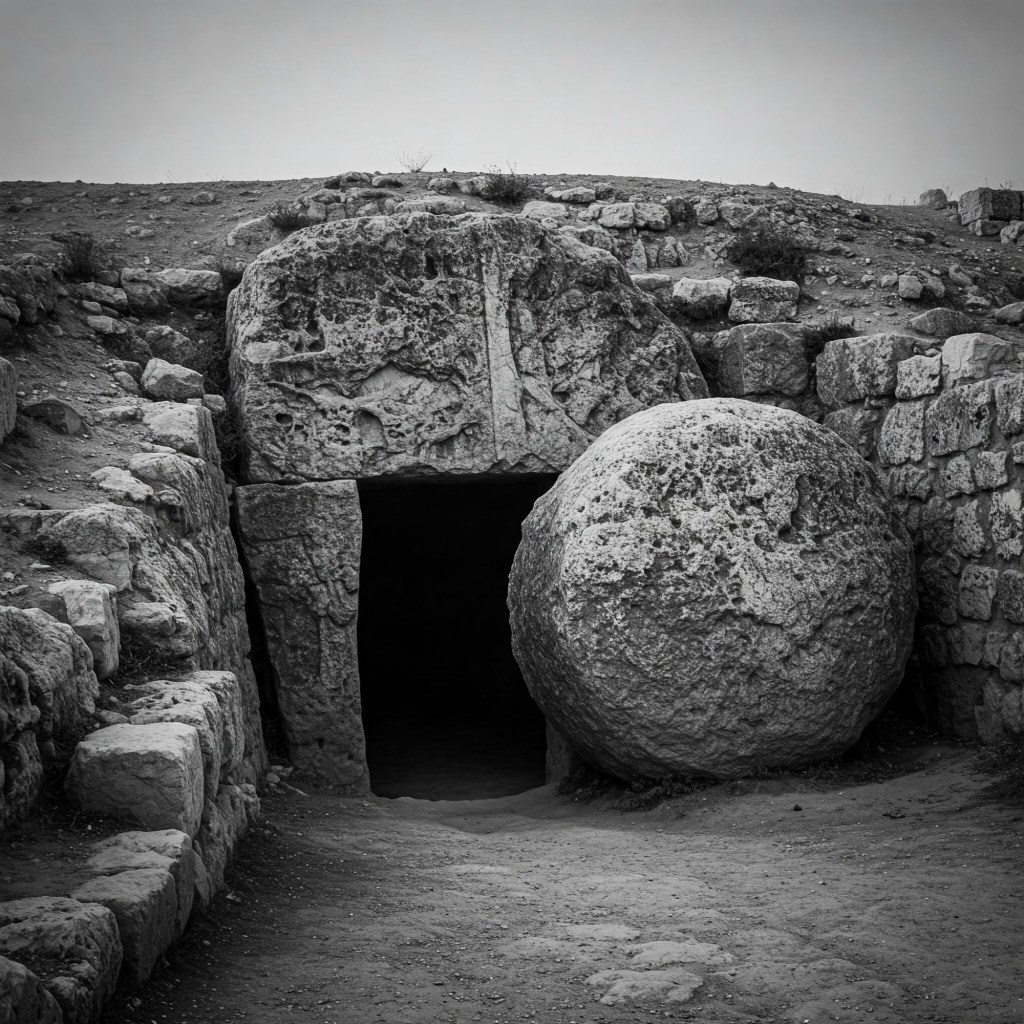
An AI generated image of the garden tomb in black-and-white set against grey sky. The entrance to the tomb is partially open, with a large stone across the right hand side of it. 

Here’s the passage in full : John 19:38–42 (ESV)

“After these things Joseph of Arimathea, who was a disciple of Jesus, but secretly for fear of the Jews, asked Pilate that he might take away the body of Jesus, and Pilate gave him permission. So he came and took away his body. Nicodemus also, who earlier had come to Jesus by night, came bringing a mixture of myrrh and aloes, about seventy-five pounds in weight. So they took the body of Jesus and bound it in linen cloths with the spices, as is the burial custom of the Jews. Now in the place where he was crucified there was a garden, and in the garden a new tomb in which no one had yet been laid. So because of the Jewish day of Preparation, since the tomb was close at hand, they laid Jesus there.”

Secret Disciples: Joseph and Nicodemus

Joseph of Arimathea, a wealthy member of the Sanhedrin, is described as a “secret disciple” of Jesus, concealing his faith due to fear of the Jews. His position in Jewish society made public allegiance to Jesus risky, potentially threatening his status and safety. Yet, in a bold act, Joseph approaches Pilate to request Jesus’ body, an action that could have exposed him to scrutiny. Similarly, Nicodemus, who previously visited Jesus at night (John 3:1–2), likely out of fear, joins Joseph in this act of devotion. He brings approximately seventy-five pounds of myrrh and aloes, an extravagant amount of spices, signaling his commitment. Their actions challenge modern Christians to examine their own faith. Many face pressure to hide their beliefs in hostile or secular environments. Rather than concealing faith, believers are called to proclaim it sensitively but unashamedly, as Jesus instructs in Matthew 5:16: “Let your light shine before others.” How can we move from secrecy to courageous witness in our daily lives?

Jewish Burial Customs in the Passage

In the first century, Jewish burial practices were rooted in respect for the deceased and adherence to purity laws. Deuteronomy 21:23 required prompt burial to avoid defilement, especially before the Sabbath. The body was typically washed, wrapped in linen cloths, and anointed with spices like myrrh and aloes to honor the deceased and mask the odour of decay. In John 19:38–42, Joseph and Nicodemus meticulously follow these customs. They wrap Jesus’ body in linen with the spices Nicodemus provides, a quantity far exceeding typical burials, reflecting deep reverence. Their care fulfills Isaiah 53:9, which prophesies the Messiah’s burial with the rich. This deliberate act underscores Jesus’ dignity, even in death.

The Garden Tomb: Location and Significance

John 19:41 describes the burial site as a new tomb in a garden, unused by anyone else. Joseph’s offering of his own tomb represents a personal sacrifice. Theologically, the tomb is a temporary resting place, foreshadowing the resurrection. Two possible locations in Jerusalem are associated with this site. The Garden Tomb, located north of the Damascus Gate, is favored by some Protestants for its serene, garden-like setting and rock-hewn tomb, fitting John’s description. Alternatively, the Church of the Holy Sepulchre, supported by early Christian tradition and archaeological evidence of first-century tombs, is widely accepted by Catholic and Orthodox traditions. If you would like my opinion, I favour the Garden Tomb location over the Holy Sepulchre .But I am no biblical archaeologist! 

Regardless of the exact site, the garden tomb invites believers to trust God’s redemptive plan, even in moments of apparent defeat.

The Disciples’ Limbo and Our Hope

For the disciples, Jesus’ death was a devastating blow. They believed Him to be the Messiah, yet witnessed His execution, leaving them in fear and confusion. Unaware of the resurrection to come, they faced a limbo of shattered hopes. Their vulnerability reflects the human struggle with uncertainty. In contrast, modern believers have the benefit of hindsight, knowing that Resurrection Sunday follows Good Friday. This perspective transforms despair into hope, as Paul writes in 1 Corinthians 15:20, describing Christ as “the firstfruits of those who have fallen asleep.” The disciples’ experience encourages Christians to hold fast to faith during trials, trusting that God’s plan unfolds according to his will. 

So what do we do? 

Joseph and Nicodemus, once secretive, acted with courage to honour Jesus in His burial. Their example challenges us to proclaim our faith boldly, even in difficult circumstances. We are called to trust in the resurrection hope, knowing that God’s victory overcomes life’s darkest moments.

The darkness of Friday has been and gone, and we find ourselves in the limbo of its aftermath. Fear not though, Sunday is coming…

The Cross and the Crown: Reflecting on John 19:17–24 This Good Friday

As Christians gather on this Good Friday, we pause to reflect on the sacrifice of Jesus Christ, the pivotal moment of our faith. John 19:17–24 captures the raw reality of the crucifixion, where Jesus is declared “King of the Jews” and His clothes are divided by soldiers. This passage reveals Jesus as the sovereign King of all, fulfilling ancient prophecies and completing His mission as the Savior of humanity. On this sacred day, we are called to marvel at His love and respond with heartfelt worship.

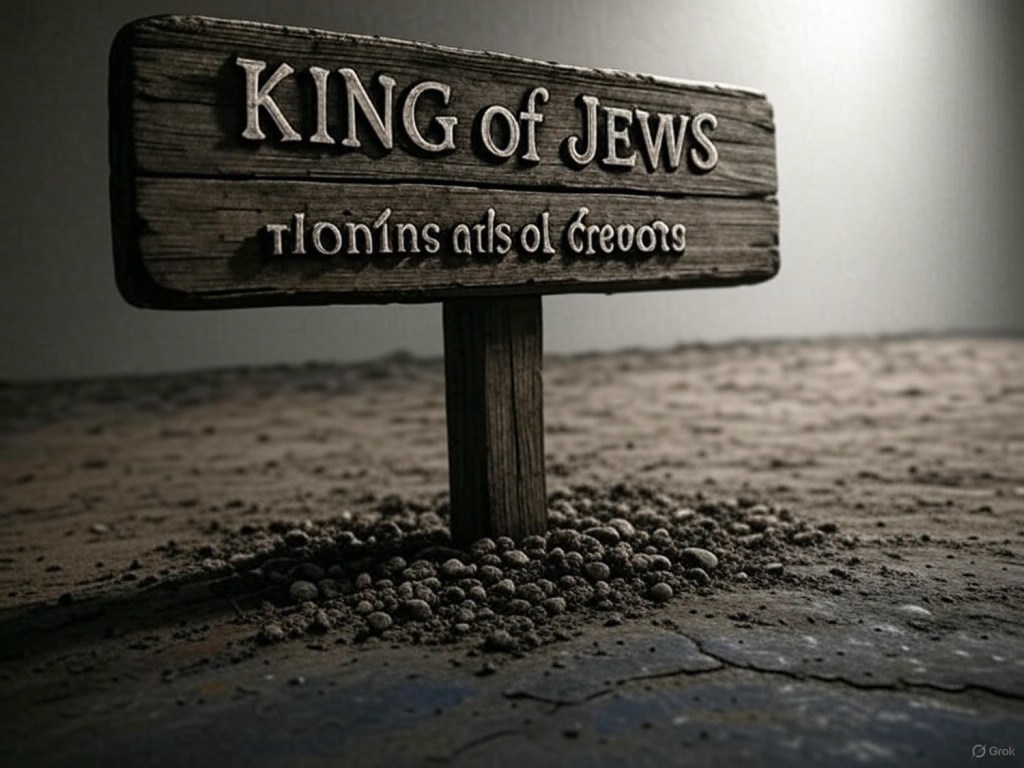
A wooden sign is planted in the ground, surrounded by small pebbles and dirt. The sign has the text “KING of JEWS” prominently displayed in large, bold letters. Below this, there is a line of text in a different script that reads ” πλοκίης αἰς οἱ ςρεοοης” which are random Greek letters for illustration . The background is a plain, slightly textured surface with a gradient of light and shadow.

Jesus: King of the Jews and King of All

John 19:17–19 recounts Jesus’ journey to the cross: “Carrying the cross by himself, he went to the place called Place of the Skull… There they nailed him to the cross… Pilate also had an inscription written and put on the cross. It read, ‘Jesus of Nazareth, the King of the Jews’” (NLT). The title “King of the Jews,” though meant as mockery by Pilate, proclaimed a profound truth. Despite opposition, Pilate refused to change the inscription (John 19:22), unwittingly affirming Jesus’ identity.

Jesus’ kingship transcends earthly boundaries. He is not only the King of the Jews but the “King of kings and Lord of lords” (Revelation 19:16, NLT). On the cross, His reign was established through sacrifice, challenging the powers of this world and offering hope to all who believe. Good Friday reminds us that Jesus’ kingship demands our allegiance. As Christians, we are called to live under His loving authority, trusting His sovereign plan even in the face of suffering.

The Soldiers and the Fulfillment of Prophecy

The scene at the cross continues in John 19:23–24: “When the soldiers had crucified Jesus, they divided his clothes among the four of them. They also took his robe, but it was seamless… So they said, ‘Rather than tearing it apart, let’s throw dice for it.’ This fulfilled the Scripture that says, ‘They divided my garments among themselves and threw dice for my clothing’” (NLT). This moment directly fulfills Psalm 22:18, written centuries earlier, proving Jesus as the promised Messiah.

This single fulfilled prophecy points to a greater truth: Jesus’ entire life and death align with God’s redemptive plan. From His birth in Bethlehem (Micah 5:2) to His suffering (Isaiah 53), Jesus fulfilled every Messianic prophecy, culminating in His sacrificial death. Good Friday marks the climax of His mission to save humanity, as He bore the weight of our sins on the cross. Even the soldiers’ callous actions, dividing His clothes, served God’s purpose, demonstrating His sovereignty over every detail. As we reflect on this, we stand in awe of Jesus’ obedience and God’s faithfulness.

Good Friday: The Weight and Wonder of the Cross

Good Friday is a day of somber reflection and profound gratitude.

Jesus’ death was the ultimate act of love, as He “gave his life to purchase freedom for everyone” (1 Timothy 2:6, NLT). John 19:17–24 anchors us in the reality of the cross—Jesus endured unimaginable pain to atone for our sins, fulfilling the Law and the prophets. His kingship, declared in the inscription, and His fulfillment of prophecy, seen in the soldiers’ actions, assure us of His victory over sin and death.

On this day, we are invited to pause and contemplate the cost of our salvation. The cross reveals both the depth of human sin and the boundless love of God. As we consider Jesus’ sacrifice, we find hope in His reign as King, knowing that His death was not the end but the beginning of eternal life for all who believe. Good Friday calls us to lift our eyes to the cross, where our Savior triumphed.

A Call to Worship

In response to Jesus’ kingship and sacrifice, our hearts turn to worship. Good Friday is a time to gather in worship services, pray, or meditate on Scripture, giving thanks for all Jesus has done. Reflect on His love, which led Him to the cross, and commit to living under His reign daily. Let this day inspire a life of worship, where every action honors Jesus as King and Savior. As Psalm 95:6 urges, “Come, let us worship and bow down. Let us kneel before the Lord our maker” (NLT).