Father’s Day is a time to honour the men who shape our lives with love and guidance. We celebrate this day with gratitude, reflecting on the role of fathers in our families. As Christians, we also look to God, our perfect Heavenly Father, who loves us unconditionally. Today, I deeply miss my late father, yet I am grateful for the example he set through his faithful life, and I find comfort in God’s eternal presence.
The Bible offers profound insights into fatherhood. Psalm 103:13 states, “As a father has compassion on his children, so the Lord has compassion on those who fear him.” This verse highlights God’s tender, steadfast love. Similarly, Matthew 7:11 teaches, “If you, then, though you are evil, know how to give good gifts to your children, how much more will your Father in heaven give good gifts to those who ask him!” These passages reveal God as the perfect Father, whose care surpasses even the best earthly fathers.
Not everyone has a positive father figure to celebrate. For some, Father’s Day may evoke pain or absence due to a father’s neglect or loss. In these moments, God promises to be a father to the fatherless. Psalm 68:5 declares, “A father to the fatherless, a defender of widows, is God in his holy dwelling.” No matter our circumstances, God offers love, protection, and guidance to all who seek Him. His perfect fatherhood is unchanging and available to everyone.
This Father’s Day, I feel the weight of my father’s absence. He passed away some years ago, and today, I miss him keenly. I am grateful for the life he lived—one marked by hard work and integrity. His example continues to guide me as a Christian and as a person. While my heart aches, I find solace in God’s fatherly love, which never fades.
For those missing their fathers or lacking a father figure, God’s embrace offers comfort. Isaiah 40:11 paints a vivid picture: “He tends his flock like a shepherd: He gathers the lambs in his arms and carries them close to his heart.” Yet, the Bible makes it clear that we can only approach this loving Father through Jesus Christ and His sacrifice. John 14:6 declares, “Jesus answered, ‘I am the way and the truth and the life. No one comes to the Father except through me.’” To experience God’s fatherly love, we must surrender to Jesus, following Him as the only way to the Father.
As we mark Father’s Day, let us give thanks for the fathers who have blessed our lives and pray for those who find this day challenging. May they come to know God’s love by surrendering to Jesus, the only path to the Father. For me, this day blends gratitude for my father’s legacy with trust in God’s unchanging care. May we all find peace in following Christ to our Heavenly Father’s embrace.
“A wise son brings joy to his father, but a foolish son brings grief to his mother.”
Two parents sat on a large sofa cradling a newborn baby, looking very happy 
This proverb from the book of Proverbs cuts right to the chase about how a child’s actions profoundly affect their parents. When it speaks of a “wise” son, it’s not just about academic cleverness or quick wit. It refers to someone who consistently makes good choices, acts with integrity, and shows sound judgment in life. This kind of child brings immense happiness and a deep sense of pride to their father. Their thoughtful and responsible decisions reflect well on their upbringing, leading to positive outcomes that fill their parents with contentment.
Conversely, a “foolish” son is someone who acts impulsively, makes poor decisions, or disregards good counsel. Their actions often lead to negative consequences, causing distress, worry, and significant sadness, particularly for their mother. This isn’t about a lack of love, but the heavy emotional burden of witnessing a child stray from a path of well-being and purpose. It’s a challenging experience for any parent to see their child struggle due to misguided choices.
This ancient saying holds remarkable relevance in our modern lives. It serves as a potent reminder that our choices and behaviours have a tangible impact on those who care for us most deeply – our parents. It prompts us to consider: are our actions bringing joy or grief to those who have invested so much in our lives? It encourages us to cultivate wisdom – to seek understanding, exercise good judgment, and act with integrity in all we do.
For parents, this proverb also subtly underscores the profound and enduring nature of their role. Once you become a parent, you never stop being one. We parents often carry a deep-seated concern about how our children will turn out, a worry that can last a lifetime. This verse highlights that we have a tremendous influence in shaping our children’s character during their formative years. The values we instil, the guidance we provide, and the environment we create all contribute significantly to the development of their wisdom and moral compass.
However, as children grow up, they inevitably take responsibility for their own actions. While parental influence is vast, the ultimate choices made by adult children are their own. The proverb acknowledges this journey from parental guidance to individual accountability. Ultimately, Proverbs 10:1 offers a timeless principle: living wisely leads to a flourishing life, not just for the individual, but for their wider family circle, fostering a legacy of joy rather than sorrow.
The ultimate wisdom we hope our children cultivate is the wisdom to follow Christ.
Whether you are a parent or a child, or somewhere in between, make wise choices today which you will be happy with for a lifetime.
Many Christians in the UK feel disconnected from government, often dismissing all politicians as unworthy of attention due to widespread distrust. This disengagement can lead believers to view politics as irrelevant to their faith. Yet, Scripture presents a different call: praying for good government is a biblical priority and a cornerstone of Christian prayer life. Three passages—1 Timothy 2:1-4, Jeremiah 29:7, and Romans 13:1-4—explicitly command believers to intercede for leaders, revealing its centrality to faith. Such prayers foster peace, advance the Gospel, and align society with God’s purposes, countering apathy with obedient trust in His sovereignty.
An AI generated image of parliament like buildings in a cityscape 
Biblical Commands to Pray for Good Government
Scripture unequivocally commands Christians to pray for those in authority, positioning this practice as a foundational priority. A close examination of three passages reveals the depth and urgency of this call, grounding it in God’s redemptive plan.
1 Timothy 2:1-4: The Foremost Priority of Prayer
“First of all, then, I urge that supplications, prayers, intercessions, and thanksgivings be made for all people, for kings and all who are in high positions, that we may lead a peaceful and quiet life, godly and dignified in every way. This is good, and it is pleasing in the sight of God our Saviour, who desires all people to be saved and to come to the knowledge of the truth” (1 Timothy 2:1-4). Paul’s use of “first of all” is striking, marking prayer for leaders as the primary focus of Christian intercession. This is not a casual suggestion but a deliberate directive, placing prayers for kings, governors, and all in authority at the forefront of the church’s spiritual practice. The Greek term prōton (first) underscores priority in rank, not merely sequence, suggesting that this prayer is foundational to Christian worship. Paul’s comprehensive terms—supplications (requests for needs), prayers (general communion with God), intercessions (pleas on behalf of others), and thanksgivings—call for a multifaceted approach to praying for leaders, regardless of their character or policies. The purpose is twofold: to enable believers to live “peaceful and quiet” lives conducive to godliness and to support God’s desire for “all people to be saved.” This links prayer for government directly to evangelism, as stable societies facilitate the Gospel’s spread. Christians are thus called to prioritise intercession for leaders, trusting God to work through even flawed authorities to achieve His redemptive purposes.
Jeremiah 29:7: Praying for a Hostile Nation’s Welfare
“Seek the welfare of the city where I have sent you into exile, and pray to the Lord on its behalf, for in its welfare you will find your welfare” (Jeremiah 29:7). This command, given to Israelites exiled in Babylon, is remarkable for its context. Babylon was a pagan, oppressive empire, yet God instructs His people to pray for its well-being. The Hebrew word shalom (welfare) implies peace, prosperity, and wholeness, suggesting prayers for holistic societal good. This directive reveals that God ties the flourishing of His people to the health of the surrounding society, even under hostile rule. The call to “pray to the Lord” indicates that intercession is the primary means of seeking this welfare, placing prayer at the heart of civic engagement. For modern Christians, this passage challenges disengagement, urging prayers for local and national governments—whether supportive or antagonistic—as their stability directly impacts believers’ ability to live faithfully. Jeremiah’s command underscores that praying for government is not optional but integral to God’s plan for His people’s spiritual and social thriving.
Romans 13:1-4: Submitting to God’s Appointed Authorities
“Let every person be subject to the governing authorities. For there is no authority except from God, and those that exist have been instituted by God. … For he is God’s servant for your good” (Romans 13:1-4). Paul asserts that all governing authorities are established by God, serving as His instruments for order and justice. The Greek exousia (authority) emphasizes God’s sovereign appointment of rulers, whether emperors or local officials. This theological foundation implies a duty to pray for leaders to fulfil their God-given role as “servants for good,” promoting justice and punishing evil. While submission to authority is the primary focus, prayer naturally follows, as intercession seeks God’s guidance for leaders to align with His purposes. This passage calls Christians to trust in God’s sovereignty over governance, praying for authorities—such as MPs or councillors—to act justly, thereby fostering a society where righteousness prevails. Romans 13 elevates prayer for government as an act of faith in God’s ultimate authority.
Why Praying for Good Government Matters
Praying for good government is vital for several reasons. First, it produces peace, enabling Christians to lead “a peaceful and quiet life” (1 Timothy 2:2), free from persecution or chaos, where faith can flourish. Second, it supports Gospel advancement, as stable governance creates opportunities for evangelism, aligning with God’s desire for “all people to be saved” (1 Timothy 2:4). Third, it promotes justice, as governments are God’s servants to uphold good and punish evil (Romans 13:4). Prayer aligns leaders with God’s heart, benefiting society. Finally, in a distrustful culture, praying for all leaders reflects Christlike humility, distinguishing Christians as agents of reconciliation. Early Christians prayed for Roman emperors despite persecution, showing the timeless power of such prayers.
Practical Steps for Praying for Good Government
Specific Prayers: Pray for leaders’ wisdom and integrity, covering local councillors, MPs, and global figures.
Consistent Practice: Include prayers for government in daily devotions, using 1 Timothy 2:1’s framework.
Community Prayer: Join church groups to pray collectively for leaders, amplifying impact.
Faithful Trust: Pray with confidence in God’s sovereignty (Romans 13:1), even when outcomes are uncertain.
Conclusion
Praying for good government is a biblical priority, rooted in 1 Timothy 2:1-4, Jeremiah 29:7, and Romans 13:1-4. These passages reveal its centrality to Christian prayer, fostering peace, justice, and Gospel advancement. Believers must move beyond disengagement, prioritising intercession for leaders. Through prayer, Christians participate in God’s redemptive work, transforming nations for His glory.
As some of you will know, I present a weekly show on Pure 24/7 Radio. It’s a 90s music show and you can catch it on UK time from 6 pm on a Thursday evening.
What you might not know, is that the wonderful people behind Pure 24/7 Radio also produce a magazine… Pure media: the magazine.
It really is a wonderful magazine! Very high-quality, interesting articles and entirely free if you read it online! If you prefer to have a copy in your hands, then you can order printed versions from the shop. Here’s the link… Pure media magazine shop
Why am I telling you this? Well, the May edition has just landed and it features yours truly talking about my faith and my journey of site loss. I do encourage you to check it out where you can not only read more about my story, but enjoy the other wonderful features in the magazine.
If you enjoy it, tell a friend or even buy an extra copy to share with someone in your church or family.
Find out more by searching for them on Facebook or ex, or just visiting the website above. 
Imagine receiving a personal letter from a trusted friend, filled with encouragement, warnings, and a call to live faithfully. The letter of 3 John is just that—a brief but powerful message that resonates with us today. Written by the Apostle John, this short epistle addresses Gaius, a faithful believer, and tackles issues in the early church. In this post,I will unpack the key themes of 3 John, outline its structure, and offer practical applications for our lives.
Though concise, 3 John reveals timeless truths about walking in truth, showing hospitality, and confronting challenges in the church.
A cartoon postman/mailman carrying a tiny letter with a church in the background as if he is delivering this small but important epistle
Context and Background
The letter of 3 John is traditionally attributed to the Apostle John, the same author of 1 and 2 John and the Gospel of John, based on its similar style and theological emphasis. Likely written in the late 1st century, the letter is addressed to Gaius, a beloved member of a Christian community, with references to two other figures: Diotrephes and Demetrius. The setting appears to be a church facing internal conflicts, particularly regarding the support of traveling missionaries and issues of authority.
John’s purpose in writing is multifaceted: to commend Gaius for his faithfulness, to warn against the disruptive behavior of Diotrephes, and to encourage continued support for missionaries spreading the gospel. Despite its brevity—only 14 verses—3 John holds significant value for understanding personal relationships, truth, and hospitality in the early church. It reminds us that even small acts of faithfulness can have a lasting impact.
Outline of Key Topics in 3 John
Greeting and Commendation (Verses 1-4)
The letter opens with John’s warm greeting to Gaius, whom he addresses with affection and describes as beloved. John expresses joy upon hearing that Gaius is “walking in the truth,” a phrase that underscores Gaius’ faithfulness to the gospel. This section highlights the importance of living a life aligned with God’s truth, a central theme of John’s writings. For John, truth is not merely intellectual assent but a way of life that reflects commitment to Christ.
Hospitality and Support for Missionaries (Verses 5-8)
John praises Gaius for his hospitality toward traveling Christian workers, likely itinerant missionaries spreading the gospel. Gaius has provided practical support, such as food and shelter, enabling these workers to continue their ministry. John urges Gaius to persist in this generosity, noting that supporting such workers makes believers “co-workers for the truth.” This section emphasizes the role of hospitality in advancing God’s kingdom and our shared responsibility to support gospel work.
Warning Against Diotrephes (Verses 9-10)
John then addresses a troubling issue: the behavior of Diotrephes, a church member who rejects John’s authority and refuses to welcome traveling missionaries. Diotrephes’ actions are driven by pride, as he seeks preeminence and even expels those who disagree with him. John promises to address this behavior directly if he visits, highlighting the dangers of pride and division in the church. This section serves as a caution against self-centered leadership that undermines the unity and mission of the Christian community.
Commendation of Demetrius (Verses 11-12)
In contrast to Diotrephes, John commends Demetrius, who has a good reputation among the church and is likely a missionary or leader. John encourages Gaius to “imitate what is good” rather than evil, presenting Demetrius as a godly example. This brief section underscores the value of positive role models in the Christian life and the importance of character in leadership.
Closing and Personal Note (Verses 13-14)
John concludes with a personal note, expressing his desire to visit Gaius in person rather than communicate only through letters. He sends greetings from mutual friends and blesses Gaius with peace. This closing reinforces the value of personal connection in the Christian community, reminding us that relationships are central to the life of the church.
Practical Applications for Today
The letter of 3 John, though written to a specific individual in a specific context, offers timeless lessons for us today. Here are five practical applications for living out its teachings:
Walking in Truth
John’s joy over Gaius’ faithfulness encourages us to prioritize studying and applying Scripture in daily life. We ought to live out biblical truth in our actions and decisions, not just understand it intellectually. We should foster accountability by engaging in Bible study groups or mentoring relationships to stay rooted in God’s truth.
Practicing Hospitality
Gaius’ support for missionaries challenges us to open our homes and resources to those in need, particularly those serving in ministry. We should consider hosting a missionary, supporting a local outreach, or providing practical help to church workers. We ought to cultivate a culture of generosity in our churches by organizing initiatives to support global or local missions.
Addressing Division
The example of Diotrephes serves as a warning against prideful or divisive behavior in the church. We should confront such issues with humility and grace, seeking reconciliation and unity. We ought to promote a shared focus on the gospel to prevent self-centeredness from fracturing our communities.
Imitating Godly Examples
Demetrius’ good reputation highlights the importance of seeking and becoming godly role models. We should identify mentors who reflect Christlike character and strive to emulate their faith and integrity. Likewise, we ought to inspire others by living with consistency and humility in our communities.
Building Personal Connections
John’s desire for a face-to-face visit underscores the value of personal relationships in the church. We should invest in meaningful interactions, whether through small groups, one-on-one discipleship, or sending encouraging notes. Building strong connections strengthens our churches’ witness and fosters mutual support.
Conclusion
The letter of 3 John, though only 14 verses long, is a rich and relevant message for us today. It calls us to walk in truth, practice hospitality, confront division, follow godly examples, and build personal connections. These timeless principles challenge us to live faithfully in our churches and communities. We should reflect on how we can apply these lessons—perhaps by supporting a missionary, fostering unity, or mentoring others. Let 3 John inspire us to love generously and strengthen the body of Christ.
If you would be interested in doing a verse by verse study of this letter, do let me know in the comments! Thanks 
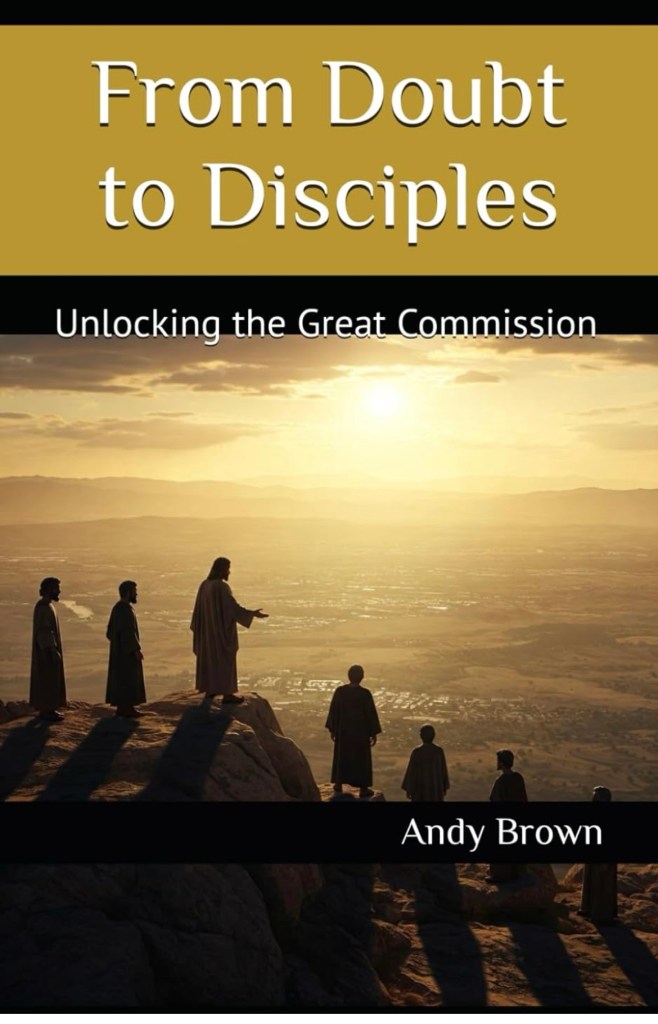
Check out Andy‘s brand-new book… From Doubt to Disciples: Unlocking the Great Commission. Now available on Amazon 
“A gentle answer deflects anger, but harsh words make tempers flare.”Proverbs 15:1 (NLT) This particular verse came up in my Bible reading this morning. It may be very familiar to you or perhaps it’s the first time you’ve read it. Either way, there is much wisdom in its words. A gentle answer can make a…
— Read on andy-brown.org/2021/02/24/a-gentle-answer/
If you have not checked out the Berry Bunch Family already, then I strongly encourage you to do so. i’m truly excited to hear more of their testimony and about gods faithfulness in their lives and ministry.
It was something of an honour to be mentioned in this post as well!
Do give it a read, and start following their site. you won’t regret it!
I’ve written, edited, and scheduled our first #TestimonyTuesday post. This is an exciting new, and regular, output for us, and we have Nicola to …
I read this post over the weekend, and really wanted to share it with you. I perhaps should have done so yesterday (on the Sunday) or even waited until next weekend…
But here it is, and I hope you enjoy it as much as I did.
Morning friends and welcome to the weekend. I had a different post for this morning but I think the Lord had other ideas so I have put it back into …







 Andy Brown