Stones that shout for joy

Today is Palm Sunday, and the day where we remember Jesus entering Jerusalem on a donkey. It is called Palm Sunday because of the crowds who lay palm branches and their own coats on the ground for Jesus to ride on as He entered the city. Think of this as a sort of “red carpet!”

In the village where we live, a usual Palm Sunday would see a group from the church walking from the town hall through to the church – led by a locally sourced donkey! It is quite a sight to be seen, and the children love it.

This year, due to the COVID-19 situation, this won’t be going ahead. Instead, many churches around the country and the world will celebrate online via live streaming. I hope, if nothing else, this reminds us how fortunate we are to be able to meet in person.

Jesus’ Triumphal Entry into Jerusalem is recorded in Luke’s Gospel.

After Jesus had said this, he went on ahead, going up to Jerusalem. 29 As he approached Bethphage and Bethany at the hill called the Mount of Olives, he sent two of his disciples, saying to them, 30 ‘Go to the village ahead of you, and as you enter it, you will find a colt tied there, which no one has ever ridden. Untie it and bring it here. 31 If anyone asks you, “Why are you untying it?” say, “The Lord needs it.”’

32 Those who were sent ahead went and found it just as he had told them. 33 As they were untying the colt, its owners asked them, ‘Why are you untying the colt?’

34 They replied, ‘The Lord needs it.’

35 They brought it to Jesus, threw their cloaks on the colt and put Jesus on it. 36 As he went along, people spread their cloaks on the road.

37 When he came near the place where the road goes down the Mount of Olives, the whole crowd of disciples began joyfully to praise God in loud voices for all the miracles they had seen:

38 ‘Blessed is the king who comes in the name of the Lord!’

‘Peace in heaven and glory in the highest!’

39 Some of the Pharisees in the crowd said to Jesus, ‘Teacher, rebuke your disciples!’

40 ‘I tell you,’ he replied, ‘if they keep quiet, the stones will cry out.’

Luke 19:28-40 (NIVUK)

As mentioned above, our church are not able to meet this Palm Sunday. Our family had agreed to lead the prayers that day, so made a little video instead. My daughters danced in the background, waving homemade palm branches while I talked a little about Jesus’ entry into the city.

I pointed out that if we are ever in danger of missing an important point from the Gospels, then often the Pharisees come to our aid. In the video at least, I’m not sure I fully explained why – so will try to do a better job here!

As Jesus enters the city, the crowds begin to praise Him. They cut branches from the trees and lay out their jackets for Him to ride over. Verse 38 records the words they began to shout: “Blessed is the king who comes in the name of the Lord!” This is a direct quote from Psalm 118.

When the crowds do this, the Pharisees immediately stand to attention and tell Jesus to rebuke His disciples. Why? Because they knew, as well as Jesus did, that Psalm 118 and these words in particular are Messianic. They know that the crowds are acknowledging Jesus as the King who was to come.

The Pharisees do not want anyone to recognise this. They don’t believe it themselves, and essentially consider it blasphemy. They are saying, “Jesus! These people are proclaiming you as the Messiah! Stop them!”

How does Jesus respond? By telling them that if the people refused to cry out, then the very stones themselves would begin to praise.

Palm Sunday is the fulfilment of a very specific prophecy from the Old Testament book of Daniel. In that, the angel Gabriel declares the exact day in which the Messiah would be presented to Jerusalem as King, and that day was this Palm Sunday when Jesus rode into the city. You can hear more about this in my message – Prophecy and Palm Branches which I will put at the bottom of this post. You can hear more of my talks in the Audio section.

While I was in Jerusalem a few years ago, I was fortunate enough to be able to walk the road that Jesus went down that first Palm Sunday. As we walked, I picked up a small stone from the ground which I have kept as a keepsake. Of course the stone itself was not there the day Jesus was, although that would have been nice, but it is a little reminder to me. If I do not praise God, then maybe that little stone might cry out.

When you are next out, doing your daily exercise, or the next time you take a turn around the garden, why don’t you also pick up a stone. You can put it somewhere that you’ll see it, and every time you do, take a moment to praise and thank God for His Son. Otherwise that stone might shout for joy instead of you!

Jesus rode that donkey into Jerusalem knowing full well where it would lead. Less than a week later, He would be nailed to a wooden cross and bearing the punishment for us all. That crowd which praised Him on the way in, would soon change their tune and shout “Crucify him!”

Remember why Jesus did it. It was for you and for me. I see Palm Sunday as the peak at the top of a roller-coaster – that moment where all seems to freeze before it races downwards the other side. Jesus is being rightly praised, but would soon plummet into the shame of a sinner’s death – undeserved. He did it for you.

Praise the God and Father of our Lord Jesus Christ this Holy week.


Palm Branches and Prophecy


Time or Effort? (PoW)

Pearls of Wisdom

It’s not the time you put in, but what you put into the time.

Time and effort are not always correlated. Just because we have spent a lot of time on something, does not mean we have put a lot of effort in. The reverse is also true. A lot of effort does not necessarily mean a lot of time.

Prayer is a classic example of this. Just because you’re putting in long hours of praying, does not mean you have spent any quality time with God. In a similar way, you can have a really good relationship with God but have no need to spend hours and hours and hours of lengthy, set aside prayer time. Although praying little and often is the only surefire way of having a good relationship with God.

We tend to spend our time on the things that we care about. And in that sense, our relationship with God should certainly capture the majority of our time. But it is not about the quantity of time with God, but rather the quality.

If you spend a daily prayer time with Jesus, then that’s great and something every Christian should do. But don’t measure that time by its length, measure it by its quality.


Put your time into your relationship with Christ. Remember, it’s not about how much time you spend, but about how much you put into that time. May you be extremely blessed in your time with Jesus today and always.

Are you ready for the bridegroom?

When writing this blog, I sometimes prepare a post in advance and schedule it for release. This is particularly useful on days when I know I am going to be busy and probably won’t get the time to write. Since posting daily over the last couple of weeks, this is increasingly important.

Today was a day when I had a post already written and scheduled, yet as I was praying this morning, I had the sense that I needed to write something different.

The pre-written post will come out another day of course, so won’t go to waste, but I felt especially pressed to share on the parable of the ten virgins today.

Jesus told a story about ten virgins. This sounds a little odd to our ears, but what He was referring to was ten young women who were prepared for marriage. In His day, betrothed women would await the coming of their bridegroom. They would not know when exactly he would come, so they would have to keep watch and be ready.

The parable comes from Matthew’s Gospel, and goes like this:

Then the Kingdom of Heaven will be like ten virgins who took their lamps and went out to meet the bridegroom. 2 Five of them were foolish, and five were wise. 3 Those who were foolish, when they took their lamps, took no oil with them, 4 but the wise took oil in their vessels with their lamps. 5 Now while the bridegroom delayed, they all slumbered and slept. 6 But at midnight there was a cry, ‘Behold! The bridegroom is coming! Come out to meet him!’ 7 Then all those virgins arose, and trimmed their lamps.[a] 8 The foolish said to the wise, ‘Give us some of your oil, for our lamps are going out.’ 9 But the wise answered, saying, ‘What if there isn’t enough for us and you? You go rather to those who sell, and buy for yourselves.’ 10 While they went away to buy, the bridegroom came, and those who were ready went in with him to the wedding feast, and the door was shut. 11 Afterward the other virgins also came, saying, ‘Lord, Lord, open to us.’ 12 But he answered, ‘Most certainly I tell you, I don’t know you.’ 13 Watch therefore, for you don’t know the day nor the hour in which the Son of Man is coming.

Matthew 25:1-13 (WEB)

Jesus is deliberately contrasting the five wise virgins with the five unwise ones. The five who were wise went out well prepared. They took sufficient oil with them, ready for the potentially long wait. The other five were not well prepared and so came up short. While they were away getting their oil, they missed the coming of the bridegroom and were locked outside.

There is a clear warning for all of us here. We must prepare and be ready for the coming of the Bridegroom. That is, we must be ready for when Jesus returns.

We must not only prepare once, but live prepared. We do not know the day or the hour when He might return, and so we must treat every day like it is the one where we see His coming.

When I look at my life, I sometimes try to imagine Jesus returning. What will HE find me doing when He appears? I hope He finds me being a good witness, living in obedience and I’m not wasting my time on pointless TV or worse sinfulness.

My point is to simply tel you to be ready for His appearing. Make sure you are right with Jesus, and that you have trusted your life to Him. Time is finite for us, and we will all only have so many opportunities to respond to God’s call. It really will be too late one day, so don’t put it off.

I could end the post here, but the parable has more to say than this. What I have said above is not untrue, but let’s look at it again.

All ten virgins were awaiting the coming of the bridegroom. Verse one tells us that all ten took up their lamps and went out. The way I describe the warning from the parable above sounds more like a warning to those outside of the church – that is, those who don’t know Jesus. Yet, maybe this parable is meant for the church itself, and not those outside.

The church is described as the “Bride of Christ,” and so this parable is indeed fitting to be applied to it. The virgins, wise or otherwise, all went out to meet their bridegroom. The whole church went out to meet Christ, but some were not ready. This parable may in fact be a warning to those in the church that we should not lapse in our readiness for Christ.

We do not want to be counted among the unwise virgins, locked out of the wedding feast because we were not ready.

Whichever way you apply the parable – to the world or to the church, the message is the same. Be ready for Jesus.

How can you do that today?

You must start and continue to trust in Him. Your good works cannot save you. The only thing that can deal with our sin once and for all is the precious blood of Jesus. He shed that blood on the cross so that you could go free.

If you are part of a church, yet have not made a commitment to Jesus, then you are one of the unwise. Church attendance does not save you, only Jesus does. That is not to say that church is unimportant of course, but it is not enough.

Set aside some time to pray to the Father. Don’t wait until tomorrow; do it today! Talk to God about where you are spiritually. Confess your sins, and ask Him to forgive you. He is so willing to do so! Ask Him to help you prepare for the coming of Christ. Whether it is one hour, one day or one century away, there is no better time than now to be ready.

Who can you pray for?

Confess your offenses to one another, and pray for one another, that you may be healed. The insistent prayer of a righteous person is powerfully effective.

James 5:16 (WEB)

Are you tired of hearing about the corona virus yet? It has been quite a while since the headlines mentioned anything other than the global pandemic! Sorry to mention it again here!

In these difficult times, there is a lot of practical things we can do as the Body of Christ to support each other. If you have elderly or vulnerable family members or neighbours, you might be able to shop for them to save them having to go out.

Our family, led by my wonderful wife, is setting about sending Easter cards or cards of encouragement to all the members of our church (the ones we have contact information for that is).

As you might have noticed, I have been trying to post on the blog every day. I am hoping that even in the difficult days ahead, many will read the blog and ideally be encouraged or uplifted in some way.

What practical things are you doing? What things could you do to bless those around you at this time?

You might be in a situation where doing something practical is just not possible right now. Not all of us can. There is one thing you can do however, and it will make a tremendous difference. You can pray.

Sometimes we think of prayer as a last resort. We do all the practical stuff, and then turn to prayer when we run out of ideas. This really shouldn’t be the way we think. Prayer is our first and foremost response in every situation.

Who can you pray for today? I hope it won’t take you long to think of someone.

my family has a jam jar full of lolly sticks. On each stick, we write the name of a friend or family member. When we sit down to pray, we draw out a stick and then pray for the person named. It is a great way of remembering to pray for different people.

Don’t be afraid to ask for prayer at this time either. There are prayer warriors out there just looking for someone to cover in prayer. Why not be the “squeaky wheel?”

As well as the people you know, please also pray for your government and leaders. They need God’s wisdom and guidance right now to make right decisions and to time them well.

I exhort therefore, first of all, that petitions, prayers, intercessions, and givings of thanks be made for all men: 2 for kings and all who are in high places, that we may lead a tranquil and quiet life in all godliness and reverence.

1 Timothy 2:1-2 (WEB)

Please also pray for your church leaders. Many places of worship have been closed and this presents something of a unique challenge for ministers and pastors alike.

Those working in the medical field will also very much need our prayers right now. In the UK, our health service was stretched prior to the pressures of the corona virus, and so they need our support now more than ever .

I could go on, but there is an unending list of people and situations we can pray for. Prayer is powerful, and we in the family of God can make a huge difference.

Pray without ceasing.

1 Thessalonians 5:17 (WEB)

What about the animals?

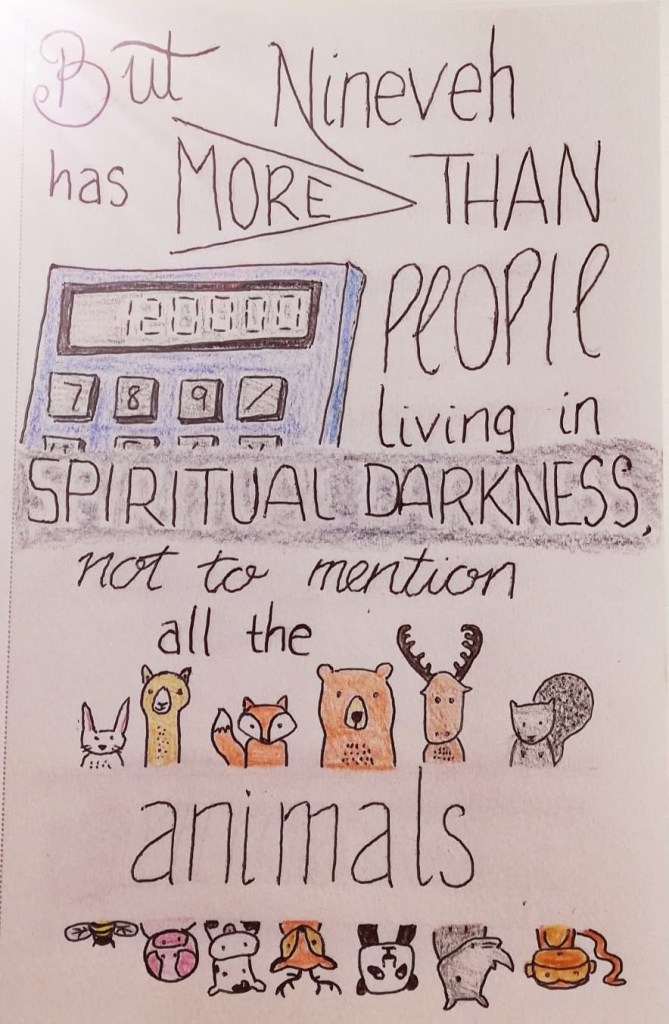
Jonah 4:11 (NLT) But Nineveh has more than 120,000 people living in spiritual darkness, not to mention all the animals. Shouldn’t I feel sorry for such a great city?”

As I write this, I’m overlooking a sort of forest woodland. In the last few minutes I have seen an abundance of nature! I’ve seen ducks, squirrels, deer, rabbits and even what I think was a stoat.

Due to the Coronavirus, the woodland has largely been abandoned at the moment. I suspect that the sudden drop in guests will quite badly affect the wildlife here. Over time I am sure they have become somewhat dependent on the food given to them by visitors. This area will be closed to the public for several weeks leaving the animals to fend for themselves for a while.

While the sudden drop in available food will be a bit of a shock to them, I am not overly worried about them. God cares for people, but He cares for His creation also.

There have been a number of posts on social media about panic buying and stockpiling. As a result, many food banks and charities have seen a dip in food donations. This is not limited to charities offering support for people either, and a number of animal rescue shelters are struggling too. The Coronavirus is affecting the whole world in myriad ways.

The verse above is quoted from the book of Jonah in the Old Testament. In fact, it is the closing verse of that book. Most people recall that Jonah was once swallowed by a big fish, but in case you don’t know the rest of the story, here is a brief summary.

God called Jonah to preach to the non-Jewish (Gentile) city of Nineveh. Instead, Jonah heads in the complete opposite direction and boards a ship to Tarshish. A great storm swamps the ship, and in the end Jonah confesses to the crew that he is the cause of their struggle. Ultimately they have to throw him overboard to still the storm.

It is at this point – more or less – that Jonah is swallowed by the fish. The fish later spews up the reluctant prophet on to the shoreline, and Jonah finally goes to Ninevah as he was instructed.

Jonah did not want to go to Ninevah and preach because he was afraid the people would listen to him… He knew that if they heard his message, they would repent and turn back to God – and God would forgive them. Imagine that?

After he gives his message, he goes and sits outside the city to see what would happen. The sun is burning hot, and he grows weary. God causes a vine to grow up beside him and offer him some shelter. Later however, a worm comes along and eats the root of the vine so it withers and Jonah loses his shade.

It’s something of an odd story right? Indeed it is, but it is really about who is in charge. God is running the show throughout, and He gives Jonah the vine and quickly takes it away to demonstrate to Jonah that he has no control in the situation. God wants Jonah to realise that He cares for the people of Ninevah.

The book of Jonah closes with the verse above. God tells Jonah He is right to care for the 120,000 people living there. We don’t know what happened to Jonah after this, but let’s hope he learned a lesson!

Perhaps 15 years ago, I had a dog who was very poorly. They had a particularly bad night, and we had to contact an emergency vet. The next day I happened to be reading this closing chapter of Jonah. I’ll always remember that because I recall very vividly this final verse. As well as the 120,000 people, God specifically mentions the animals also.

The word animals here is sometimes translated as cattle, so perhaps refers to farm animals or bovine species. Whatever it refers to though, it is clear that God cares for the animals also.

Animals are a part of God’s creation. While they are not as important as people, they are important. We have a responsibility to take care of them, and must certainly not mistreat them.

Spare a thought this week for all those affected by the Coronavirus. We must prioritise helping people with various needs at this time. We, the church, may not be able to gather together in large numbers, but we can and must continue to be Jesus’ hands and feet on the Earth. Call an isolated family member. Check on an elderly neighbour. Let’s do what we can to share God’s love in this difficult time.

As well as those things, and if you’re not overstretched, do consider whether there are ways to take care of God’s creation also. You might consider grabbing a can of dog food to pass on to a struggling pet owner. Perhaps you could walk a friend’s dog. Maybe, like me, there is a nearby animal shelter who could do with a helping hand at this difficult time.

Like many, I’m deeply disappointed to read stories of fighting in supermarkets and immoral seller hiking up prices. There are plenty of positives stories also, and we – the church – should be leading the way in that.

How can you be a blessing to those around you at this time? And remember, God cares about the animals also.

The Sinfulness of my Sin

I acknowledged my sin to thee, and my iniquity have I not hid. I said, I will confess my transgressions to the LORD; and thou forgavest the iniquity of my sin. Selah.

Psalm 32:5 (WEB)

The sinfulness of my sin… captivating title right? And I know what you are thinking – two blog posts in two days? What’s gotten into Andy?!

I’m pleased to report that all is well, and I’m not self-isolating with nothing to do. In fact, I am very conscious of how everyone is feeling right now, and hoping that a few extra blog posts will be well received.

A few weeks ago I spoke on Psalm 32. You can listen to that message here. It is a wonderful Psalm and I only had a short time to discuss it. This post covers one of the things I did not have time to explore.

The totality of the Psalm is about sin and repentance. It points out the depth of our wrongdoing, the wonder outs grace of God and our responsibility to confess and acknowledge our sin.

There is an interesting little phrase in verse 5 which says God forgives the “iniquity of our sin.” We might say the “sinfulness of our sin.”

Some translations of the Bible render this as the “guilt of our sin,” but this doesn’t quite cover it in my view.

If God forgives our sin, then what does it mean for Him to forgive the iniquity of our sin?

It is like saying the “saltiness of salt,” or the “chocolatey-ness of chocolate…” What is the psalmist getting at here?

Often when we say “Sorry,” we are not really sorry for what we did, but rather are sorry we got caught. When we see hardened criminals breaking down in tears in the dock of the courtroom, it is often about the loss of their freedom, money or reputation. Being sorry for the consequences of sin is of course very natural, and a great reason not to do it in the first place. But are we sorry for the sin itself? If we never got caught, are we truly repentant for the thing we did?

The sinfulness of our sin is the badness of our sin. It is to recognise that sin is wrong, not because it has terrible consequences, but because it is wrong in the sight of God.

When we are truly repentant, we are sorry to God for falling short of His perfection. We are saying that the thing we did – the things we all do – are very wrong irrespective of consequence and punishment.

God forgives us not just from the punishment of sin through Jesus’ death at the cross, but for sin’s sinfulness also. God forgives us for the wickedness of our sin, and all of its consequences. That is not to say that we are free from any consequence on Earth of course, just rob a bank to see what I mean. God can forgive a robber, but they’ll still go to jail for it.

The point is that we need to recognise that our sin is wrong. It is wrong in and of itself. The consequences are indeed terrible, if facing them without Christ, but the sinfulness alone is wicked before God.

As you reflect on and confess your own sins, ask yourself if you are sorry for what they are, or for their consequence.

Spend some time this week to reflect on where you have fallen short, and on the One who forgives all of your sins and covers all of your iniquity. Come to Jesus at the cross and surrender your whole life to Him. It will be the best decision you ever made!

Psalm 32

Andy recently spoke at a Holy Communion service at St. John’s Church, Great Clacton. He spoke on Psalm 32, one of thhe Penitential Psalms, and you can see the text of the passage and listen to the sermon audio below.


By David. A contemplative psalm.

Blessed is he whose disobedience is forgiven,
whose sin is covered.
2
Blessed is the man to whom Yahweh doesn’t impute iniquity,
in whose spirit there is no deceit.
3
When I kept silence, my bones wasted away through my groaning all day long.
4
For day and night your hand was heavy on me.
My strength was sapped in the heat of summer. Selah.
5
I acknowledged my sin to you.
I didn’t hide my iniquity.
I said, I will confess my transgressions to Yahweh,
and you forgave the iniquity of my sin. Selah.
6
For this, let everyone who is godly pray to you in a time when you may be found.
Surely when the great waters overflow, they shall not reach to him.
7
You are my hiding place.
You will preserve me from trouble.
You will surround me with songs of deliverance. Selah.
8
I will instruct you and teach you in the way which you shall go.
I will counsel you with my eye on you.
9
Don’t be like the horse, or like the mule, which have no understanding,
who are controlled by bit and bridle, or else they will not come near to you.
10
Many sorrows come to the wicked,
but loving kindness shall surround him who trusts in Yahweh.
11
Be glad in Yahweh, and rejoice, you righteous!
Shout for joy, all you who are upright in heart!

Psalm 32 (WEB)


Lent is Coming

It’s only about a month until Ash Wednesday and the beginning of Lent.

I know that Christians mark Lent in many ways. Some observe fasting, while others start a spiritual habit.  I knw many who like to read a new book or follow Lent study throughout the period. And here comes the shameless plug…

If you are looking for something to read and study over Lent, then please consider getting a copy of my 40-day devotional – A Journey with Jesus.

It is available from your local Amazon store, both in paperback and Kindle.

It’s also available in large print for those who prefer.

I hope you enjoy it, but more importantly, I hope you grow closer to God as a result.

Quick to Listen (audio)

Understand this, my dear brothers and sisters: You must all be quick to listen, slow to speak, and slow to get angry.

James 1:19 (NLT)

A short audio message from Andy about this particular verse considering respectful debate, the General Election and social media.

Never more have we needed this lesson from James!

https://andy-brown.org/wp-content/uploads/2019/12/quick-to-listen-1.m4a


Chosen To Be Holy

Ephesians #3

“even as he chose us in him before the foundation of the world, that we should be holy and blameless before him. In love he predestined us for adoption to himself as sons through Jesus Christ, according to the purpose of his will,”

Ephesians 1:4-5 (ESV)

A while ago I was forced to reassess something extremely important in the Christian faith. I had to face the challenge of the sovereignty of God. And these verses played no small part in that journey.

I once believed that although God was supreme, He did not control every single little action in the universe. I believed that our response to Him was somehow our choice – an act of our free will. The more I think about that, the more ludicrous it sounds.

The Bible teaches that God chose us, and not the other way around. As hard as that may be to get our heads around sometimes, it must be true. The alternative goes something like this, and I hope you agree it makes little sense. When I was a sinner, and had nothing to do with God whatsoever; while I was far off and living (and enjoying) my sin and sinfulness, somehow… some way… I decided to turn from that sin and come to God…

That cannot be correct.

Instead, while I was in that sin and quite happy there, God reached down and saved me from and in spite of myself. He essentially saved me against my will because no sinner willingly wants God in their lives. I had no will to escape the sin that I was in. Nor did I have the power to do so. The truth is that God chose me and He chose you as well.

These verses clearly tell us that God chose us and He did so before the foundation of the world. He chose us before creation. He chose us before we did or thought or said anything. That means that his choice had absolutely nothing to do with us. He chose us because it was His sovereign will to do so.

When we hear this truth, we often ask the question: “If He chose us, then why not choose someone else?” That is to say, if the choice is His, what about the ones who reject Him? This is a difficult question, and when we realise that God chooses some and not others, we feel it is somehow unfair. I’ve said it before, but fairness is not what we want from God, rather we want grace and mercy.

It is a miracle He chose any of us at all.

Why did He choose us? To be holy and blameless before Him.

I’ve always believed that God saved us for our own sake, and of course He does, but i’m no longer convinced it is His primary reason for doing so. Rather, I am starting to think God saved us not for us, but primarily so that He would have a spotless bride to present to His Son.

God predestined us for adoption, as the verses above say, and put simply, that means that God decided in advance to bring us into His family forever. Adoption is such a wonderful picture because legal adoptions cannot be undone, and also entitle the adoptee to everything that a natural child would have access to. Adopted children are as equal as natural ones, and the word “sons” here is important because the son (in that culture) had a greater claim than a daughter.

The point is that this adoption does not make us somehow second-class children. We are not somehow lesser children to God because we are adopted, rather instead the text makes clear that we are welcomed and celebrated in God’s family.

God specially selected you to be His very own, and He has brought you into His adopted family. I hope, like me, that makes you feel very special indeed. Even if the entire world rejects you, you can be assured that God will never reject or forsake you (Hebrews 13:5).

Rejoice in God’s love for you today, and know that this love will never change. You are His adopted child!

The Mount of Beatitudes

Pilgrimage to Israel #2

Having spent some time in and around the sea of Galilee, the next step of our pilgrimage took us to the Mount of Beatitudes. This is the mountain where Jesus taught his sermon, and included the eight the attitudes in the eight blessings that he spoke.

You can find these in Matthew five.

Seeing the multitudes, he went up onto the mountain. When he had sat down, his disciples came to him. He opened his mouth and taught them, saying,

“Blessed are the poor in spirit,
    for theirs is the Kingdom of Heaven.Isaiah 57:1566:2
Blessed are those who mourn,
    for they shall be comforted.Isaiah 61:266:10,13
Blessed are the gentle,
    for they shall inherit the earth.[a] Psalm 37:11
Blessed are those who hunger and thirst for righteousness,
    for they shall be filled.
Blessed are the merciful,
    for they shall obtain mercy.
Blessed are the pure in heart,
    for they shall see God.
Blessed are the peacemakers,
    for they shall be called children of God.
10 Blessed are those who have been persecuted for righteousness’ sake,
    for theirs is the Kingdom of Heaven.

11 “Blessed are you when people reproach you, persecute you, and say all kinds of evil against you falsely, for my sake. 12 Rejoice, and be exceedingly glad, for great is your reward in heaven. For that is how they persecuted the prophets who were before you.

Matthew 5:1-12 (WEB)

MtBe

The church of the Beatitudes sits atop a hill, sloping down to the shores of the sea of Galilee. As Jesus preached his sermon on the Mount, we were told He would likely have sat in a boat on the water, with the crowds gathered on the hillside. He would have projected His voice up the hill and it would have acted much like a stadium, allowing the vast numbers of people to hear His blessed words.

The text of the Bible (above) slightly contradicts this however. It states that Jesus would have been on the hillside, likely up high, and the crowds gathered beneath Him. In a similar way, He could have projected His voice downwards enabling all to hear.

Jesus opens his sermon with these eight blessings. I love the sermon on the Mount, but I must confess to struggling with some of these blessings. The meaning can be hard to grasp at times, and living them out can be even more difficult.

What does it mean, for instance, to be poor in spirit? Likewise, how can any of us hope to be pure?

Yet Jesus pronounces special blessings on those who attain these things. The purpose of my post today is not to teach on the Beatitudes, but I can’t help but pause here for a moment to think about the depth of their meaning.

Do you hunger and thirst for righteousness – moral uprightness and to be in right standing with God?

Are you a peacemaker? Are you there, in the midst of conflict, mediating and offering soothing words? How difficult it is to give a soft answer at times, and yet we know a soft answer turns away wrath – Proverbs 15.

Anyway, back to the blog already in progress… you remember, the one about the place – Mount of Beatitudes!

The chapel is beautiful. There is a real sense of peace here. The building is octagonal in shape; one side for each of the eight blessings.

One of the most notable things about this place are the acoustics of the church. As our group moved quietly around, a few of our number with wonderful voices began to sing. If just a few voices can make such a wonderfully uplifting noise, then what must a whole host of angels sound like? I don’t recall even which song was sung, but I just remember the atmosphere as the harmonies surrounded us.

The gardens surrounding the church are not large, but they are well kept and offer wonderful views of the Sea of Galilee. As you walk around the paths, there are signs displaying the text of each of the beatitudes. Time did not allow us to linger there for too long, but I can imagine it being a wonderful place to just walk around and slowly pray through each blessing in turn.

In that peaceful place, it is easy to forget the troubles that still face the land of Israel today. While the Bible teaches that there will be troubled times in Israel and across the world during the latter days, we know that the Prince of peace will one-day put everything right. We may be persecuted, as the blessing tells us, for His name’s sake, but our trouble on earth is but a wisp in comparison to eternity.

Blessed indeed are the peacemakers, and blessed may you be today and every day that you seek to follow Christ.

Blessed 2x

Ephesians

Many months ago I began writing about the book of Ephiasians. You can find that post here – From an Apostle to the Saints.

For various reasons, I did not write more on the subject but I am very pleased to return to it today. I did promise you it might not be a series… and I make no further claims now!

“Blessed be the God and Father of our Lord Jesus Christ, who has blessed us with every spiritual blessing in the heavenly places in Christ”

Ephesians 1:3 (WEB)

After Paul’s introduction, he wastes no time and dives straight in! Blessed! Blessed be God! You can feel the power of his words leaping from the page as you read this. Before he says anything else on any other subject, he starts with praise.

It’s a great place to start a letter, and it’s a great place to start a prayer. In fact, it’s a great way to start anything really! Whatever you’re doing, be it work, washing up or watching TV, always start with a word of praise.

Praising God has many effects on us, which we can consider in a moment, but praise isn’t about us at all. It is about God Himself. We turn our attention off of ourselves and our own lives, and we focus as fully as possible on the One who made us. Worship is our reason for being, and on days when I feel I achieve little else, I want to be able to say I fulfilled my created purpose by praising the God of Heaven today.

Imagine the effect on us, if we uttered words of worship prior to any activity. Take the TV example above. How different might our TV viewing choices be if we were to spend a moment thanking and worshipping the Father before picking up the remote.

Paul identifies God as the Father of our Lord Jesus Christ, and we rejoice in that. There’s also a nod towards the Trinity here, so see if you can spot the Holy Spirit’s presence also. If not, I’ll pick up on that in a moment.

The word “Blessed,” appears twice in this verse, although they are slightly different Greek words. The way we read it naturally in English is how it was intended. The first “blessed,” is referring to God being blessed, or praised, and the second, refers to the blessing of God or invocation of God’s blessings on people.

What Paul says next is astonishing to me. He says, “who has blessed you with every spiritual blessing in heavenly places in Christ Jesus.” Read that again before you continue.

God has blessed us, which is wonderful. To simply say we’ve been blessed though, is something of an understatement!

God has “blessed us,” and we must first notice the tense. This is not a blessing we will get in the future, but something we hold right now.

What have we been blessed with exactly? “Every spiritual blessing,” That word translated as “every,” is the Greek word – pas – and means “every,” “any,” and “all.” That’s every spiritual blessing! Not some of them, not half, not most, but all of them!

You might not be feeling all that blessed at the moment, in fact, you might be looking at a stack of bills or a doctor’s report feeling anything but blessed. This verse shouldn’t be interpreted as “God is going to give me whatever I want…” as I don’t think that’s true. We do the Word and God Himself a great disservice however, when we diminish a verse like this and explain it away not accepting what it says.

You are more than just your body, and your life is more than just your bank balance. We must not limit the blessings of God to the physical realm. The spiritual world is far more real than this physical one, and came first. There was “spirit” long before there was any earthly matter.

Paul calls it “spiritual blessing,” and some therefore limit this to refer to things of the spirit such as sanctification, justification, salvation etc. And of course, all these are included. But the blessings here are “spiritual”, I believe, not because they are spiritual in nature, but because they are given by the Spirit of God. Christmas gifts are given at Christmas, that’s what makes them Christmas gifts, not because the gift itself has anything to do with Christmas (although it certainly might do).

Thus in this one verse Paul has pointed us to God the Father God the Son and God the Holy Spirit.

My point is that this blessing given by God is no small thing. It’s not limited to things of the spirit, although we would do well to focus on the eternal things more than the temporary.

So where is this blessing exactly? We find it in heavenly places in Christ Jesus. You might be thinking you’d rather have the blessing down here on Earth than locked away in heaven with Christ. Yet if the blessing is in Christ and Christ dwells in us then the blessing is not as far away as we might think.

We are too often guilty of thinking that blessing relates to money possessions or things this world holds so dear. Paul goes on to talk about many wonderful spiritual blessings in the next few verses and we will examine these another time.

The take home message today is really to think about what we mean by being blessed. If we ask God to bless us are we asking for something God has already done?

What we have as believers and adopted children of God is far greater than anything this world can offer. Our eternal hope is held securely in Christ and God can do no more than He already has to enable us to access heaven forever.

It is truly humbling to think about what God has done for us.

But God commends his own love toward us, in that while we were yet sinners, Christ died for us.

Romans 5:8 (WEB)

We in no way deserve “every spiritual blessing” but it is ours because of what Jesus did at the cross. That is grace. And I join with Paul in saying “Blessed be the God and Father of our Lord Jesus Christ!” Amen!