It was a pleasure and an honour to preach at church yesterday we have been working our way through the book of Micah, and finally reached the last chapter.
The chapter opens with a rather bleak picture, but turns to the Lord in hope. You might find it helpful to read Micah 7: 1–10 before listening.
A cartoon image of a man hiding in a bush with a long butterfly net, ready to pounce 
Father’s Day is a time to honour the men who shape our lives with love and guidance. We celebrate this day with gratitude, reflecting on the role of fathers in our families. As Christians, we also look to God, our perfect Heavenly Father, who loves us unconditionally. Today, I deeply miss my late father, yet I am grateful for the example he set through his faithful life, and I find comfort in God’s eternal presence.
The Bible offers profound insights into fatherhood. Psalm 103:13 states, “As a father has compassion on his children, so the Lord has compassion on those who fear him.” This verse highlights God’s tender, steadfast love. Similarly, Matthew 7:11 teaches, “If you, then, though you are evil, know how to give good gifts to your children, how much more will your Father in heaven give good gifts to those who ask him!” These passages reveal God as the perfect Father, whose care surpasses even the best earthly fathers.
Not everyone has a positive father figure to celebrate. For some, Father’s Day may evoke pain or absence due to a father’s neglect or loss. In these moments, God promises to be a father to the fatherless. Psalm 68:5 declares, “A father to the fatherless, a defender of widows, is God in his holy dwelling.” No matter our circumstances, God offers love, protection, and guidance to all who seek Him. His perfect fatherhood is unchanging and available to everyone.
This Father’s Day, I feel the weight of my father’s absence. He passed away some years ago, and today, I miss him keenly. I am grateful for the life he lived—one marked by hard work and integrity. His example continues to guide me as a Christian and as a person. While my heart aches, I find solace in God’s fatherly love, which never fades.
For those missing their fathers or lacking a father figure, God’s embrace offers comfort. Isaiah 40:11 paints a vivid picture: “He tends his flock like a shepherd: He gathers the lambs in his arms and carries them close to his heart.” Yet, the Bible makes it clear that we can only approach this loving Father through Jesus Christ and His sacrifice. John 14:6 declares, “Jesus answered, ‘I am the way and the truth and the life. No one comes to the Father except through me.’” To experience God’s fatherly love, we must surrender to Jesus, following Him as the only way to the Father.
As we mark Father’s Day, let us give thanks for the fathers who have blessed our lives and pray for those who find this day challenging. May they come to know God’s love by surrendering to Jesus, the only path to the Father. For me, this day blends gratitude for my father’s legacy with trust in God’s unchanging care. May we all find peace in following Christ to our Heavenly Father’s embrace.
Proverbs 10:2 states: “Treasures gained by wickedness do not profit, but righteousness delivers from death” (ESV). This verse offers a profound contrast between the fleeting value of ill-gotten wealth and the enduring worth of righteousness. Its message remains vital today, guiding us to seek true treasure in a life aligned with God’s principles.
The verse highlights two paths: “treasures gained by wickedness” refers to wealth or success obtained through dishonest means—fraud, exploitation, or deceit. Such gains “do not profit,” meaning they are ultimately empty, unable to provide lasting security or fulfilment. In contrast, “righteousness delivers from death,” suggesting that a life of integrity and right standing with God offers true deliverance, both from spiritual ruin and the consequences of immoral choices. Righteousness, in this context, is more than moral uprightness; it is a state of being reconciled with God, living in harmony with His will.
Our real treasure lies in this righteousness. Unlike material wealth, which can be lost or devalued, righteousness brings eternal value. It reflects a heart aligned with God’s justice, compassion, and truth. For example, choosing honesty in business dealings, even at personal cost, builds trust and integrity that outlast temporary profits. Righteousness also means standing right before God, forgiven and restored through faith, which provides peace that no amount of money can buy.
Practically, Proverbs 10:2 challenges us to prioritise ethical living. In a world obsessed with success—whether through career, wealth, or status—it’s tempting to bend principles for gain. A professional might inflate their achievements to climb the corporate ladder, or a student might cheat to pass an exam. The verse warns that such choices lead to hollow victories, often with consequences like broken relationships or eroded self-worth. Instead, pursuing righteousness—through honest work, fair treatment of others, or humility—yields lasting rewards. It protects us from the “death” of guilt, shame, or ruined reputations and anchors us in God’s grace.
Righteousness as our treasure also transforms our perspective. Material wealth fades, but a life rooted in God’s righteousness endures, offering hope beyond this world. It’s a treasure that grows through acts of kindness, integrity, and devotion, enriching both the individual and their community.
In conclusion, Proverbs 10:2 reminds us that true profit lies in righteousness—being morally upright and in right standing with God. This treasure is only fully realised through a sustained relationship with Jesus Christ as our Lord and Saviour. Through Him, we find forgiveness, guidance, and the strength to live rightly, securing a reward that no earthly wealth can match.
“A wise son brings joy to his father, but a foolish son brings grief to his mother.”
Two parents sat on a large sofa cradling a newborn baby, looking very happy 
This proverb from the book of Proverbs cuts right to the chase about how a child’s actions profoundly affect their parents. When it speaks of a “wise” son, it’s not just about academic cleverness or quick wit. It refers to someone who consistently makes good choices, acts with integrity, and shows sound judgment in life. This kind of child brings immense happiness and a deep sense of pride to their father. Their thoughtful and responsible decisions reflect well on their upbringing, leading to positive outcomes that fill their parents with contentment.
Conversely, a “foolish” son is someone who acts impulsively, makes poor decisions, or disregards good counsel. Their actions often lead to negative consequences, causing distress, worry, and significant sadness, particularly for their mother. This isn’t about a lack of love, but the heavy emotional burden of witnessing a child stray from a path of well-being and purpose. It’s a challenging experience for any parent to see their child struggle due to misguided choices.
This ancient saying holds remarkable relevance in our modern lives. It serves as a potent reminder that our choices and behaviours have a tangible impact on those who care for us most deeply – our parents. It prompts us to consider: are our actions bringing joy or grief to those who have invested so much in our lives? It encourages us to cultivate wisdom – to seek understanding, exercise good judgment, and act with integrity in all we do.
For parents, this proverb also subtly underscores the profound and enduring nature of their role. Once you become a parent, you never stop being one. We parents often carry a deep-seated concern about how our children will turn out, a worry that can last a lifetime. This verse highlights that we have a tremendous influence in shaping our children’s character during their formative years. The values we instil, the guidance we provide, and the environment we create all contribute significantly to the development of their wisdom and moral compass.
However, as children grow up, they inevitably take responsibility for their own actions. While parental influence is vast, the ultimate choices made by adult children are their own. The proverb acknowledges this journey from parental guidance to individual accountability. Ultimately, Proverbs 10:1 offers a timeless principle: living wisely leads to a flourishing life, not just for the individual, but for their wider family circle, fostering a legacy of joy rather than sorrow.
The ultimate wisdom we hope our children cultivate is the wisdom to follow Christ.
Whether you are a parent or a child, or somewhere in between, make wise choices today which you will be happy with for a lifetime.
In this instalment of our series exploring the Book of 3 John, we examine verses 5–8, where the Apostle John commends Gaius for supporting travelling missionaries. This passage underscores the critical role of hospitality and partnership in advancing the gospel. As we study each verse, we’ll explore its significance and consider its application in our modern context, where physical itinerant preaching has largely been replaced by digital ministries. These “digital missionaries” spread the gospel online, and this passage offers guidance for supporting their work. We’ll also delve into verse 7, which highlights the missionaries’ refusal to accept support from non-believers, emphasising how this choice serves as a powerful witness to the world while preserving the gospel’s integrity. Additionally, we’ll clarify that while our tithes belong primarily to the local church, our offerings can be directed as the Lord leads to support missionaries, digital or otherwise, with discernment to ensure our giving aligns with God’s purposes.
3 John 5 – Faithful Hospitality
“Dear friend, you are faithful in what you are doing for the brothers and sisters, even though they are strangers to you.”
John praises Gaius for his faithful support of fellow believers, particularly travelling missionaries, whom he calls “brothers and sisters.” The inclusion of “strangers” underscores Gaius’ generosity toward those he doesn’t personally know, reflecting a selfless commitment to God’s work.
Gaius’ faithfulness shines through in his practical support for missionaries, providing resources like food, shelter, or funds despite lacking personal ties with them. This hospitality was essential for enabling itinerant ministers to spread the gospel, demonstrating a love that transcends familiarity and fosters unity in the early church’s mission.
3 John 6 – Commending Generosity
“They have told the church about your love. Please send them on their way in a manner that honours God.”
The missionaries Gaius supported shared testimonies of his love before the church, affirming his reputation for generosity. John urges him to continue equipping these workers “in a manner that honours God,” ensuring their journey is supported with dignity and resources.
Gaius’ support not only sustained the missionaries but also strengthened the church’s witness through their public praise. The call to send them off honourably suggests providing practical aid—such as provisions, encouragement, or travel assistance—that reflects God’s generosity and upholds the mission’s integrity, ensuring missionaries could continue their work unhindered.
3 John 7 – Sacrificial Service and Witness to the World
“It was for the sake of the Name that they went out, receiving no help from the pagans.”
John highlights the missionaries’ sacrifice: they ventured out “for the sake of the Name” (Christ), relying solely on believers’ support and refusing aid from “pagans” (non-believers). This choice ensured their mission remained a clear testimony to the world.
Primarily, refusing pagan support allowed the missionaries to present a powerful witness to non-believers. By depending solely on the church, they demonstrated that the gospel is self-sufficient, sustained by God’s provision through His people, not by worldly resources. This independence signalled to pagans that the message of Christ stood apart from secular agendas, inviting curiosity and respect for the faith. A notable example is the Apostle Paul, who worked as a tentmaker to support himself, as described in Acts 18:3: “and because he was a tentmaker as they were, he stayed and worked with them.” Paul also writes in 1 Thessalonians 2:9, “Surely you remember, brothers and sisters, our toil and hardship; we worked night and day in order not to be a burden to anyone while we preached the gospel of God to you.” By labouring with his hands, Paul avoided burdening those he ministered to, reinforcing the gospel’s credibility as a message free from reliance on non-believers. Additionally, this practice preserved the gospel’s purity, preventing entanglement with external influences that might dilute or compromise its truth. While both witness and integrity were crucial, the outward testimony to the world was paramount, showcasing the missionaries’ trust in God and the church’s unity in supporting the mission.
The Need for Discernment in Giving
When supporting missionaries, particularly digital ones, we must exercise wisdom and discernment in our giving. Unlike travelling ministers, whose character and lifestyle could often be observed directly by the communities they served, digital missionaries operate in a virtual space, making it harder to assess whether they bear good fruit for the gospel. While we can evaluate their teaching at face value, their personal conduct—how they live out their faith behind the scenes—remains less visible. To ensure our offerings honour God, we should seek ministries that demonstrate transparency, such as those publishing financial accounts or clearly outlining their mission and impact. For example, supporting a digital ministry that provides detailed reports on how donations are used reflects wise stewardship, ensuring our gifts advance the gospel through trustworthy channels.
3 John 8 – Partners in Truth
“We ought therefore to show hospitality to such people so that we may work together for the truth.”
John concludes by urging believers to support these missionaries, becoming “fellow workers for the truth.” By aiding them, Gaius and others actively participate in their gospel mission, sharing in its impact.
Supporting God’s workers makes believers partners in spreading the truth. The term “fellow workers” implies a collaborative effort, where every act of hospitality—however small—contributes to the mission of proclaiming Christ, uniting the church in a shared purpose.
Application Today: The message of 3 John 5–8 resonates in our digital age, where online ministries serve as modern equivalents of travelling missionaries. Just as Gaius supported strangers for the sake of the gospel, we can back “digital missionaries”—pastors, podcasters, or content creators—who spread God’s Word through platforms like YouTube, social media, or apps. This support might include engaging with their content, sharing posts to amplify their reach, or contributing offerings to sustain their work, such as donations to maintain websites, fund outreach campaigns, or develop Christian apps. However, we must prioritise our tithes to the local church, which serves as the primary hub for worship, teaching, and community, ensuring its ministries thrive. Our offerings, beyond the tithe, can be directed as the Lord leads to support missionaries, whether digital or traditional, provided we use discernment to ensure their credibility. The principle of refusing pagan support, as seen in verse 7, remains vital. Many digital ministries avoid secular sponsorships to maintain a clear witness to the world, showing that the gospel relies on God’s provision through His people, not on commercial or ideological influences. By supporting these ministries, we help them uphold this testimony, demonstrating to non-believers the power and independence of the Christian faith. For example, donating to a Christian podcast that refuses secular ads or promoting a YouTube channel that relies solely on believer support reinforces this witness. As we partner with these ministries through our offerings, we become fellow workers for the truth, advancing Christ’s mission in a digital world.
Conclusion: The example of Gaius in 3 John 5–8 challenges us to support those who proclaim the gospel, just as he did for travelling missionaries. In today’s context, this means standing with digital missionaries who carry God’s truth to global audiences. While our tithes belong first to the local church, our offerings can be given as the Lord leads to support these ministries, using discernment to ensure they are worthy of our gifts. By refusing pagan support, these missionaries maintain a strong witness to the world, and through our resources, engagement, and prayers, we uphold the gospel’s integrity and become partners in spreading the truth in our time.
In my previous post, A Mighty Message in a Little Letter, I provided an overview of the Third Epistle of John, a brief yet profound letter in the New Testament. This post marks the beginning of a new series where I will examine all 14 verses of 3 John, verse by verse, to uncover the depth of its message. Today, we focus on the first four verses, exploring the warmth of John’s greetings, the significance of spiritual and physical health, and the call to walk in truth. This study aims to provide practical insights for living out our faith, grounded in the text’s historical and theological context.
A man walking alone on a sunlit forest path, holding two books—one in each hand. He is seen from behind, heading toward a bright, misty clearing. To his left, there is a signpost with the word “TRUTH” and an arrow pointing forward in the direction he is walking. The path is surrounded by lush green foliage and tall trees, with sunlight streaming through the leaves, creating a peaceful and contemplative atmosphere. In the distance, there is a large, scroll-like object with writing on it, partially obscured by the light and trees, adding a sense of mystery and symbolism to the scene.
Verse 1: A Warm and Personal Greeting
“The elder, To my dear friend Gaius, whom I love in the truth.” (3 John 1, NIV)
John, identifying himself simply as “the elder,” opens the letter with a warm address to Gaius, a beloved friend. The phrase “whom I love in the truth” reflects not only personal affection but also a shared commitment to the gospel. The warmth of John’s greeting is striking. In an era where letters were rare and precious, receiving such a personal message from an apostle must have been profoundly encouraging. Imagine Gaius, perhaps weary from challenges in the church, opening this letter and feeling the weight of John’s care and affirmation. This sets the tone for the letter, reminding us that Christian relationships are rooted in love and truth, fostering encouragement and mutual support.
Verse 2: A Prayer for Health, with a Deeper Meaning
“Dear friend, I pray that you may enjoy good health and that all may go well with you, even as your soul is getting along well.” (3 John 2, NIV)
Verse 2 is often cited by prosperity gospel preachers as evidence that Christians should expect physical health and material success. However, a closer look reveals a more nuanced meaning. John’s prayer for Gaius’s good health and prosperity is a common epistolary greeting, akin to a standard well-wishing in ancient letters. It expresses a heartfelt desire for Gaius’s well-being but does not guarantee it as a divine promise. The key phrase, “even as your soul is getting along well,” prioritises spiritual health over physical. John acknowledges Gaius’s strong faith and implies that spiritual vitality is primary, with physical health being secondary. This counters prosperity teachings by grounding our ultimate hope in spiritual flourishing, not earthly circumstances. While God cares for our physical needs, John’s focus is on the soul’s alignment with God’s truth, which sustains us through life’s trials.
Verse 3: Walking in the Truth
“It gave me great joy when some believers came and testified about your faithfulness to the truth, telling how you continue to walk in it.” (3 John 3, NIV)
The phrase “walking in the truth” is central to this verse and the letter’s message. For John, walking in the truth is more than intellectual assent to biblical doctrine; it is a daily, practical expression of faith in our words, thoughts, and actions. It means living in alignment with the gospel, allowing its truth to shape every aspect of life. To illustrate, we can compare this to Galatians 2:11-14, where Paul confronts Peter for not “walking in line with the gospel.” Peter, under pressure, withdrew from eating with Gentiles, implying that adherence to Jewish customs was necessary for fellowship. This contradicted the gospel’s truth of unity in Christ, regardless of cultural or ethnic distinctions. Peter’s failure to walk in the truth caused division and confusion. For us, walking in the truth involves consistency between our beliefs and behaviour, ensuring our actions reflect Christ’s love, grace, and justice. It challenges us to examine whether our daily choices—how we treat others, handle conflicts, or steward resources—align with the gospel.
Verse 4: The Joy of Faithful Disciples
“I have no greater joy than to hear that my children are walking in the truth.” (3 John 4, NIV)
John concludes this opening section with a heartfelt expression of joy. The term “my children” likely refers to those John has mentored or led to faith, including Gaius. His “greatest joy” comes from knowing they are walking in the truth, faithfully living out the gospel. This verse underscores the deep satisfaction of seeing others grow in faith. As I write this blog, I feel a similar privilege and humility. Knowing that readers might be encouraged to walk in the truth through these reflections is profoundly humbling and joyful. It reminds us that our greatest legacy is not personal achievements but the impact of our faith on others, nurturing a community rooted in truth and love.
Conclusion: A Call to Faithful Living
These first four verses of 3 John set a foundation for the letter’s themes of hospitality, faithfulness, and truth. John’s warm greeting encourages us to build relationships grounded in love and gospel truth. His prayer for Gaius reminds us to prioritise spiritual health, trusting God with our physical needs. The call to walk in the truth challenges us to live consistently with the gospel, as Paul urged Peter to do. Finally, John’s joy in his disciples’ faithfulness inspires us to invest in others’ spiritual growth. As we continue this series, may we be encouraged to walk in the truth, finding joy in faithful living and community.
Have you ever felt like giving up? I know I have. Recently, at work, I was having a tough time. It felt like I wasn’t making any progress in my career. Day-to-day tasks felt dull and unchallenging, and I was hungry for bigger and better things. The temptation to throw in the towel was strong. But, I pressed on, emphasised excellence in my work, and eventually, I got a breakthrough with a promotion.
Biblical perseverance isn’t just stubbornness, but a steadfast commitment rooted in faith and trust in God, even amidst trials. It’s crucial for spiritual growth, fulfilling God’s calling, and enduring hardship for Christ’s sake. Biblical men are called to be resilient, and this post will explore this vital trait, drawing inspiration from key figures, so we can apply these lessons to our walk with Christ.
Cartoon-style elderly man with a long white beard and bushy eyebrows, wearing a blue robe and sandals, standing outdoors in a mountainous landscape. He is smiling broadly and winking, while holding a massive barbell with large weights above his head in a triumphant pose. The sky is bright blue with fluffy clouds, and green trees and rocky mountains surround him, giving the scene a lively and energetic atmosphere.
The Apostle Paul: Pressing On Towards the Goal
Consider the life of the Apostle Paul. After his dramatic conversion, he embarked on immense missionary journeys, facing a vast array of suffering. Shipwrecks, beatings, imprisonment, and constant opposition marked his path. Yet, he never wavered.
Philippians 3:14 encapsulates his spirit: “I press on toward the goal for the prize of the upward call of God in Christ Jesus.” “Pressing on” speaks of effort, determination, and forward momentum despite obstacles. Paul’s “goal” was his spiritual life and calling, and his “prize” was the reward of faithfulness.
He faced countless trials, but his focus remained fixed. He understood that true biblical perseverance is about keeping one’s eyes on the ultimate prize – Christ – regardless of earthly circumstances. Paul’s life demonstrates this powerfully.
Caleb: Unwavering Faith and Steadfastness
Caleb, one of the twelve spies sent into Canaan, offers another compelling example. Unlike the other ten, who were fearful, Caleb remained confident in God’s promise.
Numbers 13 and 14 recount how the spies assessed the land and the people’s subsequent fear and rebellion. Caleb, however, trusted God, even when facing overwhelming odds and popular dissent.
His perseverance led to him inheriting the land promised to him (Joshua 14:6-15), even forty-five years later. At 85, he was still strong and zealous, a testament to a life lived with unwavering faith. Caleb’s story illustrates that perseverance is not just about enduring hardship, but also about holding fast to God’s promises and acting on faith, even when others falter.
Joseph: A Picture of Enduring Hope
Joseph’s life is a powerful picture of enduring hope. From being the favoured son to being betrayed by his brothers, his journey was filled with adversity.
He faced enslavement in Egypt, false accusations, and imprisonment. Even in prison, he waited patiently, hoping the cupbearer would remember him, trusting God’s plan even when circumstances seemed bleak.
Joseph maintained integrity in Potiphar’s house. He exercised patience and hope during prolonged suffering. Ultimately, his reconciliation with his brothers and his understanding of God’s sovereign hand (Genesis 50:20) reveal the depth of his perseverance. Joseph’s life shows that perseverance is about maintaining faith and hope through extended periods of injustice and suffering, knowing that God is working all things for good.
Application: Cultivating a Resilient Spirit
How can we cultivate this resilient spirit in our own lives?
Rooted in God’s Word: Daily scripture reading and meditation are foundational. The Bible provides divine wisdom, comfort, and reminders of God’s unchanging character and promises. When we immerse ourselves in His Word, we strengthen our faith and build a robust spiritual foundation that can withstand the storms of life. It’s where we find the strength to keep going when our own resources are depleted.
Prayer: Seeking God’s strength and guidance in challenging times is indispensable. Prayer is our direct line to the Almighty, allowing us to articulate our struggles, express our doubts, and lay our burdens before Him. It’s through prayer that we receive peace that surpasses understanding, divine intervention, and renewed spiritual energy to face another day. It reminds us that we are not alone in our battles.
Community: Leaning on brothers in Christ for support and encouragement is vital. We are not designed to walk this path in isolation. A strong Christian community offers accountability, practical help, and empathetic understanding. Beyond general fellowship, we can cultivate what some call a “foxhole” – a tight-knit group of men you can call on any time, day or night, to stand with you in a time of trial. This kind of deep, trusted brotherhood is essential. Be a part of a group of men like that; actively seek out and build such a group. More importantly, be the kind of man who will consistently be there for his brothers in their time of need. This level of committed support prevents the isolation that can erode our resolve to persevere.
Focus on the Long-Term: Shifting our perspective from immediate gratification to eternal rewards is crucial for endurance. The temporary discomforts and trials of this life become bearable when viewed against the backdrop of eternity. Remembering the ultimate prize – an eternal dwelling with Christ – provides profound motivation to press on, knowing that our present sufferings are incomparable to the glory that awaits us.
Embrace Discomfort: Viewing trials as opportunities for growth and spiritual refinement changes our entire outlook. Instead of seeing difficulties as setbacks, we can embrace them as tools in God’s hand to shape our character, deepen our faith, and increase our reliance on Him. Just as gold is refined by fire, our perseverance is forged in the crucible of adversity, making us stronger and more Christ-like.
Trust in God’s Sovereignty: Remembering that God has a plan even when we don’t understand it brings profound peace. When we trust that God is in control, even amidst chaos and uncertainty, we are freed from the burden of needing to orchestrate every outcome ourselves. This confidence in His overarching purpose allows us to surrender our anxieties and continue forward with assurance, knowing that He is working all things for our good and His glory.
Biblical perseverance equips men to face life’s battles with resilience, not giving up on their faith, families, or callings. The Christian man is a “keeps-on-keeping-on” man.
None of the men we have considered today had it easy. They endured long periods of trial, and while we all hope and long for a victorious ending, not all get that in this life. While we have no doubt that God will make everything right in the end, we also remember examples of men who remained faithful and yet were martyred or forgotten. This is hard to take sometimes, but for biblical men, our goal is not our own fame or fortune but the glory of God. He must increase, and we must decrease. 
Conclusion
Perseverance is vital for biblical men. The examples of Paul, Caleb, and Joseph demonstrate its power. Embrace perseverance as a core trait of your Christian walk, trusting that God will empower you to “press on” and “keep on keeping on” for His glory. Reflect on areas in your life where you need to cultivate greater perseverance.
As a Christian, I often approach television adaptations of biblical stories with a mix of excitement and caution. The Bible is a sacred text, rich with history, theology, and divine truth, so any attempt to bring its narratives to the screen must be handled with care. Amazon Prime Video’s House of David, a new series chronicling the early life of King David, has caught my attention. Having watched roughly half of the first season, I’m eager to share my thoughts on how closely it aligns with the biblical account, its strengths as a production, and where it takes creative liberties. I hope to give you my thoughts, encouraging discernment while appreciating the show’s efforts to bring Scripture to life.
Be My AI: A wooden slingshot lying on sandy ground in a desert-like environment. The slingshot is positioned upright, casting a long shadow due to the low angle of the sun, which is either rising or setting in the background. The ground is covered with small pebbles and a few larger stones scattered around. In the distance, there are blurred silhouettes of hills or mountains under a clear sky. The lighting creates a warm, golden tone across the scene.
A Faithful Foundation with Creative Flourishes
House of David centres on the early years of David, the shepherd boy who becomes Israel’s greatest king, with the first season building towards his iconic confrontation with Goliath. The show draws primarily from 1 Samuel 13–18, faithfully depicting key moments such as Samuel’s anointing of David and David’s role as a harpist in King Saul’s court. The prophet Samuel, portrayed by Stephen Lang, is a commanding presence, embodying the gravitas of a God-ordained seer. King Saul (Ali Suliman) and other biblical figures, like Jonathan and Michal, are all present, grounding the narrative in the scriptural framework. For those familiar with David’s life as depicted in the Bible, the core story is recognisable, and the show strives to honour the essence of these events.
However, the Bible provides sparse details about David’s early life, leaving gaps that House of David fills with creative storytelling. This poetic licence is understandable—television demands a fleshed-out narrative to sustain an eight-episode season. For example, the show introduces subplots, such as a fictional romance between David and Michal that unfolds earlier than in Scripture, and explores David’s family dynamics, including a tradition suggesting he was an outcast due to his birth circumstances. While these additions add drama, they occasionally stray from the biblical text. The David of Scripture is marked by unwavering faith and courage, but the show sometimes portrays him as rebellious or uncertain, which feels inconsistent with his biblical character. As long as these embellishments don’t contradict the Bible’s core truths, I find them generally acceptable for a dramatic adaptation, though they require discernment.
I found some of the shows portrayal of David a little inconsistent at times. Even as a young man, watching the flocks, my impression from the Bible is that he had unwavering courage. The show often depicts him as quite fearful, and although he faces those fears Even tackling a lion, the show does not depict him as the man I imagine from reading the Bible. I am the 1st to admit that could be my problem, and perhaps there is some realism in a younger David learning to face his fears and develop courage as he matures. But it’s something to look out for and consider. 
Strengths: Engaging Storytelling and High Production Value
One of the standout qualities of House of David is its production quality. Filmed in Greece, the series boasts stunning cinematography, with sweeping landscapes and detailed sets that immerse viewers in the ancient Near Eastern world. The costumes and battle scenes are meticulously crafted, lending authenticity to the period. The acting is another strength—Michael Iskander’s portrayal of David captures his musicality and heart, even if the character occasionally deviates from the biblical archetype. Ali Suliman’s Saul is particularly compelling, portraying a king torn between divine calling and personal pride, a dynamic that mirrors 1 Samuel 15’s account of his disobedience.
The show’s pacing is steady, allowing relationships—such as David’s friendship with Jonathan or his tensions with Saul—to develop naturally. It explores themes of faith, obedience, and destiny, which resonate deeply with Christian viewers. The inclusion of David’s love for music, with Hebrew psalms woven into the narrative, adds a spiritually rich layer, reminding us of his role as the “sweet psalmist of Israel”.
Areas of Concern: Darkness and Supernatural Elements
House of David doesn’t shy away from the grittier aspects of the biblical world. The battle scenes, while not gratuitous, are reasonably violent, reflecting the harsh realities of the time. This aligns with the historical context but may be intense for younger viewers, so parental discretion is advised.
More concerning is the show’s emphasis on witchcraft and supernatural elements, particularly among Israel’s enemies. For instance, a subplot involving the Amalekite king Agag casting spells and references to giants as descendants of fallen angels lean heavily into fantasy. While these elements draw from biblical and postbiblical traditions, they risk sensationalising the narrative, making it feel more like a fantasy epic than a historical drama. The Bible mentions spiritual forces, but House of David amplifies these, sometimes veering into speculative territory, such as an early meeting with the Witch of Endor, which is entirely fabricated.
Clearly the Bible is a supernatural book. There are many references to God in the show, and we know from the biblical text that the enemies of Israel did worship false idols and have detestable practices which led to God‘s judgement on them. So I’m not criticising the show for supernatural elements, Merely pointing out that we ought to handle this material with care. 
A Reminder to Return to Scripture
I haven’t watched The Chosen, a series often compared to House of David for its biblical storytelling, but I assume it shares a similar approach: blending scriptural fidelity with dramatic interpretation. House of David is an engaging watch, and I’m eager to finish the season. Its success—reaching #2 on Prime Video’s most-watched list and drawing 22 million viewers in its first 17 days—shows its broad appeal. However, as Christians, we must use such adaptations as a springboard, not a substitute, for studying the Bible. Shows like this can spark interest in Scripture, but they also remind us to verify what we see against the Word of God.
In conclusion, House of David is a visually stunning, well-acted series that largely captures the spirit of David’s early life, though it takes notable creative liberties. It’s a compelling blend of faith and drama, but its darker themes and supernatural flourishes require discernment. I encourage viewers to enjoy it as historical fiction while returning to 1 Samuel to anchor their understanding in truth. Let’s use this series to deepen our engagement with the Bible, ensuring we know what is—and isn’t—biblical.
What does it mean to love God in a world filled with challenges? The Bible provides a clear answer: loving God is inseparable from obeying His commands. In 1 John 5:2–3 (NIV), we read, “This is how we know that we love the children of God: by loving God and carrying out his commands. In fact, this is love for God: to keep his commands. And his commands are not burdensome.” The apostle John emphasises that obedience is the tangible expression of our love for God. Far from being oppressive, God’s commands are designed to lead us into abundant life.
This post begins a series exploring how we can live out our love for God by obeying the commands of Jesus. Today, we focus on three specific commands: loving our neighbour, forgiving others, and making disciples. Each command offers practical ways to reflect God’s love in our daily lives. By examining their meaning and application, we can take steps toward a deeper, more obedient faith.
A group of seven people, including both older adults and younger adults, standing together outdoors on a sunny day. They are smiling and appear to be enjoying each other’s company. Several of them are holding bags filled with fresh produce, such as leafy greens and other vegetables. The group is casually dressed, and they are standing on a paved street with yellow buildings and green trees in the background. In the distance, a church steeple is visible. The overall mood is cheerful and communal, suggesting they may have just come from a market or community event.
Examining Three Commands of Jesus
Command 1: Love Your Neighbour as Yourself (Mark 12:31)
Jesus declares in Mark 12:31 (NIV), “The second is this: ‘Love your neighbour as yourself.’ There is no commandment greater than these.” Paired with loving God, this command forms the foundation of Christian ethics. It calls us to treat others with the same care, respect, and selflessness we desire for ourselves.
Loving our neighbour does not mean accepting or endorsing sinfulness. True love seeks the ultimate good of others, which may involve graciously challenging sinful behaviour and sharing the Gospel. This command is radically inclusive, extending to friends, strangers, and even those who oppose us. It reflects God’s heart for all people, urging us to see others through His eyes.
Practically, we can obey this command by serving those around us—perhaps helping a struggling neighbour with practical needs or listening empathetically to a friend. Loving our neighbour might also mean gently pointing someone toward God’s truth through the Gospel, offering hope and redemption. For example, consider a church member who invited a colleague to a Bible study, patiently answering their questions about faith. Such actions embody Christ’s love. Reflect on your daily interactions: are they marked by this selfless, Gospel-centred love?
Command 2: Forgive Others (Matthew 6:14–15)
In Matthew 6:14–15 (NIV), Jesus teaches, “For if you forgive other people when they sin against you, your heavenly Father will also forgive you. But if you do not forgive others their sins, your Father will not forgive your sins.” Spoken in the context of the Lord’s Prayer, this command underscores forgiveness as a cornerstone of Christian life.
Forgiveness means releasing resentment and extending grace, mirroring the forgiveness God offers us. It is not always easy—deep hurts, such as betrayal or injustice, can feel insurmountable. Yet Jesus calls us to forgive, relying on God’s strength to heal our wounds. Forgiveness does not excuse sin but frees us from bitterness and aligns us with God’s heart.
To apply this command, start by praying for those who have hurt you, asking God to soften your heart. Journaling can help process emotions, while seeking reconciliation—where appropriate—can restore relationships. For instance, forgiving a family member who apologised after a dispute can rebuild trust. Forgiveness is often a process, not a one-time act. Begin with small steps, trusting God to guide you toward healing and peace.
Command 3: Make Disciples (Matthew 28:19–20)
Jesus’s final charge, known as the Great Commission, is found in Matthew 28:19–20 (NIV): “Therefore go and make disciples of all nations, baptising them in the name of the Father and of the Son and of the Holy Spirit, and teaching them to obey everything I have commanded you.” This command calls every believer to share the Gospel and nurture others in faith.
Making disciples involves sharing the good news of Jesus, mentoring new believers, and living as an example of His teachings. This command connects directly to loving our neighbour: there is no greater act of love than sharing God’s love through the Gospel, offering others the hope of eternal life. While the scope is global, discipleship begins in our immediate communities—with friends, family, or colleagues.
Practically, you can obey by sharing your faith with a friend, joining a small group to grow together, or mentoring a new believer. For deeper insight into the Great Commission, I recommend my book, From Doubt to Disciples, which explores how to live out this command with confidence. Grab a copy to discover practical steps for disciple-making. By modelling Christ’s love, your faith can become contagious, inspiring others to follow Him.
Conclusion: Living Out Love Through Obedience
The commands to love our neighbour, forgive others, and make disciples are powerful expressions of loving God, as outlined in 1 John 5:2–3. Loving our neighbour includes sharing the Gospel, not affirming sin, ensuring our love points to God’s truth. Forgiving others reflects God’s grace, freeing us to live in peace. Making disciples, the ultimate act of neighbourly love, spreads God’s hope to others. These commands, though challenging, are not burdensome—they lead to a life aligned with God’s purpose.
Start small: choose one command to focus on this week. Perhaps offer a kind word to a neighbour, forgive a lingering hurt, or share your faith with a friend. God’s grace empowers us to grow in obedience, transforming our lives and communities. This post is the first in a series exploring Jesus’s commands. Future posts will examine others, such as “Do not judge” or “Follow me,” to deepen our journey.
Jesus said if you love me, you will obey me… How much will you love him this week?
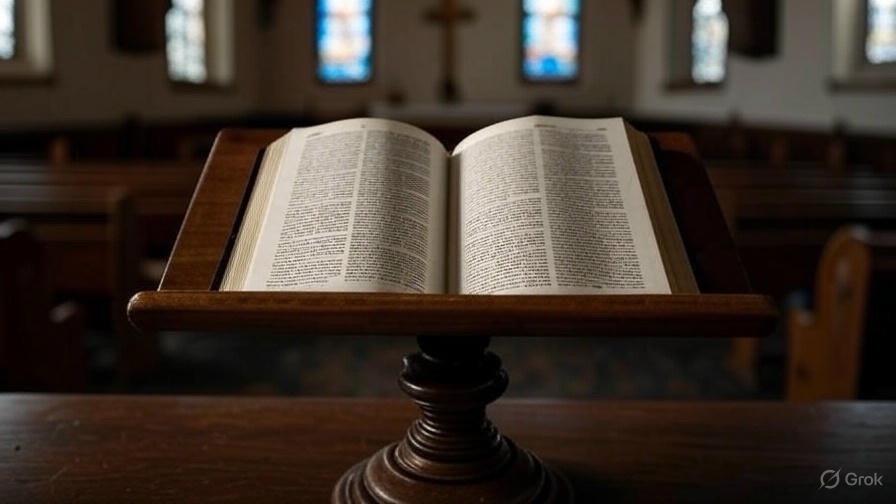
A blank Bible on a lectern indicating a famine of God‘s word 
In Amos 8:11, the prophet delivers a stark warning from God: “‘The days are coming,’ declares the Sovereign Lord, ‘when I will send a famine through the land—not a famine of food or a thirst for water, but a famine of hearing the words of the Lord.’” This Old Testament passage describes a divine judgement where God withholds His word as punishment for persistent disobedience. In our modern day, surrounded by unprecedented access to Scripture, this warning remains profoundly relevant, exposing a spiritual famine amidst apparent abundance.
In ancient Israel, God’s word through prophets was a lifeline, guiding the nation in covenant faithfulness. When the people embraced idolatry and injustice, God’s response was sometimes silence—a withdrawal of His voice. Amos 8:12 elaborates, stating that people would “stagger from sea to sea… searching for the word of the Lord, but they will not find it” (NIV). This spiritual famine was a deliberate act of judgement, leaving the nation desolate. Similarly, Hosea 4:6 declares, “My people are destroyed from lack of knowledge. Because you have rejected knowledge, I also reject you as my priests.” Here, God links spiritual ignorance to rejecting His truth, a precursor to the famine Amos foretells.
Today, such a famine seems unlikely. Smartphones and tablets provide instant access to countless Bible translations, sermons, and commentaries. A quick search yields devotionals, theological podcasts, and Christian blogs (including this one ). Yet, Amos’s warning persists. Despite this digital abundance, many churches fail to proclaim the full counsel of God’s word. Some prioritise uplifting messages over the call to repentance and faith in Christ. Others dilute the gospel, avoiding the reality of sin or the truth that “there is no other name under heaven given to mankind by which we must be saved” (Acts 4:12). This selective preaching creates a modern famine—not of Scripture’s availability, but of its faithful proclamation.
Consider the state of many churches. Is the gospel preached clearly, pointing to Christ’s atoning work and the need for repentance? Too often, sermons focus on self-help or cultural trends, neglecting the transformative power of God’s word. Hebrews 4:12 reminds us that Scripture is “living and active, sharper than any double-edged sword,” yet its edge is blunted when churches sidestep its harder truths. This echoes the judgement of Amos 8:11: God’s word is present, but its clarity and authority are withheld from those who refuse to heed it. Isaiah 55:2 questions, “Why spend money on what is not bread, and your labour on what does not satisfy?”—a challenge to those chasing spiritual substitutes over God’s truth.
This famine manifests in congregations unaware of biblical doctrines or unprepared to confront sin. It appears where the gospel is reduced to moralism, leaving souls hungry for the true “bread of life” (John 6:35). As believers, we must seek churches that faithfully proclaim God’s word in its entirety, urging repentance and pointing to Christ. We must also examine our hearts, ensuring we don’t contribute to this famine by ignoring Scripture’s call to holiness.
Amos 8:11 challenges us to hunger for God’s word, not merely its accessibility but its faithful preaching. Let’s pray for churches to boldly declare the full counsel of God, lest we wander in a self-inflicted famine, searching for truth we’ve chosen to ignore.
Many Christians in the UK feel disconnected from government, often dismissing all politicians as unworthy of attention due to widespread distrust. This disengagement can lead believers to view politics as irrelevant to their faith. Yet, Scripture presents a different call: praying for good government is a biblical priority and a cornerstone of Christian prayer life. Three passages—1 Timothy 2:1-4, Jeremiah 29:7, and Romans 13:1-4—explicitly command believers to intercede for leaders, revealing its centrality to faith. Such prayers foster peace, advance the Gospel, and align society with God’s purposes, countering apathy with obedient trust in His sovereignty.
An AI generated image of parliament like buildings in a cityscape 
Biblical Commands to Pray for Good Government
Scripture unequivocally commands Christians to pray for those in authority, positioning this practice as a foundational priority. A close examination of three passages reveals the depth and urgency of this call, grounding it in God’s redemptive plan.
1 Timothy 2:1-4: The Foremost Priority of Prayer
“First of all, then, I urge that supplications, prayers, intercessions, and thanksgivings be made for all people, for kings and all who are in high positions, that we may lead a peaceful and quiet life, godly and dignified in every way. This is good, and it is pleasing in the sight of God our Saviour, who desires all people to be saved and to come to the knowledge of the truth” (1 Timothy 2:1-4). Paul’s use of “first of all” is striking, marking prayer for leaders as the primary focus of Christian intercession. This is not a casual suggestion but a deliberate directive, placing prayers for kings, governors, and all in authority at the forefront of the church’s spiritual practice. The Greek term prōton (first) underscores priority in rank, not merely sequence, suggesting that this prayer is foundational to Christian worship. Paul’s comprehensive terms—supplications (requests for needs), prayers (general communion with God), intercessions (pleas on behalf of others), and thanksgivings—call for a multifaceted approach to praying for leaders, regardless of their character or policies. The purpose is twofold: to enable believers to live “peaceful and quiet” lives conducive to godliness and to support God’s desire for “all people to be saved.” This links prayer for government directly to evangelism, as stable societies facilitate the Gospel’s spread. Christians are thus called to prioritise intercession for leaders, trusting God to work through even flawed authorities to achieve His redemptive purposes.
Jeremiah 29:7: Praying for a Hostile Nation’s Welfare
“Seek the welfare of the city where I have sent you into exile, and pray to the Lord on its behalf, for in its welfare you will find your welfare” (Jeremiah 29:7). This command, given to Israelites exiled in Babylon, is remarkable for its context. Babylon was a pagan, oppressive empire, yet God instructs His people to pray for its well-being. The Hebrew word shalom (welfare) implies peace, prosperity, and wholeness, suggesting prayers for holistic societal good. This directive reveals that God ties the flourishing of His people to the health of the surrounding society, even under hostile rule. The call to “pray to the Lord” indicates that intercession is the primary means of seeking this welfare, placing prayer at the heart of civic engagement. For modern Christians, this passage challenges disengagement, urging prayers for local and national governments—whether supportive or antagonistic—as their stability directly impacts believers’ ability to live faithfully. Jeremiah’s command underscores that praying for government is not optional but integral to God’s plan for His people’s spiritual and social thriving.
Romans 13:1-4: Submitting to God’s Appointed Authorities
“Let every person be subject to the governing authorities. For there is no authority except from God, and those that exist have been instituted by God. … For he is God’s servant for your good” (Romans 13:1-4). Paul asserts that all governing authorities are established by God, serving as His instruments for order and justice. The Greek exousia (authority) emphasizes God’s sovereign appointment of rulers, whether emperors or local officials. This theological foundation implies a duty to pray for leaders to fulfil their God-given role as “servants for good,” promoting justice and punishing evil. While submission to authority is the primary focus, prayer naturally follows, as intercession seeks God’s guidance for leaders to align with His purposes. This passage calls Christians to trust in God’s sovereignty over governance, praying for authorities—such as MPs or councillors—to act justly, thereby fostering a society where righteousness prevails. Romans 13 elevates prayer for government as an act of faith in God’s ultimate authority.
Why Praying for Good Government Matters
Praying for good government is vital for several reasons. First, it produces peace, enabling Christians to lead “a peaceful and quiet life” (1 Timothy 2:2), free from persecution or chaos, where faith can flourish. Second, it supports Gospel advancement, as stable governance creates opportunities for evangelism, aligning with God’s desire for “all people to be saved” (1 Timothy 2:4). Third, it promotes justice, as governments are God’s servants to uphold good and punish evil (Romans 13:4). Prayer aligns leaders with God’s heart, benefiting society. Finally, in a distrustful culture, praying for all leaders reflects Christlike humility, distinguishing Christians as agents of reconciliation. Early Christians prayed for Roman emperors despite persecution, showing the timeless power of such prayers.
Practical Steps for Praying for Good Government
Specific Prayers: Pray for leaders’ wisdom and integrity, covering local councillors, MPs, and global figures.
Consistent Practice: Include prayers for government in daily devotions, using 1 Timothy 2:1’s framework.
Community Prayer: Join church groups to pray collectively for leaders, amplifying impact.
Faithful Trust: Pray with confidence in God’s sovereignty (Romans 13:1), even when outcomes are uncertain.
Conclusion
Praying for good government is a biblical priority, rooted in 1 Timothy 2:1-4, Jeremiah 29:7, and Romans 13:1-4. These passages reveal its centrality to Christian prayer, fostering peace, justice, and Gospel advancement. Believers must move beyond disengagement, prioritising intercession for leaders. Through prayer, Christians participate in God’s redemptive work, transforming nations for His glory.
For those who prefer to read rather than listen, here is a transcript of the sermon I preached yesterday on Mica five. Enjoy
Good morning everyone! It’s a pleasure to share some thoughts on a truly profound passage from the Bible today. Please forgive my notes – it’s a complex piece of scripture, and I wanted to do it justice! It has nothing to do with my age or memory, I promise! Let’s begin with a prayer: Father, we thank You so much for Your Word this morning. Thank You for gathering us together, Your people, to worship You. We thank You for Your majesty and Your presence among us. We thank You for this passage before us. Please help us to understand it, to learn from it, and to learn about You. We pray that what we learn today, Lord, we will apply in our lives, in Jesus’ name. Amen. Now, who read Micah chapter 5 and fully understood it? Anyone? No? I’m not surprised! It’s quite a tricky passage, isn’t it? Even after reading many commentaries, I don’t think any single one fully agrees on its meaning. So, we’ll do our best this morning! Layers of Meaning: Like Wallpaper in an Old House Have you ever moved into a new house and had to decorate a room with ghastly wallpaper? You start to peel it off, only to reveal an even more hideous layer underneath. You keep going, layer after layer, until you finally expose the bare wall. I see today’s passage a little like that – lots of layers. Micah’s prophecy moves from his present day to a future time. The clear references to Jesus and Bethlehem remind us of the coming great ruler. So, Micah is talking about his contemporary situation, but also a future time as well. It can be a little tricky to know which period he’s referring to at any given moment, but we’ll do our best. A Quick Refresher: Understanding Micah For those who might be new to Micah, he was a prophet around the 8th century BC, perhaps 720 BC. He spoke a lot about the Northern Kingdom of Israel and the Assyrian Empire’s threat to them. He was primarily addressing Judah, the Southern Kingdom, but often used the Northern Kingdom as a reference point. Sometimes the Bible refers to ‘Israel’ as the Northern Kingdom, sometimes as the Southern Kingdom (‘Judah’), and sometimes as the collective Israelites, the people of Israel. It can get a bit confusing, which is why some Old Testament passages are hard to follow. Do keep that in mind as you read.
Chapter 1: Micah focused on the people’s idolatry and their judgment for it.
Chapter 2: He addressed sins against the people, such as mistreating the poor and widows.
Chapter 3: This chapter dealt with the sins of the leaders.
Chapter 4: Here, the focus shifts to the ‘Mountain of the Lord’ – a hopeful, future time when all people would flow to it, perhaps referring to the coming of Jesus. It also mentions the Assyrian Empire again. Micah 5:1 – A Disputed Beginning Micah 5:1 often sparks debate about its placement. In the Hebrew Bible, it’s actually at the end of chapter 4. One commentary I read couldn’t understand why anyone would put it at the start of chapter 5. I have a theory why, though I might be completely wrong! We’re only looking at six verses this morning, but they are packed with powerful imagery. We must stay rooted in Micah’s immediate context: he’s speaking to people living under the looming shadow of the Assyrian Empire. While some of the prophecy certainly looks ahead, it’s easy to get lost in the imagery and forget the immediate concerns of his audience. Jerusalem Under Siege and Humiliation (Micah 5:1) Verse 1 says: “Marshal your troops, city of troops!” This refers to Jerusalem, though it’s called the ‘city of troops’ rather than ‘Jerusalem’ or ‘Daughter Zion’. It describes Jerusalem under siege, a dangerous time as the Assyrian Empire gathers. Then it says, “They will strike the ruler of Israel on the cheek with a rod.” This is a powerful image of humiliation. While it could be a physical blow, striking someone on the cheek with a rod was primarily about public shame. When Jesus spoke about ‘turning the other cheek’, it wasn’t about inviting further blows, but about refusing to engage in a cycle of humiliation. This is about Jerusalem, the great city of God, facing profound humiliation. From Humiliation to Hope: The Rise of Bethlehem (Micah 5:2) Then the passage shifts gears dramatically to Bethlehem: “But you, Bethlehem Ephrathah, though you are small among the clans of Judah, out of you will come for Me one who will be ruler over Israel, whose origins are from of old, from ancient times.” This is why I believe verses 1 and 2 belong together. You have the powerful capital city of Jerusalem, under siege and its leader humiliated, facing God’s judgement. Yet, Bethlehem, this tiny village, just a few miles from Jerusalem, the home of David, is contrasted with this mighty city. From this humble place, God calls forth a great ruler. Ron Hamilton and the Power of Humble Beginnings Have you ever heard of Ron Hamilton? He’s from Rutherglen in Scotland. Ever used daily disposable contact lenses? Well, Ron Hamilton invented them, from that small fishing village. From humble origins, a technology emerged that affects countless lives. In a similar way, from Bethlehem, this small town, a great ruler would be called forth by God. Bethlehem: The House of Bread Do you know what the name Bethlehem means? ‘House of Bread’. ‘Beth’ means house (think of Bethsaida, or Bethany), and ‘lechem’ means bread. So, Bethlehem is the “House of Bread”. It’s fascinating how this links to the Christmas story. In Matthew chapter 2, the wise men follow the star, arrive in Jerusalem, and Herod asks the teachers of the law where the Christ is to be born. They quote Micah 5:2, saying, “He will be born in Bethlehem.” And it’s from this ‘House of Bread’ that Jesus, who later declares, “I am the bread of life,” comes forth. There’s a beautiful connection here. A Ruler From Ancient Times The verse also states that this ruler’s “origins are from of old, from ancient times.” This isn’t just a regular human leader. This suggests a divine, Messianic figure, someone special. As Christians, we immediately think of Jesus. Micah looks ahead to a time when, despite Israel and Judah’s present troubles, God would call forth a ruler from ancient times, one who would be their deliverer. Israel Abandoned, Then Reunited (Micah 5:3) Verse 3 is interesting: “Therefore Israel will be abandoned until the time when she who is in labour gives birth and the rest of his brothers return to join the Israelites.” This idea of Israel being abandoned could be their punishment for turning their backs on God. We know the Northern Kingdom was carried away by the Assyrians, and while Judah avoided the Assyrians, they fell to the Babylonians and went into exile. This was God’s judgment. We see this throughout Israel’s history: periods of trouble and exile under the Assyrians, Babylonians, Persians, Greeks, and Romans. But the verse sets a time limit: “until the time when she who is in labour gives birth to a son.” This clearly refers back to Bethlehem and the idea of this ruler from ancient times. It’s a picture of Israel giving birth to the Messiah. This could signify an end to their troubles with the coming of the Messiah. For us, it’s hard not to connect the ‘woman in labour giving birth to a son’ with Mary giving birth to Jesus. The Rest of the Israelites and the Church The passage then speaks of “the rest of his brothers return to join the Israelites.” Some people link this to the modern nation of Israel being formed in 1948 and 1967, and the gathering of scattered Jewish people. While I understand why some make that connection, I personally don’t think it refers to the current nation of Israel. Looking at the news today, it’s clear that the nation of Israel is not living securely. We don’t want to lose sight of God’s covenant with Abraham, promising descendants as numerous as the stars and sand, and a specific land. But I don’t believe this passage should be interpreted as referring to the modern political entity of Israel. Instead, I think the idea of Jesus, the Messiah, uniting the rest of the brothers to join the Israelites, could be a reference to the Church. It could be about Gentiles coming to believe in Jesus and being united with God’s people, the Israelites, forming this new entity, the Church, where believers live for God. The Shepherd King and His Greatness (Micah 5:4) Verse 4 tells us: “He will shepherd His flock in the strength of the Lord, in the majesty of the name of the Lord His God. And they will live securely, for then His greatness will reach to the ends of the earth.” This idea of a ruler being a shepherd is fascinating. Again, Jesus declared, “I am the good shepherd.” So, this ruler is not only the ‘bread of life’ but also the ‘great shepherd’. He will shepherd His flock in the ‘majesty of the name of the Lord His God’. That word ‘majesty’ resonates when we worship and feel God’s powerful presence. His greatness “will reach to the ends of the earth.” This certainly points to Jesus. There are few places in the world today where Jesus’ name isn’t known. The Church began humbly in Jerusalem and spread to Judea, and then to the rest of the world. The Gospel is being preached everywhere, and we look forward to the day when it truly reaches every place, giving everyone the opportunity to know Jesus. This could also refer to a future time when Jesus returns and establishes His kingdom. Our Peace and Deliverance (Micah 5:5) Verse 5 is powerful: “And He will be our peace.” This immediately reminds us of the Christmas story, linked so well to Bethlehem. The first people to hear about Christ’s birth were the shepherds, and the angels proclaimed, “Peace on earth.” This coming ruler will be our peace. However, Micah immediately links this back to the Assyrian invasion. He says that this ruler “will raise up seven shepherds, even eight commanders.” This is a common Hebrew phrase, meaning ‘X and X plus one’, used for emphasis. You see it in Proverbs (“There are six things… yes, seven…”) or Amos (“For three sins… even four…”). It’s a Hebrew way of emphasising a complete and abundant number. So, it’s probably not literally seven or eight people, but a sufficient and abundant number of leaders. Seven often represents completeness in the Bible, and eight could symbolise abundance. These shepherds will “rule the land of Assyria with the sword, the land of Nimrod with the bare blade. He will deliver us from the Assyrians when they invade our land and march across our borders.” Nimrod, mentioned here, is a character from Genesis 10, often translated as a ‘great hunter before the Lord’, but actually meaning ‘against the Lord’. He’s an antagonist. This speaks of the enemies of Israel, the Assyrians and their allies. The sword here simply means a sword, not a metaphor for the Word of God, as some suggest. This is a message of hope: when the Assyrians come, God will raise up sufficient leadership to deliver His people from this difficult time. The simple words “He will deliver us from the Assyrians” are enough. That’s the hope they could cling to. What Does This Mean for Us Today? So, what can we take from this rich passage? There’s so much to think about, from contact lenses to the Bread of Life! But what can we do with it in our lives? I think the final phrase, “He will deliver us from the Assyrians,” holds the key. It means we can have hope and trust in God that He will make things right. This isn’t a prosperity gospel – I’m not saying God will fix all your problems immediately. We know that’s not true. Israel faced centuries of trouble and difficulty. God never promised a life free of pain. But in the midst of troubled times, God’s message was: there is hope. There is someone we can trust. There is a future to look forward to. Micah was speaking to his contemporaries, but also looking ahead to a future time when God would make everything right. Perhaps that won’t be on this side of eternity. But we can trust that God is our deliverer. He brings us hope, and if we trust in Him, we know we have a future in heaven, a time where we can rise above all the troubles of this life and know that He will make everything right. Whatever you’re in the middle of today – doubt, financial difficulty, health concerns, or simply feeling under siege – passages like this remind us that God has a plan. Even in trouble, we can trust and hope in Him, knowing that one day He will deliver us. Whether that hope is realised in this life or the next, God is a God of eternity. We need to be eternally minded, not solely earthly minded. While I wish I could tell you God will fix all your problems in this life, that’s not what we see. But we know He will fix everything in the next. These passages tell us we can trust in that hope God gives. I hope that’s encouraging to you this morning, and that you’ve learned a few things from this passage. Shall we pray? Father, we thank You for the Book of Micah. Thank You for the prophetic message given to the people of Israel and Judah in those days. We thank You and hope it was an encouragement to them. May we too see Your Word as a great hope for us. We thank You for hope, and that even when the enemy is at our door, when we face troubled times, Lord, we trust in You. Not that You’ll necessarily deliver us from every problem and pain in our life, but that You’ll be right there with us. You have promised never to leave us, never to forsake us. Lord, we know that even if we face troubles in this life, You have a plan, and we trust and hope in You. Help us to learn from Your people, who so often turned their backs on You, and help us not to turn our backs on You, Lord, but to follow You more heartily. May we lean on You and trust You. As we pray today, bless us as we think about Your Word, and what it means. We thank You, Lord Jesus, that You stepped down into this world, into this world of trouble and difficulty. You didn’t demand we lift ourselves up, but You left Your heavenly throne, came to earth as a baby in Bethlehem. We always think that Your Word is true and powerful. We thank You that You came to set us free. We pray we would follow You with our whole hearts. In Jesus’ name. Amen. Thank you.








 Andy Brown